
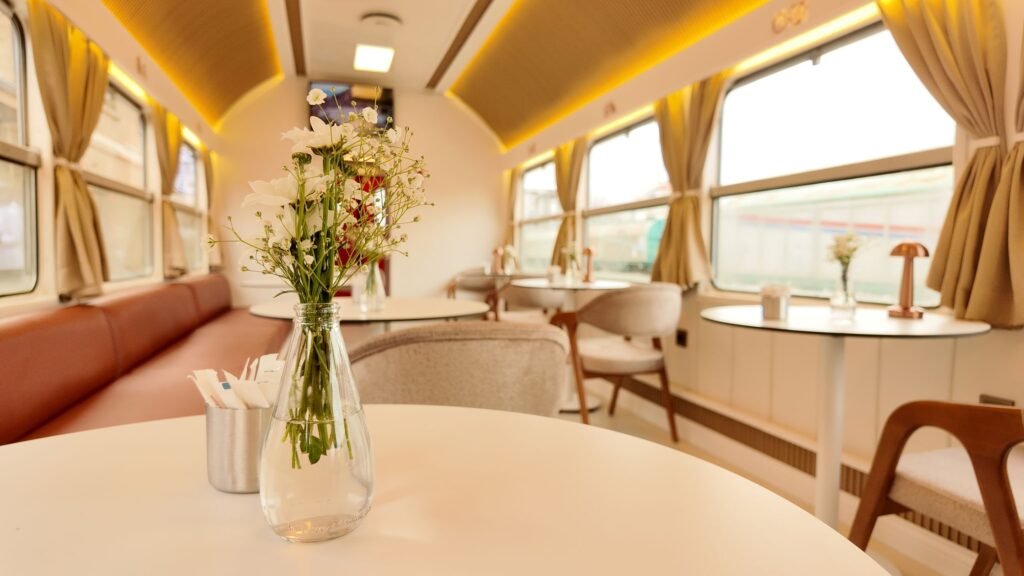
Planning a luxury train cabin comparison? This guide makes it simple to choose the right cabin class, route, and season—without guesswork. This luxury train cabin comparison shows how suites differ from classic sleepers, what an en‑suite bathroom really adds, and when to spend more for privacy, views, and service. As a result, you can book with confidence.
Quick answer for your luxury train cabin comparison
Here is the short version so you can move fast:
- Book a suite if you want an en‑suite bathroom, larger bed, and lounge space. It shines on multi‑night routes, anniversary trips, and when you prize privacy.
- Choose a deluxe/twin cabin if you want good value on 1–2 night journeys and do not mind a compact washroom or shared facilities, depending on the train.
- Pick daylight-only service (like some panoramic trains) if you care most about scenery and plan to sleep in a hotel at night.
Because each operator outfits its cars differently, always confirm bathroom type, bed configuration, and cabin size on the official route page before you book. In addition, ask about carriage location to manage noise.
Free download: Luxury Trip Planning Checklist
Shortlist premium stays faster with a calm, high-signal checklist.
Luxury train cabin comparison summary matrix
This section distills what most travelers ask first. It is the essence of a luxury train cabin comparison you can use when shortlisting cabins. Therefore, scan this table, then jump to the sections that match your trip.
| Your top priority | Best cabin type | Why it fits |
|---|---|---|
| Private bathroom + space | Suite / Grand Suite | En‑suite shower/WC and separate lounge area on many luxury trains; best for special trips. |
| Value on 1–2 nights | Deluxe/Twin Sleeper | Compact but comfortable, often with clever storage; sometimes semi‑private or shared facilities. |
| Views all day, hotel at night | Daylight panoramic class | Big windows and hosted dining; no sleeper. Great for mountain or coastal routes. |
| Classic heritage vibe | Historic Pullman | Iconic wood‑paneled cars; may use shared WCs or washbasins depending on the line. |
How to run a luxury train cabin comparison
Not all cabins are created equal, even within the same category name. Therefore, use these criteria to compare like‑for‑like and avoid surprises later.
- Bathroom type: En‑suite shower and WC vs. shared facilities down the hall. Also confirm water pressure and hot‑water windows on heritage stock.
- Sleeping layout: Twin bunk, twin side‑by‑side, fixed double, or convertible sofa‑bed. Additionally, check if the bed stays made during the day.
- Cabin footprint: Exact square footage varies; focus on whether there is separate seating and wardrobe space.
- Windows and views: One large picture window vs two smaller; some suites span the carriage width with corner seating.
- Dining/service: Private in‑cabin dining, butler/steward ratio, and dress code expectations.
- Noise and motion: Cabins near wheels, doors, or the generator can be louder. As a result, light sleepers may prefer mid‑car positions.
Cabin choice workflow for a premium sleeper cabin guide
Tip: If a suite is sold out, ask about interconnecting cabins that convert into a larger “cabin suite” on some heritage trains. Likewise, ask if a deluxe cabin can be configured as twin lower berths.

Luxury train cabin comparison scorecard: space, sleep, service
Use this quick scorecard to compare categories across cabin types. It is not a rating of any specific train. Instead, it shows typical trade‑offs so you can pick faster.
| Cabin type | Privacy | Sleep comfort | Daytime seating | Storage | Bathroom convenience |
|---|---|---|---|---|---|
| Historic/Classic | 2 | 3 | 3 | 3 | 2 |
| Deluxe/Twin Sleeper | 3 | 3 | 3 | 3 | 3 |
| Suite | 5 | 4 | 5 | 4 | 5 |
| Grand/Presidential | 5 | 5 | 5 | 4 | 5 |
As you weigh options, start with privacy and bathroom needs. Then, consider sleep and seating. Finally, adjust for route length and season.
Cabin types in a luxury train suite comparison
Because names vary by operator, use the features below to map categories across trains. In short, match features, not labels.
Historic Pullman in a first-class rail cabin comparison
These are the most atmospheric, often in lovingly restored carriages. However, many classic cabins use shared WCs and have washbasins in‑cabin. Beds convert from daytime seating to bunks at night. For romance and old‑world charm, they are hard to beat. Even so, consider mobility and morning routines.
Deluxe or Twin Sleeper in a premium sleeper cabin guide
Also called “state cabins” on some lines, these are the workhorse of luxury trains. They typically provide twin lower berths or a lower/upper bunk, clever storage, and either compact en‑suite or semi‑private facilities depending on the route. Therefore, they suit 1–2 night journeys well.
Suites in a luxury train suite comparison
These are larger spaces with private shower and WC, a fixed double or convertible bed, and a sitting area. On some icons, suites are unique by carriage and can include extra windows, decorative marquetry, and private dining. Consequently, they book out first.
Observation, lounge, and dining cars
While not cabins, these shared spaces shape your experience. In addition, they can influence cabin choice: if a lounge is exquisite, you may spend less time in‑cabin and can allocate budget differently.
Operator notes for your luxury train cabin comparison
Use these official sources for current cabin specifics, layouts, and inclusions. Details can change, so confirm before booking. Where a service is daylight only, plan hotel stays at night instead of sleepers.
- Venice Simplon‑Orient‑Express (Europe): Historic cabins, Cabin Suites, and Grand Suites on rotating routes. See Belmond’s page: belmond.com.
- Royal Scotsman (Scotland): En‑suite cabins and a spa car. See: belmond.com.
- Maharajas’ Express (India): Deluxe, Junior Suite, Suite, and Presidential Suite with en‑suite bathrooms. See: the-maharajas.com.
- The Blue Train (South Africa): De Luxe and Luxury suites with full en‑suite bathrooms. See: bluetrain.co.za.
- Rovos Rail (Southern Africa): Pullman, Deluxe, and Royal Suites with private bathrooms. See: rovos.com.
- The Ghan and Indian Pacific (Australia): Gold and Platinum Service sleepers with private en‑suites (configuration varies). See: journeybeyondrail.com.au.
- Andean Explorer (Peru): Bunk, Twin, and Suite cabins with en‑suite bathrooms. See: belmond.com.
- Train Suite Shiki‑shima (Japan): Glass‑front lounges and designer suites (set‑date departures). See: jreast.co.jp.
- Seven Stars in Kyushu (Japan): Artisanal suites and curated excursions. See: cruisetrain-sevenstars.jp.
- Rocky Mountaineer (Canada/USA): Daylight luxury rail with hotel overnights; no sleeper cabins. See: rockymountaineer.com.
| Category | Bathroom | Bed type | Space feel | Notes |
|---|---|---|---|---|
| Historic/Classic | Shared WC; basin in‑cabin on some | Convertible bunks | Cozy | Most heritage; authentic period details |
| Deluxe/Twin Sleeper | Compact en‑suite or semi‑private | Twin lower or bunk | Comfortable | Good balance of value and privacy |
| Suite | En‑suite shower/WC | Fixed double or twin | Spacious | Often separate seating; books early |
| Grand/Presidential | En‑suite, larger shower | King/Queen (varies) | Roomiest | Fewest units; highest privacy |
| Daylight panoramic | N/A (hotel overnight) | Recliner seats | Airy lounge feel | Immersive views; no sleeper |
En‑suite perks in a luxury train cabin comparison
It adds time, privacy, and comfort. On overnight journeys, having your own shower and WC means you are never queueing. Also, you control your routine around early excursions. On heritage stock, water pressure and shower size can be modest, but the convenience still feels like a major upgrade.
Meanwhile, shared‑facility routes are not inherently “less luxury.” Many are iconic. However, you trade some privacy to stay in period‑correct cars. If that bothers you, prioritize a suite or an operator with en‑suite standards. Likewise, consider the season; cold mornings make private showers more appealing.
Luxury train cabin comparison by route and season
Cabin fit depends on how you travel. Use these examples to match your priorities to real routes. Always verify the current configuration on the operator’s site before booking. Then, fine‑tune for weather and daylight.
Europe heritage routes: first-class rail cabin comparison notes
- Short, one‑night legs: A deluxe/twin sleeper balances comfort and cost. You will spend awake time in the bar car and dining rooms.
- Grand celebration trips: Suites reduce compromises: private bathroom, daytime lounge, and better sleep.
Scotland and the Highlands: premium sleeper cabin guide
- En‑suite across most cabins: Weather is changeable, and after outdoor excursions, a private hot shower is welcome.
India’s palace‑on‑wheels style
- Multiple nights + rich excursions: Suites help you reset between temple visits and gala dinners. Deluxe cabins appeal if you prefer compact living and more time in lounges.
Southern Africa: first-class rail cabin comparison takeaways
- Scenic, multi‑night itineraries: Deluxe and Royal/Grand suites offer true hotel‑like privacy. Trains here often include generously sized en‑suites.
Australia’s trans‑continentals
- Long distances: Private en‑suite sleepers feel essential. If views are your priority, you can spend hours in lounge cars and still sleep well in a compact cabin.
Peru’s high‑Andes
- Altitude + early mornings: En‑suite showers make starts smoother. Suites also create recovery space between Cusco, Lake Titicaca, and Arequipa segments.
Japan’s design‑icon trains: premium sleeper cabin guide
- Few departures + extraordinary design: Any available suite will feel special. Book as soon as sales open.
Is a suite worth it on shorter routes? A luxury train cabin comparison take
Often, yes—if you value privacy and sleep. However, if your journey is one night and heavily social, a deluxe/twin sleeper can be the sweet spot. Consider the time asleep vs time awake in shared spaces to decide. For some travelers, suites are still the right call for special occasions even on one‑night legs. Likewise, if you need a private morning routine, the upgrade pays off.
| Scenario | Upgrade to… | Worth it? | Why |
|---|---|---|---|
| Anniversary trip | Suite/Grand Suite | Usually yes | Privacy, in‑cabin breakfast, better photos, more lounge space |
| Solo traveler, 1 night | Deluxe/Twin Sleeper | Often no | Sleep well, spend day in bar car; suite space underused |
| Two+ nights, early excursions | Suite | Usually yes | Private shower maximizes rest and routine |
| Daylight scenic rail + hotel nights | N/A | No sleeper | Invest in the best daylight class instead (bigger dome/windows) |
Case studies that apply this first-class rail cabin comparison
Real plans make choices clear. Therefore, use these short scenarios to stress‑test your pick before you book.
1) Two nights, cool season, early excursions: You have dawn outings and gala dinners. As a result, a suite’s private shower and separate seating protect rest and routine. If suites are sold out, consider two interconnecting cabins for extra space.
2) One night, social group, cocktail focus: Your group plans to linger in the bar car. In that case, a deluxe/twin sleeper is strong value. Still, upgrade one couple to a suite if you want a quiet retreat or a special celebration.
3) Daylight panorama with hotel nights: There is no sleeper. Therefore, book the top daylight class with the largest windows. Then, pair it with boutique hotels for the full experience.
Best for / skip if: first-class rail cabin comparison
Use this to match the right traveler profile with the right cabin.
- Historic/Classic: Best for design lovers and romantics; skip if you require a private shower.
- Deluxe/Twin Sleeper: Best for comfort‑first travelers; skip if you dislike compact bathrooms.
- Suite/Grand Suite: Best for privacy, special trips, and longer routes; skip only if you will spend almost no time in‑cabin.
- Daylight panoramic: Best for view‑hunters; skip if you want a sleeper experience.
Twin vs double: luxury train cabin comparison for bedding
It depends on the carriage layout. Some trains offer a fixed double that stays made all day, while others convert seating into bunks at night. If mobility is a concern, prefer a lower berth or fixed double. Also ask whether the bed blocks the window when made up. Finally, confirm mattress type if you are sensitive to firmness.
How we compare cabins in a luxury train suite comparison
Here is our simple rubric to evaluate cabins across trains. It underpins every luxury train cabin comparison in this guide. Consequently, you can copy it for your own shortlist.
- Privacy: En‑suite vs shared, door seals, and foot traffic nearby.
- Sleep quality: Bed size, mattress, and noise position in the consist.
- Daytime comfort: Seating that does not force you to lounge on the bed.
- Scenic experience: Window design and access to observation cars.
- Dining and service: Steward ratio and in‑cabin dining options.
- Practical storage: Luggage and wardrobe access when the bed is made.
Common mistakes in a luxury train cabin comparison
- Booking a classic cabin expecting a private shower when the line uses shared facilities.
- Choosing upper‑berth bunks when stairs or ladders are a concern.
- Underestimating how early excursions run; a private shower can be worth it.
- Forgetting seasonal temperature swings; routes at altitude can feel cool at night.
- Skipping carriage‑location questions; end cars can be louder and busier.
Packing and comfort tips for your luxury train cabin comparison
Small choices improve space and sleep. Therefore, pack with the cabin in mind.
- Use soft‑sided luggage: It stows under beds or in closets more easily.
- Bring layers: Cars can feel warm by day and cooler at night.
- Compact toiletries: En‑suite showers are efficient; keep items tidy in a hanging kit.
- Slip‑on shoes: Easier for night‑time trips to the WC if you are in shared‑facility cars.
- Eye mask and earplugs: Helpful on heritage stock with light or track sounds.
Accessibility notes in a premium sleeper cabin guide
If mobility is a priority, ask about step‑free boarding, cabin door widths, and shower access. Some trains can place a ramp on request. Similarly, mid‑car cabins can reduce sway. Always confirm current options with the operator before you pay.
What to book first in your luxury train cabin comparison
Because suites and top cabins are few, you should reserve early. Also, some trains run seasonal or limited departures. Therefore, match your route window to cabin demand.
- Suites/Grand Suites: Reserve 9–12 months out for popular dates, sooner for Japan.
- Deluxe/Twin Sleepers: 6–9 months is often fine, but do not wait if you need adjacent cabins.
- Daylight scenic classes: Book early for peak foliage or summer mountain seasons.
Budget and booking strategy in a luxury train cabin comparison
Set your must‑haves first. Then, allocate budget to the cabin features that change your day the most. For two‑plus nights, bathroom privacy usually beats decor upgrades. Conversely, on one‑night legs, a better bar car can be the bigger win.
- Prioritize privacy and sleep. Then, add space if you linger in‑cabin.
- Ask about shoulder‑season pricing. It can free budget for a suite.
- Check if gratuities, drinks, and excursions are included. That shifts value.
Official sources for a luxury train cabin comparison
Always verify layout, inclusions, and dress codes on these official pages before you finalize a cabin:
- Venice Simplon‑Orient‑Express (Belmond)
- Royal Scotsman (Belmond)
- Maharajas’ Express (IRCTC)
- Rovos Rail and The Blue Train
- The Ghan and Indian Pacific (Journey Beyond Rail)
- Andean Explorer (Belmond)
- Train Suite Shiki‑shima (JR East)
- Seven Stars in Kyushu (JR Kyushu)
- Rocky Mountaineer
Checklist for your premium sleeper cabin guide
| Check this | Why it matters | Where to find it |
|---|---|---|
| Bathroom details | En‑suite vs shared can change your routine | Cabin specs on operator page |
| Bed layout | Fixed double vs bunks affects sleep and daytime seating | Cabin floor plan or photos |
| Window size/position | Views and photo angles | Gallery images and reviews |
| Carriage location | Noise and motion near wheels or doors | Ask reservations team |
| Dress code and dining | Helps pack correctly and set expectations | FAQ/Guest info booklet |
| Excursion timing | Early starts tilt value toward en‑suite | Itinerary page |
See cabins transform: first-class rail cabin comparison in motion
This short clip shows how day lounges convert to night sleepers, which helps you picture space use. As you watch, note bed orientation and storage access.
If the video does not load, watch it here: YouTube fallback link.
What should you confirm before paying for a luxury train cabin?
Before you pay, ask the operator for the exact cabin plan used on your departure. Train names can cover several carriage types. Therefore, a category label alone may not reveal bed width, shower layout, or daytime seating. Confirm whether the bed stays fixed or converts each evening. Also ask if staff must enter the cabin to make it up. That small detail can shape privacy and the time you can use the room.
Next, check what the fare includes beyond the cabin. Most premium journeys bundle meals, yet drinks, excursions, transfers, and hotel nights can differ. A lower cabin may deliver better value when the common lounges are spacious and the route includes long daytime stops. By contrast, a suite gains value on multi-night trips with early starts, cold weather, or several hours between excursions.
Finally, request the cancellation terms in writing and note the final-payment date. Luxury rail inventory is limited, so deposits may become restrictive earlier than hotel bookings. Travel insurance can help with covered events, but it does not replace reading the operator terms. Keep the cabin diagram, inclusions, and payment schedule together. As a result, you can compare two departures on the same facts instead of relying on category names.
A concise cabin confirmation checklist
Ask for five details: the exact carriage plan, bed arrangement, private bathroom features, included services, and cancellation timeline. Then compare those answers with your route length and daily schedule. If two cabins still seem close, choose the one that improves sleep or removes a repeated inconvenience. Those benefits usually matter more than decorative extras.
Next steps after your luxury train cabin comparison
Therefore, start with routes and timing, then choose your cabin:
- Compare luxury train routes and cabins by region on our hub.
- Review Venice Simplon‑Orient‑Express cabin options if Europe is on your list.
- Choose the best season for luxury train journeys to dodge crowds and track works.
Luxury train cabin FAQ
Which luxury train cabin should you book?
Book a suite for private shower, space, and privacy on multi‑night routes. Choose a deluxe/twin sleeper for balance on 1–2 night legs. Use this luxury train cabin comparison to align cabin, route length, and your priorities.
Are suites always en‑suite?
On most luxury trains, yes, but always confirm on the operator page linked above. Exceptions exist on heritage rolling stock and special departures.
Is an en‑suite shower comfortable on a train?
It is compact but very helpful, especially with early excursions. For longer routes or colder seasons, the upgrade feels significant.
Can two cabins connect to make a larger space?
Sometimes. Several heritage lines can pair adjacent cabins into a larger suite‑like space. Ask reservations for specific consist diagrams.
Do daylight luxury trains have sleeper cabins?
Some famous scenic lines are daytime only with hotel overnights, so there are no sleeper cabins. In those cases, invest in the best daylight class and great hotels.
Last updated: This guide was reviewed in July 2026 against official operator pages. Because schedules and cars can change, confirm details directly before booking.
Finally, when you are ready to choose, keep this luxury train cabin comparison handy. It will keep your shortlist tight, your upgrades intentional, and your trip aligned to what you value most.
Full guide: Luxury Train Trips: The Buyer’s Guide to Luxury Train Travel, Cabins, and Routes