
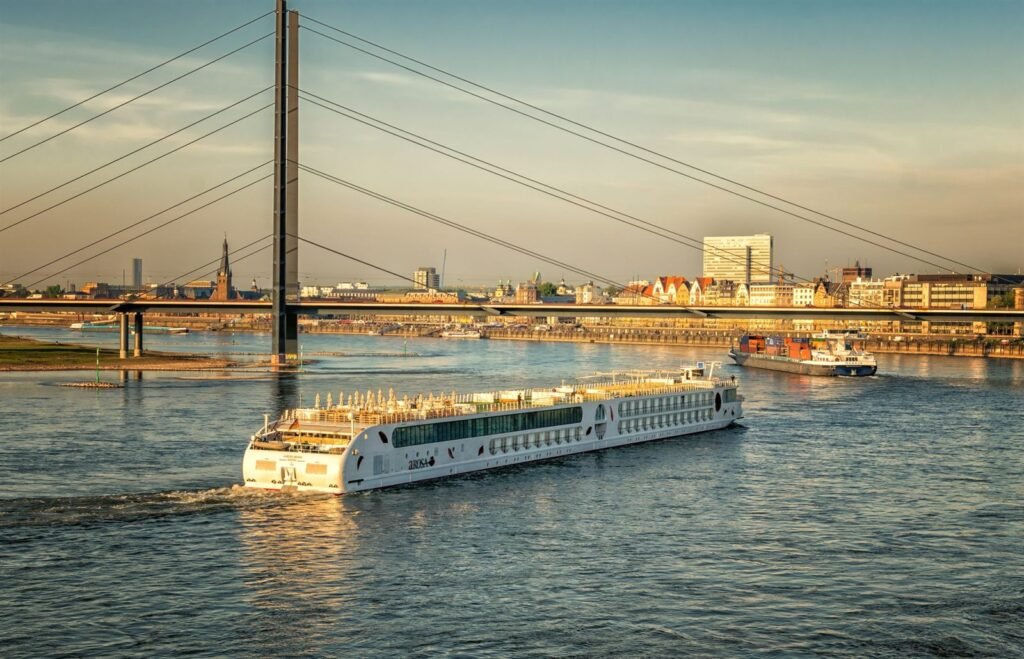
The river cruise vs ocean cruise decision is usually presented as a matter of taste. It is really a matter of physics. River ships are built to fit through locks and under bridges, and every difference in the experience follows from that single constraint. Ocean ships have no such limit, so they are built for scale instead.
Once you understand what each ship is shaped by, the rest stops being a matter of opinion. This guide covers the hard numbers, what is included, how the days actually feel, the risks each format carries, and who should choose which. It also says plainly who should skip each one.
Last reviewed and updated: October 8, 2026. How this guide was researched: this river cruise vs ocean cruise comparison is desk research, not a sailing review. Ship dimensions and capacities are taken from a shipbuilder’s own technical page, cited at the end. Where industry figures vary or could not be confirmed at source, we say so rather than quoting a convenient number. We did not sail either format for this article, and we quote no fares.
Free download: Luxury Trip Planning Checklist
Shortlist premium stays faster with a calm, high-signal checklist.
River cruise vs ocean cruise: the short answer
In the river cruise vs ocean cruise choice, pick a river cruise if the destination is the point, you want to step off into a town centre most mornings, and you prefer a small, quiet ship where you recognise faces by day three.
Choose an ocean cruise if the ship is part of the holiday, you want choice in dining and entertainment, you are travelling with a mixed-age group, or you like sea days.
If you cannot decide, the most reliable test is this: do you want to be somewhere different every morning, or do you want somewhere to be for a week that happens to move? River answers the first. Ocean answers the second.
Scale: the numbers that explain everything else
Start here, because the rest of the river cruise vs ocean cruise comparison is downstream of it.
On the Rhine, Main and Danube system, 135 metres is the practical ceiling on ship length, set by the lock chambers. The shipbuilder Meyer Werft describes its A-ROSA Silva and Flora as 135 m long with a beam of 11.4 m, carrying 186 passengers in 86 cabins, and states they are specially tailored to the narrow locks and low bridges found along the Main-Danube Canal.
One detail captures the whole category: to pass under low bridges, the crew can lower the wheelhouse and fold up the railings and awnings to reduce the ship’s height. That is how tight the margins are.
Same scale: river ship against ocean ship
Drawn to scale. The lock chamber, not the designer, sets the river ship length.
River cruise ship
135 m long, 11.4 m beam
About 186 passengers in 86 cabins
Large ocean cruise ship
roughly 330 m long
Commonly 2,000 to 7,000+ passengers across a dozen or more decks
River dimensions: Meyer Werft, A-ROSA Silva and Flora. Ocean figures are approximate industry ranges.
And why ocean ships have no such ceiling
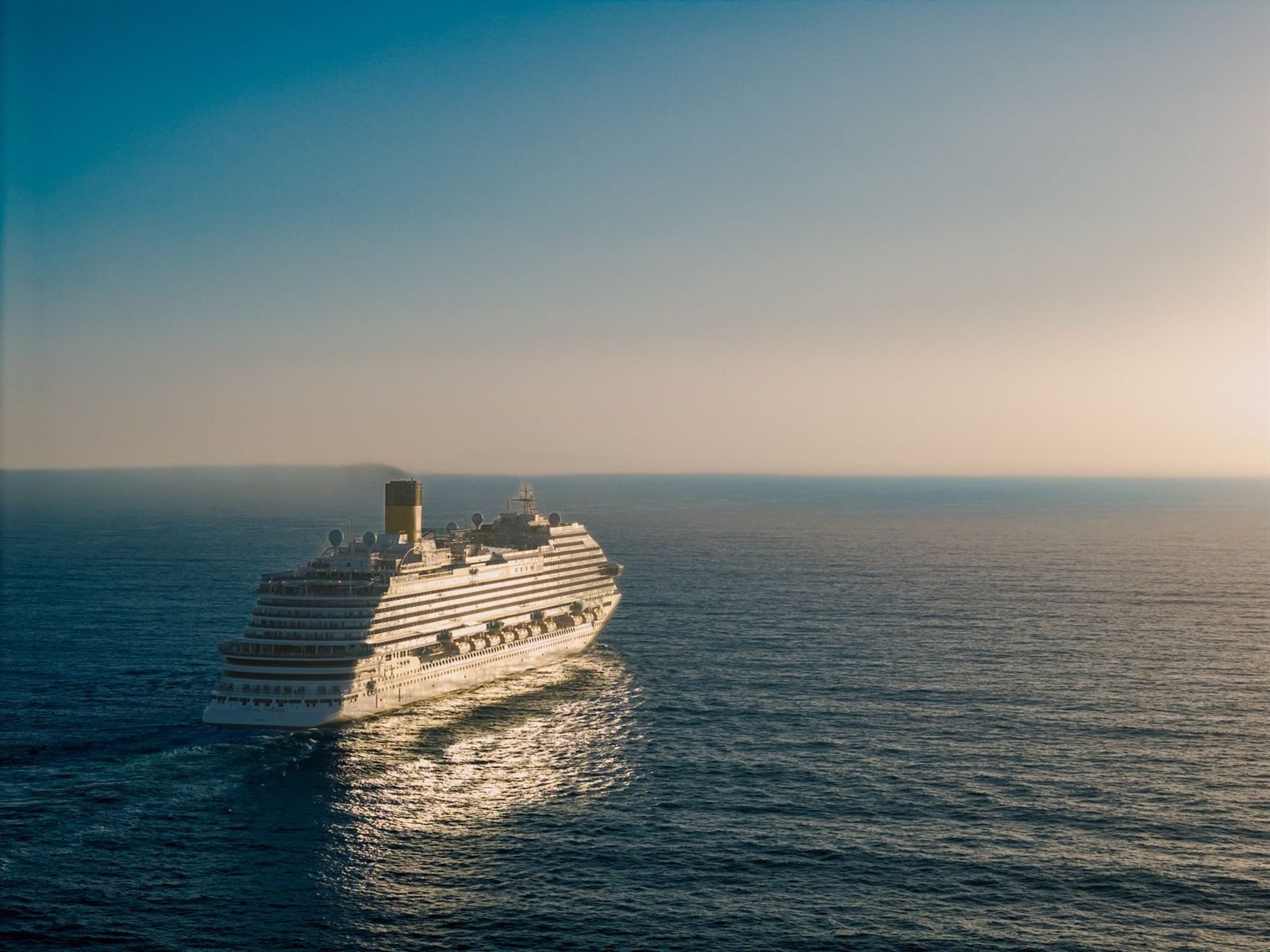
Ocean ships operate under no equivalent constraint. Industry sources put typical ocean capacity in the range of roughly 2,000 to over 7,000 passengers, with the largest vessels reaching around 1,200 feet in length. The gap is not incremental. A river ship carries a fraction of the passengers of even a mid-sized ocean ship.
Everything downstream follows. A ship with 186 guests cannot run four restaurants, a theatre, a climbing wall and three pools. A ship with 4,000 guests cannot tie up in the middle of a small European town.
Where you wake up
This is the river cruise vs ocean cruise difference passengers notice first, and it is the one that decides most bookings.
On a river itinerary, you typically dock in or beside a town centre, often overnight. You then walk straight off into it. Travel happens while you sleep, or during short afternoon stretches. The scenery is continuous, because the banks are always close. You are rarely more than a few minutes from a cathedral square.
On an ocean itinerary, you alternate port days with sea days. Ports are often industrial terminals some distance from the old town, so arrival involves a shuttle or a taxi. The payoff is range: ocean itineraries cross open water and reach places no river touches.
Neither is better. Instead, they are different holidays. The question is whether a day at sea reads to you as a gift or a delay.
The ships compared
| Factor | River cruise | Ocean cruise |
|---|---|---|
| Typical guests | Roughly 100 to 200 | Roughly 2,000 to 7,000+ |
| Ship length | Up to about 135 m on the Rhine-Danube system | Up to roughly 1,200 ft |
| Decks | Usually three plus a sun deck | Often a dozen or more |
| Docking | Frequently in town centres | Often at commercial terminals |
| Sea days | None | Several on most itineraries |
| Motion | Minimal on a river | Noticeable in open water |
| Dining venues | Usually one main room plus a casual option | Many, including speciality restaurants |
| Entertainment | A pianist, a lecturer, a local group | Theatre productions, casinos, clubs |
| Pools | Rare, small if present | Multiple, plus water features |
| Children aboard | Few, outside family sailings | Many, with dedicated programmes |
Therefore read that table as a description of two different products rather than a scorecard. The river column is not a worse version of the ocean column; it is what a 135-metre hull allows.
What is included, and why the comparison misleads
We do not quote river cruise vs ocean cruise fares, because they move constantly by season, itinerary and operator. What is worth understanding is the structure, because it is where the two formats differ most and where headline comparisons go wrong.
River fares are typically bundled. Most lines include shore excursions in each port, wine and beer with lunch and dinner, and transfers in some cases. The advertised figure is therefore closer to what you actually pay.
Ocean fares are typically unbundled. The advertised figure generally covers the cabin, main dining and basic entertainment. Excursions, drinks packages, speciality restaurants, wifi and gratuities are frequently extra, and they add up.
So a straight comparison of two headline numbers is close to meaningless. Build a like-for-like total instead: add the excursions you would actually take, a drinks package if you would use one, wifi, speciality dining and gratuities to the ocean fare before comparing. Our luxury cruise total cost calculator is built for exactly this, and are cruise drink packages worth it covers the single largest variable.
Cabins, and what a balcony means on each
Turning to accommodation, river cabins are generally compact and consistent, because a hull 11.4 metres wide does not permit much variation. Many have a French balcony, which is a floor-to-ceiling window that opens with a railing rather than a space you can stand on. That is not a cheat; a usable balcony would consume cabin width the ship does not have.
Ocean cabins range enormously. They run from windowless inside rooms to multi-room suites with private decks. A balcony on an ocean ship is normally a genuine outdoor space with furniture.
The counter-intuitive part: the balcony matters less on a river. Scenery is close on both banks and visible from the sun deck, the lounge and the dining room, so you spend less time alone in your cabin looking at it. On an ocean ship with several sea days, a balcony changes how the days feel considerably.
For more on choosing position rather than category, see best cruise cabin location and best suites on cruise ships.
Dining and the rhythm of the day
On a river ship there is usually one main restaurant, often with open seating, plus a casual alternative. Menus frequently reflect the region you are sailing through, and the kitchen is cooking for fewer than 200 people, which shows.
On an ocean ship you choose. Main dining rooms, buffets, speciality restaurants, room service and casual venues all operate. Each often has its own atmosphere and dress code. More choice means more variety, and it also means the kitchen is producing at a scale that tends toward consistency rather than character.
Dining times differ too. River schedules bend around excursions, so dinner is usually later and a single sitting. Ocean ships run fixed or flexible dining across a long service window.
Entertainment, and the honest version
In the river cruise vs ocean cruise comparison, river entertainment is modest by design. Expect a pianist in the lounge, a destination lecturer, a local folk group aboard for an evening, and conversation. Many passengers go to bed early because they have walked a town all day.
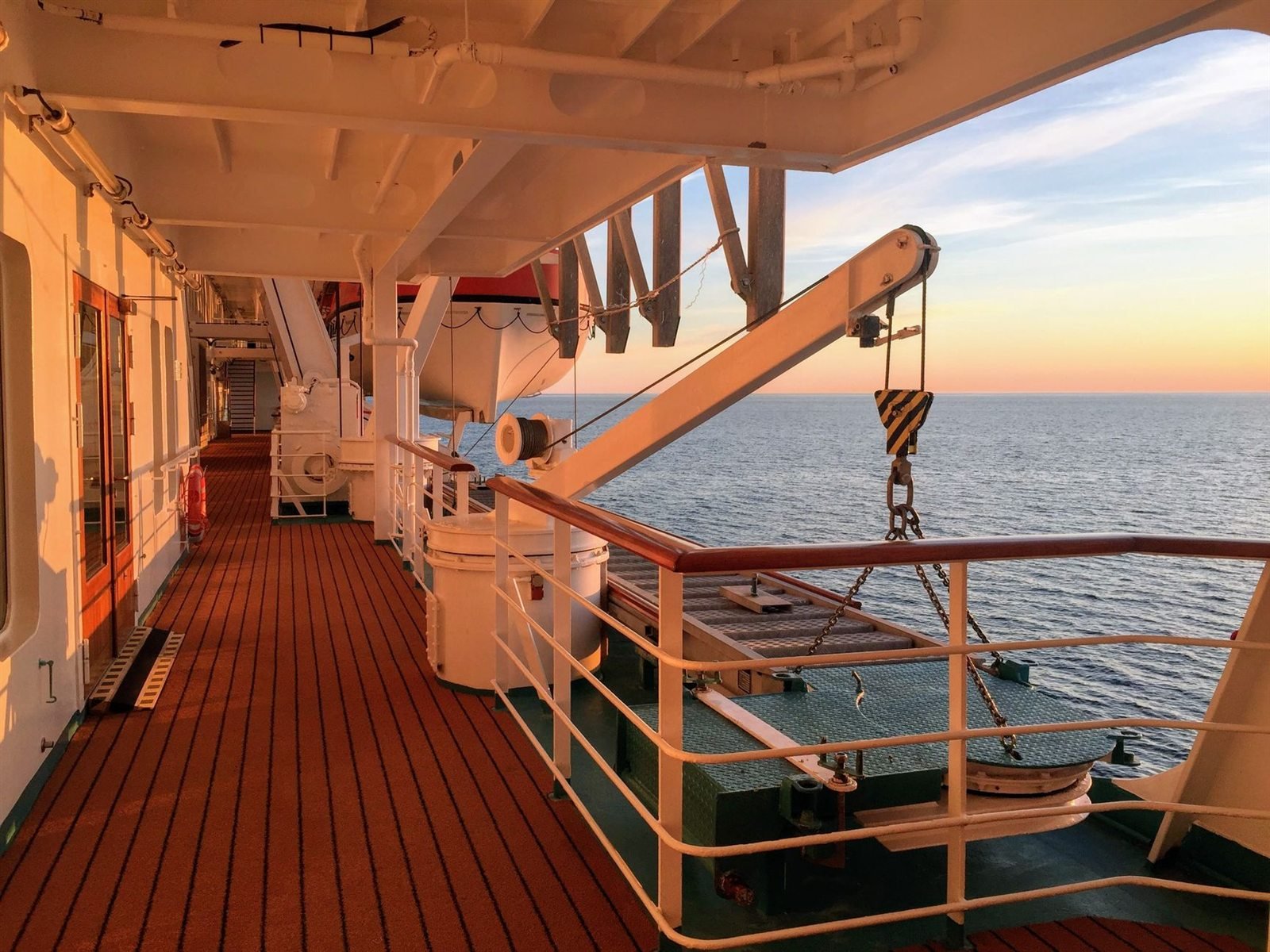
Ocean entertainment is a genuine production: theatre shows, live music across multiple venues, casinos, comedy, trivia and late bars. If evenings matter to you, this is not a close contest.
Be honest with yourself here rather than aspirational. People who describe river evenings as quiet usually mean it as praise or as complaint, and they are describing the same thing.
Who you will travel with
Socially, river cruising skews older and quieter, and solo travellers often report it as sociable because the group is small enough to know. Children are uncommon outside dedicated family sailings.
Ocean cruising spans everything, because the ship is large enough to contain several holidays at once. Families, couples and groups coexist, with children’s clubs and adults-only areas separating them.
If you are travelling with a multi-generational group, this usually settles it. A teenager on a 186-passenger river ship with a pianist and a lecture programme is unlikely to thank you.
Motion, seasickness and weather
A river ship sits in sheltered water and rarely produces noticeable motion. For travellers who are prone to seasickness, that alone can decide the river cruise vs ocean cruise question.
Ocean ships are large and stabilised, and most passengers are fine, but open water does move. Crossings and exposed stretches can be lively. If you are unsure, read how to avoid seasickness on a cruise before booking either.
Weather affects them differently too. An ocean itinerary may skip a port for sea conditions. A river itinerary is far more exposed to one specific risk, which deserves its own section.
Water levels: the river risk nobody advertises
This is the single most important thing to understand before booking a river cruise, and brochures are quiet about it.
Rivers rise and fall. In drought, water can drop too low for a ship to pass under its own draught or to clear the riverbed in shallow stretches. In flood, the water can rise too high for the ship to pass under bridges — which is why the wheelhouse folds down in the first place.
When either happens, operators generally do one of three things:
- Ship swap. Passengers coach to a sister vessel on the other side of the obstruction and continue.
- Modified itinerary. The ship stays put and towns are reached by coach.
- Hotel substitution. In severe cases, part of the trip becomes a land tour.
None of these is a disaster, and good operators handle them well. But they are materially different from the holiday you booked, so read the operator’s water-level policy before paying, and consider travel insurance that covers itinerary change rather than just cancellation. Shoulder seasons at the extremes of summer and late autumn carry more of this risk.
Ocean cruising has no equivalent exposure. Ports get missed occasionally, but the ship keeps sailing.
Excursions and how you actually see places
Meanwhile, river itineraries usually include a guided walking tour in each port as standard, often with a choice of pace. Because the ship docks centrally, independent exploring is easy and you can return to the ship for lunch.
Ocean excursions are generally sold separately and often involve a coach transfer before anything begins. Independent exploring is possible but needs more planning, and the all-aboard time is a genuine constraint when the port is an hour from town.
There is a quality difference too. A river excursion for 180 guests splits into small groups. An ocean excursion in a busy port may move several hundred people through the same site at once. For how to choose well, see best cruise excursions.
Accessibility and getting about
River ships are small, which cuts both ways. Distances on board are short and nothing is far from your cabin. However, many river ships have limited or no lift access between all decks. Gangways can be steep depending on the mooring. Ships also raft alongside one another at busy moorings, which means crossing another vessel to reach land.
Ocean ships have full lift access, wide corridors, accessible cabins and level boarding at most terminals. However, the distances on board are long, and port access may involve tenders at anchor.
If mobility is a factor, ask three specific questions before booking either: whether there is lift access to every deck you need, what the gangway arrangement is at each port, and whether tenders or rafting are expected.
Itinerary length, pacing and how tired you get
Pacing is the quiet river cruise vs ocean cruise difference that decides how a trip feels by day five, and the two formats pace very differently.
A river itinerary front-loads activity. Because you dock in a town almost every morning, there is somewhere to go every single day, and the walking adds up. Consequently many passengers find a seven-night river trip busier than they expected, and a fourteen-night one genuinely demanding. That is not a criticism; it is simply what a port-every-day schedule produces.
An ocean itinerary builds in recovery. Sea days exist partly for logistics and partly because people need them, so a fortnight at sea can feel more restful than a week on a river. However, if you dislike sea days, the same structure reads as wasted time.
There is a practical consequence for first-timers. If you are unsure which you prefer, a shorter river itinerary tests the format cheaply, whereas a longer ocean itinerary gives the ship time to show what it offers. In other words, pick the length to suit the format rather than the other way round.
Booking timing and what actually sells out
Capacity shapes availability, and this is the one river cruise vs ocean cruise factor where the small ship works against you.
A river ship with 186 berths sells out. Furthermore, the cabins people want most, which are the upper-deck ones with the full windows, go first and often many months ahead. Popular sailings such as the Christmas market season can be effectively full a year in advance, so late booking on a river is a genuine constraint rather than a strategy.
Ocean ships carry thousands, so something is nearly always available, although the specific category you want may not be. As a result, late deals exist on ocean sailings in a way they rarely do on rivers.
Two practical points follow:
- Book rivers early if the itinerary or the season matters to you, and expect limited flexibility afterwards.
- Book oceans on category rather than on ship, since the difference between a guarantee cabin and a chosen one is larger than most people assume.
For timing specifically, see best time to book a cruise, and for seasonal considerations in Europe read best time to cruise Europe.
Solo travellers, and why the small ship helps
Solo travel is where the two formats diverge in a way the brochures seldom address directly.
On a river ship, the small passenger count works in your favour socially. Open seating at dinner, a single lounge and a shared daily excursion mean you recognise most faces within two days. Consequently solo travellers frequently report river sailings as the easier format for meeting people without effort.
On an ocean ship, you can be as private or as sociable as you choose, which suits some people far better. There are solo-traveller meet-ups on many lines, and nobody notices if you skip them. Conversely, a large ship can feel anonymous if company is what you wanted.
The financial side differs as well. Single supplements apply on both, but availability of dedicated solo cabins is generally better on larger ocean ships, simply because there are more cabins to allocate. On a 186-berth river ship, a solo cabin is a scarce commodity, so book early if that is what you need.
Three questions that settle the river cruise vs ocean cruise choice
If the comparison still feels balanced, these three usually break the tie.
- Do you want to walk off into a town before breakfast? If yes, that is a river cruise, and very little else will substitute for it.
- Is a day at sea a pleasure or a waste? Answer honestly rather than how you would like to feel, because ocean itineraries contain several.
- Who is coming with you? Children, teenagers and mixed-age groups tilt the river cruise vs ocean cruise decision firmly toward the ocean.
Notice that none of these is about luxury level or price. Both formats run from comfortable to genuinely opulent, so the segment is a separate decision you make after the format. For that, start with best luxury cruise lines.
Which should you choose?
Choose a river cruise if you want a destination-led holiday, you value docking in town centres, you prefer a small ship and a quiet evening, you are prone to seasickness, or you like the simplicity of a largely inclusive fare.
Skip a river cruise if you are travelling with children or teenagers, you want a wide choice of dining and entertainment, you enjoy sea days, or you cannot tolerate the possibility of a water-level itinerary change.
Choose an ocean cruise if the ship is part of the appeal, you want variety on board, you are travelling with a mixed-age group, you want a wide range of cabin categories, or you want itineraries that cross open water.
Skip an ocean cruise if crowds tire you, you dislike coach transfers into town, or you resent paying separately for things you assumed were included.
Still weighing it up? Compare the segment first in premium cruise lines vs luxury cruise lines, then narrow with best Europe river cruises or best small ship cruise lines. The luxury cruise guide covers the category as a whole.
Frequently asked questions
How many passengers does a river cruise ship carry?
Typically around 100 to 200. As a concrete example, Meyer Werft lists its A-ROSA Silva and Flora at 135 m long with a 11.4 m beam, carrying 186 passengers in 86 cabins. Ocean ships, by contrast, commonly carry several thousand.
Why are river cruise ships all roughly the same size?
Because the locks and bridges set the limit. On the Rhine, Main and Danube system, around 135 metres is the practical ceiling, and ships are built specifically for those narrow locks and low bridges. On some vessels the crew can lower the wheelhouse and fold the railings and awnings down to clear low bridges.
Is a river cruise more expensive than an ocean cruise?
The headline figures are not comparable, because the two are structured differently. River fares usually bundle excursions and some drinks, while ocean fares typically charge separately for excursions, drinks, speciality dining, wifi and gratuities. Build a like-for-like total including everything you would actually use before comparing.
What happens if the river water level is too low or too high?
Operators usually swap passengers to a sister ship beyond the obstruction, modify the itinerary and reach towns by coach, or substitute hotel stays in severe cases. It is a recognised feature of river cruising rather than a rare failure, so read the operator’s water-level policy and consider insurance covering itinerary changes.
Do river cruises make you seasick?
Rarely. River ships sail in sheltered water and produce very little motion, which is why they suit travellers prone to seasickness. Ocean ships are stabilised and most people are comfortable, but open water genuinely moves, particularly on crossings and exposed stretches.
Are river cruises suitable for children?
Generally not, outside dedicated family sailings. River ships carry few children, have no dedicated kids’ facilities, and the evening programme is aimed at adults. An ocean ship with children’s clubs and multiple pools is the far better fit for a mixed-age group.
Sources and further reading
- Meyer Werft, technical specifications for 135 m river cruise vessels
- Cruise Lines International Association, for industry capacity and passenger data
- CDC, on health and travel considerations for cruise passengers
This guide is educational. Itineraries, inclusions and accessibility provisions vary considerably by operator and ship, so confirm the specifics with the line or your travel adviser before booking.