
If you are searching for Orient Express day trips, there is a good chance you want something that exists but is not quite called that. The famous Orient Express is a multi-night journey across Europe. The day excursions that most people picture, with art deco carriages, champagne and a few hours of English countryside, run on its sister train instead.
This guide to Orient Express day trips clears up which train is which, what a day journey actually involves from arrival to return, the dress code that catches people out, and who these trips genuinely suit. If multi-day journeys are what you are after, our guide to Orient Express style train trips covers those separately.
Last reviewed and updated: October 8, 2026. How this guide was researched: these Orient Express day trips notes are desk research, not a review of a journey we took. Operational details come from the operator’s own published FAQ, cited at the end and read for accuracy. Two figures that circulate in third-party listings are deliberately absent because the operator does not state them. We quote no fares, and availability changes constantly.
Free download: Luxury Trip Planning Checklist
Shortlist premium stays faster with a calm, high-signal checklist.
Orient Express day trips: which train do you actually mean?
This is the heart of the confusion, and sorting it takes one minute.
The Venice Simplon-Orient-Express is the celebrated continental train with sleeping cabins. Its journeys run overnight or across several nights between European cities. There is no day-trip version of it in the sense most searchers mean.
The British Pullman is its British sister train, made up of restored vintage carriages, and it is the one that runs day journeys out of London. When people search for Orient Express day trips, this is almost always what they are describing.
The Northern Belle is a separate British luxury charter train running day excursions from a range of regional stations, useful if London is not convenient.
Which train is the one you mean?
A day trip, departing from London
British Pullman. Vintage carriages, day journeys from London Victoria.
Destinations include Kent, Oxfordshire, Hampshire and Surrey.
A day trip, departing from a regional city
Northern Belle. A separate charter train with day excursions.
Useful when travelling to London first makes no sense.
Sleeping aboard, crossing Europe
Venice Simplon-Orient-Express. Overnight and multi-night journeys with cabins.
This is the famous one, and it has no day-trip equivalent.
So if the phrase in your head is Orient Express day trips, the practical answer is the British Pullman, with the Northern Belle as the regional alternative.
What a day journey actually involves
The shape of Orient Express day trips is consistent even though destinations change, and knowing it removes most of the uncertainty.
You check in at a dedicated lounge rather than a normal platform. The operator’s lounge sits at London Victoria station, near Platform 2, and boarding follows a welcome drink. Guests are asked to arrive early rather than at a fixed published time, so build slack into your morning.
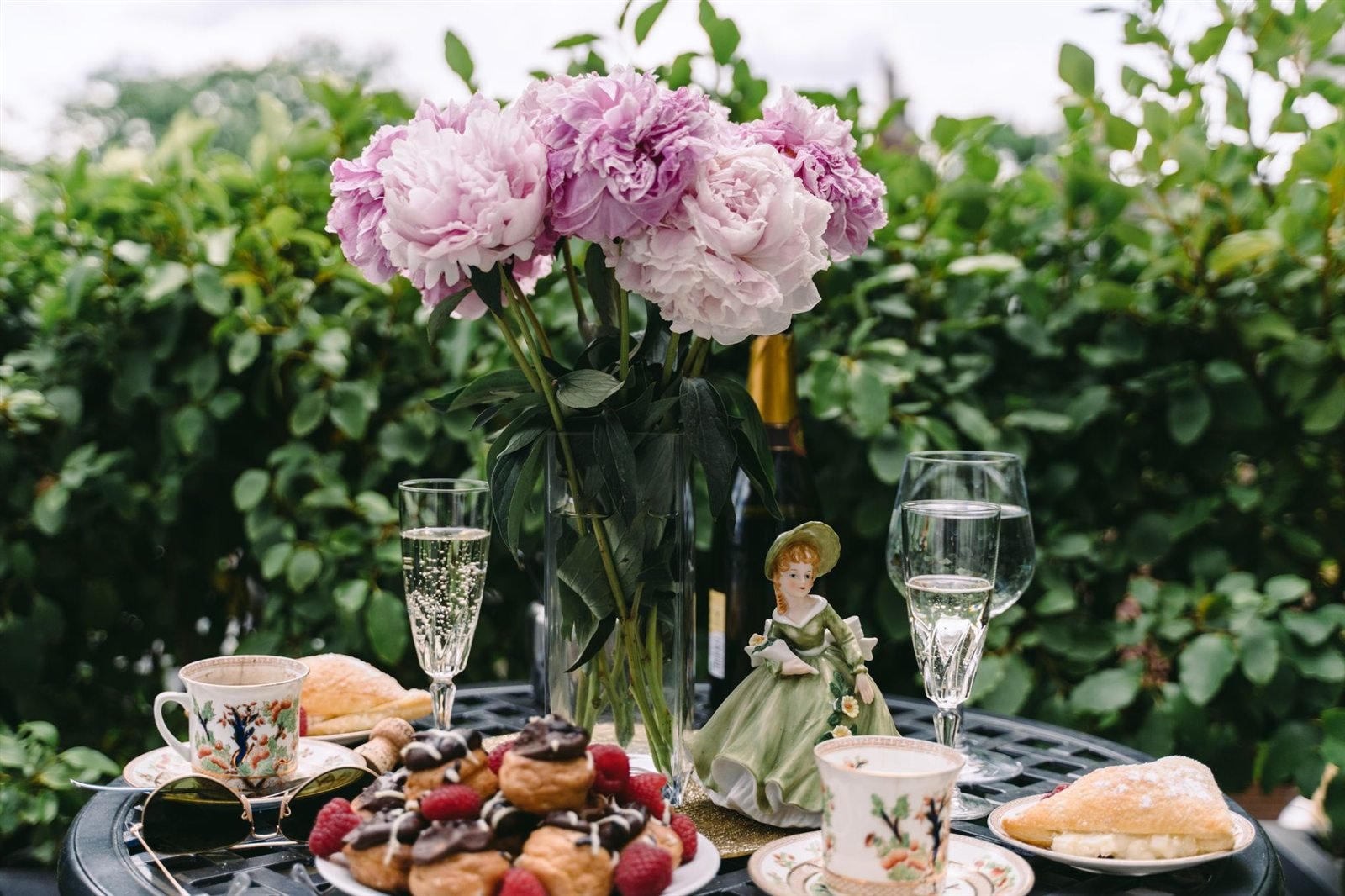
Once aboard, the journey is the event. Meals and drinks are included as specified in your itinerary, typically food with both alcoholic and non-alcoholic beverages, and a curated range of alternative or premium drinks is available to buy onboard. Service runs through the outward leg, there is usually time at the destination, and the return leg continues the hospitality.
Formats vary. Some journeys are a looping lunch or afternoon tea that returns to London without a long stop. Others deliver you to a destination such as a historic city or a country house, with time ashore before the return. Decide which you want before booking, because the two make very different days.
Where these trains go
The operator states that routes cover the UK, including Kent, Oxfordshire, Hampshire and Surrey. In practice that means a mixture of cathedral cities, coastal towns, country houses and event destinations through the year.
Two points matter more than the specific list:
- The schedule changes by season. Spring and summer bring garden and country-house destinations; autumn and winter bring festive journeys. Check the current calendar rather than an article’s list, including this one.
- Event journeys are a category of their own. Race meetings and seasonal dinners run to different rules, particularly on dress, and they book out furthest ahead.
The dress code, which catches people out
Dress is the single most common reason a first-timer on Orient Express day trips has an uncomfortable morning, so it is worth being precise.
The operator discourages casual items specifically: denim or jeans, trainers, baseball caps, collarless T-shirts and shorts. More pointedly, it reserves the right to ask guests not suitably attired to change, or it may refuse boarding. That is unusually direct language for a hospitality FAQ, and it should be read as meant.
Equally, the bar is not black tie by default. Jackets and ties are not required, and smart or formal dress is welcome. In other words, smart day wear is the target: a dress or tailored separates, or a jacket with proper shoes.
Three practical notes follow:
- Shoes are the usual slip. Trainers are named explicitly, and they are what people default to for a day out.
- Event journeys may ask for more. Race days and seasonal dinners carry their own expectations, so check the specific journey rather than the general guidance.
- Dress for sitting, not posing. You will be at a table for several hours, so comfort while seated matters more than it would at a party.
Seating, tables and travelling as a pair
Here is a detail widely misreported elsewhere, and worth getting right before you book.
Seating types are confirmed at booking, and requests are subject to availability. A table for two is therefore not guaranteed simply because you are a couple, and on some journeys pairs may share a table of four. If a private table matters to you, treat it as something to arrange explicitly at booking rather than to assume.
Families are accommodated differently: the operator states that families will be seated in a designated area of the train. That is sensible for everyone, and it is worth knowing in advance if you are bringing children or hoping to avoid them.
Timings, and why they arrive so late
One genuine quirk of these journeys surprises people who are used to airline-style confirmations.
Travel documents and the itinerary are emailed approximately five days before departure, once final timings are confirmed with Network Rail. The reason is structural: a charter train runs in the gaps of the national timetable, so its precise path is not fixed far in advance.
Plan around that rather than against it. Avoid booking a tight onward connection on the same evening, and treat any published outline timing as indicative until your documents arrive. For emergencies on the day, the operator’s reception line opens 45 minutes before the scheduled departure time.
Who these journeys suit
They suit you if the train itself is the attraction, you are marking an occasion, you like the ceremony of a long lunch, or you want a taste of heritage rail without committing several nights and a long-haul itinerary.
Skip them if you mainly want to see a destination, because the time ashore is modest and the journey is the point. Skip them too if a formal dress code would spoil your day, or if sitting at a table for several hours sounds more like an obligation than a pleasure.
Children are welcome on suitable journeys, but consider the format honestly. A long seated meal with a dress code is a particular kind of day, and the designated family seating helps without changing the fundamental shape of it.
How to choose between a day trip and an overnight journey
Many people arrive at Orient Express day trips when what they really want is the grander thing, so it is worth drawing the comparison plainly.
| Day journey | Overnight or multi-night | |
|---|---|---|
| Commitment | A single day | One or more nights, plus travel to the start |
| Sleeping aboard | No | Yes, in cabins |
| Geography | UK destinations | Continental European routes |
| Packing | One outfit | Evening wear plus day wear, in limited space |
| Best for | A celebration, or a first taste | A landmark trip in its own right |
| Booking horizon | Months, longer for events | Often a year for popular dates |
A day journey is also a sensible way to test whether you enjoy this kind of travel before committing to the larger version. If you love the carriage and the pace, the multi-night journeys will land well. If you find several hours at a table long, that is useful information cheaply bought.
For the multi-night side, see luxury train trips, best luxury train journeys for couples and the cabin comparison in luxury train cabin comparison.
Practical preparation for Orient Express day trips
A short list that makes the day run better:
- Arrive early. The lounge and welcome drink are part of the experience, not a queue to minimise.
- Confirm your seating arrangement at the time of booking rather than hoping on the day.
- Read the journey-specific notes, since event journeys differ from standard ones on dress and timing.
- Keep the evening free. Return timings depend on the network and are confirmed late.
- Bring a camera rather than relying on a phone, because the interiors reward it and the light is lovely.
- Mention occasions when booking. Operators generally handle anniversaries and birthdays well when told in advance.
If you are planning a wider luxury rail trip around it, our luxury train travel guide and scenic train routes in Europe cover the routes worth building a holiday around.
The carriages, and why they are the attraction
It is worth understanding what you are actually sitting in, because it explains the price, the pace and the dress code all at once.
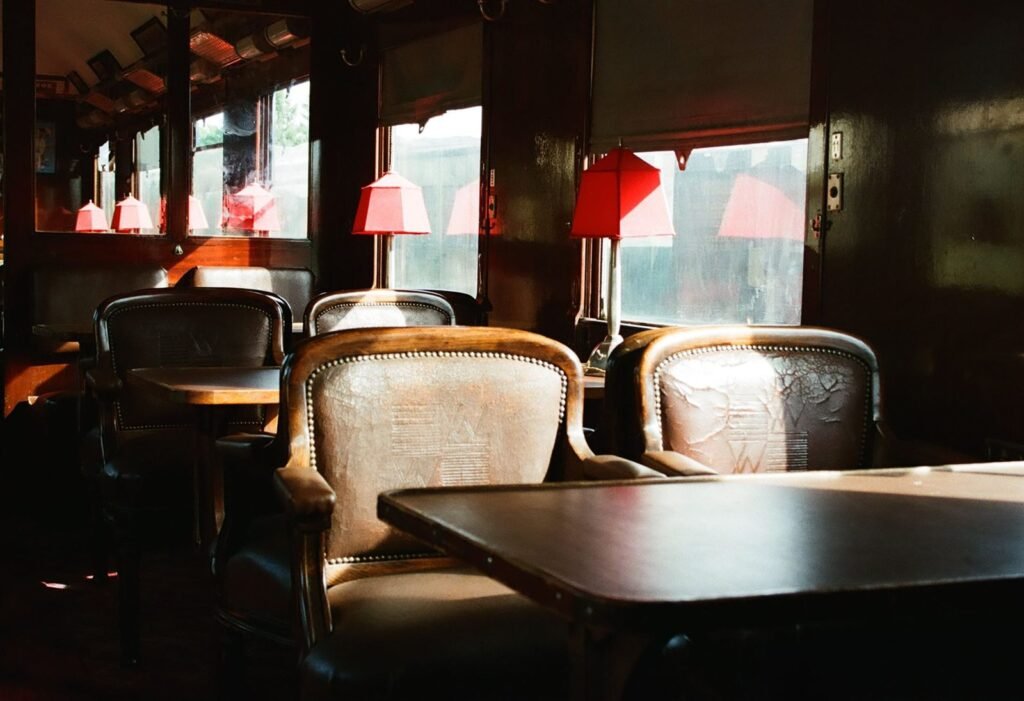
These are restored carriages from the interwar period, not modern stock dressed to look old. Marquetry panelling, fabric lampshades, brass fittings and individually upholstered armchairs were the standard of a particular era of travel, and maintaining them is specialist work. Each carriage tends to have its own name, its own history and its own décor, so the one you are allocated genuinely changes the feel of your day.
Two consequences follow for the traveller. First, the ride is not modern: older bogies and jointed track produce movement and sound that a contemporary express does not. Most people find this charming, but if you were expecting the glassy quiet of a high-speed train, adjust the expectation.
Second, space is defined by 1920s proportions. Tables are intimate, aisles are narrow, and luggage space is limited because these trains were never designed for people with suitcases. For a day journey that is no hardship, and it is part of why the format works better as a day out than as transport.
Choosing a season
The calendar shapes these journeys more than most people expect, so picking the right month matters.
- Spring brings garden and country-house destinations, with the countryside at its best through the windows.
- Summer adds event journeys, including race meetings, which carry their own dress expectations and sell out earliest.
- Autumn is arguably the sweet spot: good light, fewer crowds at destinations, and the landscape turning.
- Winter brings festive journeys and seasonal dinners, which are the most formal and the most heavily booked.
Light is a real consideration rather than a romantic one. A winter journey may spend much of the return leg in darkness, which removes the scenery from the experience entirely. If the view matters to you, favour late spring through early autumn, or choose an earlier departure.
Marking an occasion aboard
A large share of Orient Express day trips are booked for birthdays, anniversaries and proposals, and operators are well practised at handling them.
Say so at the time of booking rather than on the day. That is when seating, any celebratory additions and the crew’s awareness can all be arranged, and it costs nothing to mention. Remember that a table for two is subject to availability, so an occasion is exactly the circumstance in which to request one explicitly and early.
Manage one expectation honestly. This is a shared carriage, not a private hire, so other parties will be a few feet away throughout. For most celebrations that atmosphere is a benefit. For a proposal where privacy is essential, a private compartment, where offered, is the thing to ask about, and asking early is the only way to get one.
Accessibility and mobility
Heritage rolling stock creates genuine constraints, and they are better understood before booking than discovered at the platform.
Carriages built in the 1920s and 1930s have narrow doorways, steps up from the platform, and corridors that were not designed with wheelchairs in mind. Toilet compartments are small by modern standards. None of this makes a journey impossible, but it does make a direct conversation with the operator essential rather than optional.
Ask three specific questions when you enquire: what the step arrangement is at boarding, whether assistance is available at both the departure and destination stations, and what the toilet access is like in the carriage you would be allocated. Operators would far rather answer those in advance than improvise on the day.
If the journey you want is unavailable
Popular dates go early, and event journeys go earliest, so it is worth knowing the fallbacks before you settle for a date that does not suit you.
- Change the format rather than the date. A lunch journey and an afternoon tea journey are different products with separate availability, so one may be open when the other is not.
- Consider the regional alternative. The Northern Belle departs from a range of regional stations, which can also remove a long journey into London from your day.
- Look at midweek. Weekend departures fill first, and a midweek journey is usually quieter at the destination too.
- Take a shoulder-season date. The carriages are identical in March and in June.
- Join a waiting list where one exists, since cancellations do occur as event dates approach.
What is not a good substitute is an ordinary first-class ticket on a scheduled service. The appeal of these Orient Express day trips is the carriage and the service, and neither transfers to a modern train. If heritage rail is the draw, wait for a date rather than compromise on the train.
What the day costs you besides the fare
We do not publish fares, because they vary by journey, season and format. What is worth planning for is everything around the fare, which people routinely forget until the week before.
- Getting to the departure station. If you are travelling into London the night before, that is a hotel and a dinner on top.
- The return leg home. Because final timings arrive only days ahead, a same-evening onward journey is a gamble. Many people stay over.
- Clothing. If your wardrobe has no smart day wear, the dress code has a cost attached.
- Drinks beyond the inclusions. Premium and alternative drinks are available to purchase onboard.
- Time at the destination. Entry to a house or garden may not be included in the journey.
- Photographs. Not a cost, but worth a thought: the interiors deserve better than a phone snapshot over lunch.
Build the whole day rather than just the ticket, and the experience is far more relaxed. The most common regret reported by first-timers is not the fare; it is booking a tight connection home and spending the return leg watching the clock instead of the countryside.
A realistic timeline for the day
Journeys differ, but the rhythm is recognisable. Use this to picture it before you commit.
- Morning, before departure. Arrive at the station with time in hand and find the dedicated lounge rather than the main concourse.
- Check-in and welcome. Documents are confirmed and a welcome drink is served before boarding.
- Boarding. You are shown to your allocated carriage and table, which is where you will be for most of the day.
- The outward leg. Service begins as the train leaves, and the first hour is usually the most sociable part of the journey.
- At the destination. Depending on format, either time ashore to explore, or a continuation of the loop.
- The return leg. Service continues, the light softens, and the pace slows noticeably.
- Arrival. You are back where you started, usually in the early evening, with no luggage to collect.
The thing most first-timers under-estimate is how long they will sit. Several hours at a table is restful if you want conversation and a long meal, and it is a very long time if you do not. That single preference predicts enjoyment better than any detail of destination or menu.
How these compare with other heritage dining trains
Luxury day journeys exist elsewhere in Britain and beyond, and the differences are mostly about carriage quality and formality.
Preserved railways run dining services on heritage lines, which are charming, considerably less formal and much shorter, usually running a few miles rather than across counties. They are an excellent and far more accessible introduction, though the rolling stock and the service are a different proposition.
Scheduled scenic routes offer the landscape without the ceremony. If the view is what you want rather than the carriage, a first-class seat on a genuinely scenic line delivers more scenery per hour and far less formality. Our guide to scenic train routes in Europe covers those.
The distinction is simple. Choose a luxury charter when the train is the occasion. Choose a scenic service when the window is the occasion. Both are good days out, and conflating them is how people end up disappointed by an excellent journey that was never going to be what they had in mind.
Frequently asked questions
Does the Orient Express do day trips?
Not the famous continental train, which runs overnight and multi-night journeys with sleeping cabins. The day journeys people usually mean run on its British sister train, the British Pullman, departing primarily from London Victoria to destinations including Kent, Oxfordshire, Hampshire and Surrey.
What is the dress code for a luxury train day trip?
Smart day wear. The operator discourages denim or jeans, trainers, baseball caps, collarless T-shirts and shorts, and reserves the right to ask guests not suitably attired to change or to refuse boarding. Jackets and ties are not required, and smart or formal dress is welcome.
Will my partner and I get a table to ourselves?
Not automatically. Seating types are confirmed at booking and requests are subject to availability, so a private table is something to arrange explicitly rather than assume. Families are seated in a designated area of the train.
When will I know the exact departure and return times?
Travel documents and the itinerary are emailed approximately five days before departure, once final timings are confirmed with Network Rail. A charter train runs in the gaps of the national timetable, so plan nothing tight for that evening.
Is food and drink included?
Meals and drinks are included as specified in your itinerary, typically food with alcoholic and non-alcoholic beverages. A curated range of alternative or premium alcoholic drinks is also available to purchase onboard, so check your specific journey’s inclusions.
Is a day trip a good way to try luxury rail before a longer journey?
Yes, and it is probably the best test available. You experience the carriages, the service and the pace of a long seated meal in a single day. If you enjoy all three, a multi-night journey will suit you; if the hours at the table feel long, you have learned that cheaply.
Sources and further reading
- British Pullman operator FAQ, on dress code, seating, inclusions and itinerary timing
- Network Rail, which confirms the timings charter trains run to
- National Rail, for planning connections around a charter departure
This guide is educational. Schedules, destinations, inclusions and dress requirements are set by the operator and change by season and journey, so confirm the details for your specific date before booking.