
The quick answer on cruise cabin location
Two cabins in the same category, at the same price, can deliver very different weeks. Because the cruise cabin location decides motion, noise, walking distance and privacy, it matters more than the category name does.
The default advice is midship and low for stability, and it is sound. However, it is incomplete, because most people are more bothered by noise than by motion.
- Midship and on a lower passenger deck is the steadiest part of any hull.
- Sandwich your deck between other cabin decks, so nothing public sits above or below you.
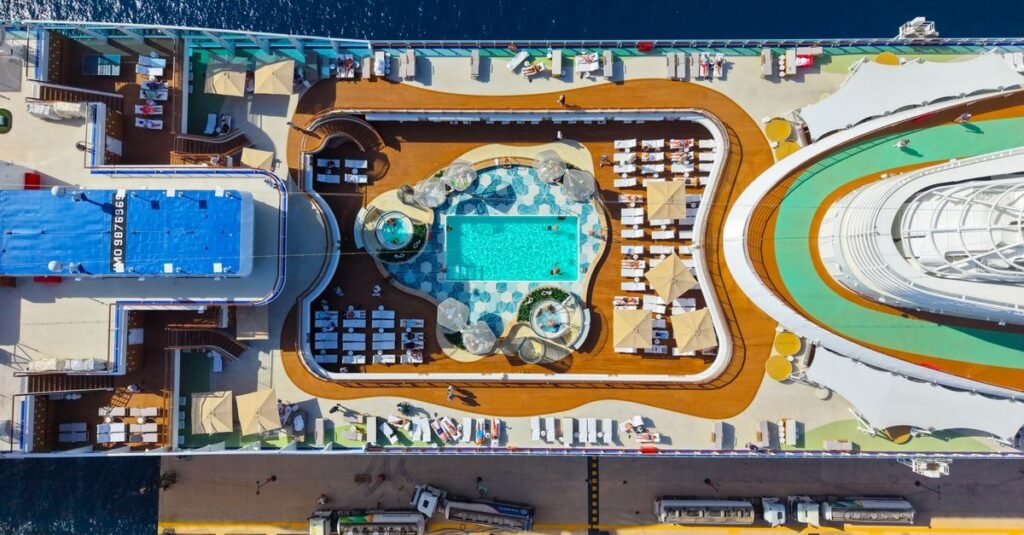
- Avoid the deck directly under the pool, the buffet and the theatre, in that order.
- Forward cabins get the most motion; aft cabins get vibration and the best views.
- Check the deck plan for connecting doors, service areas and partially obstructed views.
Affiliate disclosure: Some links in this guide are affiliate links. If you book through them, Silk Harbor Travel may earn a commission at no extra cost to you, and it does not change what we recommend.

Free download: Luxury Trip Planning Checklist
Shortlist premium stays faster with a calm, high-signal checklist.
Work through the ship’s own deck plan rather than trusting the category description. Consequently ten minutes with the plan is the highest-return part of booking a cruise.
Forward, midship or aft: the first cruise cabin location call
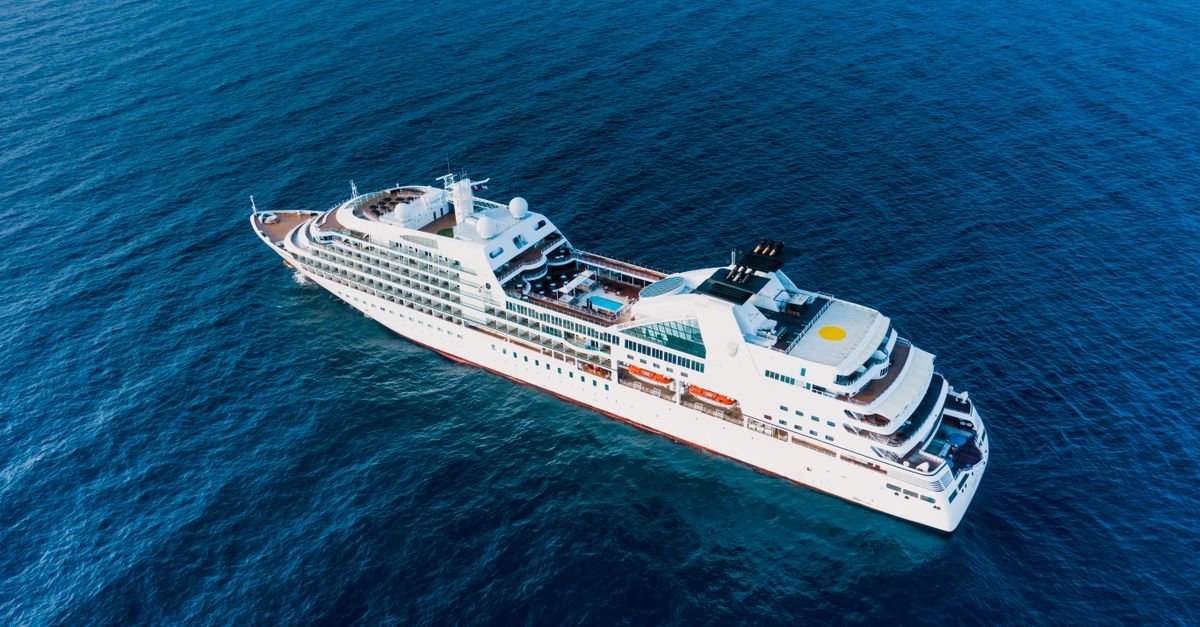
A ship pitches about its centre, so the further you sit from the middle the more vertical movement you feel. Therefore the fore-and-aft decision is mainly a motion decision.
Forward cabins feel the most pitching, and in rough water the bow rises and falls noticeably. Consequently they are the weakest choice for anyone prone to seasickness, though they are often the cheapest balcony on the ship.
Midship is the steadiest, which is why it carries a premium on most lines. Meanwhile it is also the most convenient, since lifts, stairs and the main public areas are usually clustered there.
Aft cabins are a genuine trade-off. The wake view from an aft balcony is the best on the ship and the aft corner suites are often the most desirable rooms aboard.
What you pay for that view is vibration and some noise, since the engines, thrusters and propulsion sit beneath you. So on a smooth-running modern ship it is mild, and on an older vessel it is noticeable.
Which deck to choose for your cruise cabin location
Height affects two things: motion and noise. Because the hull rolls about a point low in the ship, lower decks move less, and because public spaces sit high and low rather than in the middle, mid-height cabin decks are quieter.
Lower passenger decks are the steadiest and usually the cheapest. Consequently they are the value choice, and the main drawback is a longer walk to the pool and the buffet.
Mid-height decks sandwiched between other cabin decks are the sweet spot for most travellers. Therefore the ideal cruise cabin location is often a middling deck, midship, with cabins directly above and below.
Upper decks put you close to the pool, the buffet and the open deck, which suits people who use those constantly. Meanwhile they also sit closest to the noise sources and feel the most roll.
On very large modern ships the motion difference between decks is smaller than it used to be, thanks to stabilisers and sheer size. So on a small expedition ship or a river vessel the calculus changes again.
Comparing cabin positions on a ship
The table sets out what each position gives you and what it costs you, which is the comparison the deck plan does not make for you.
| Position | Motion | Noise risk | Typical price | Best for |
|---|---|---|---|---|
| Midship, low deck | Lowest | Low | Moderate | Seasickness, value |
| Midship, mid deck | Low | Lowest | Higher | Most travellers |
| Midship, high deck | Moderate | Higher | Higher | Pool and buffet users |
| Forward, any deck | Highest | Low to moderate | Lower | Value, strong sea legs |
| Aft, mid or high deck | Moderate | Vibration | Varies, suites high | Wake views, wide balconies |
| Under the pool deck | Moderate | Highest | Standard | Nobody, if avoidable |
| Above the theatre or club | Varies | High at night | Standard | Late sleepers only |
A framework for picking a cruise cabin location
Three checks in order will eliminate almost every bad cabin on a deck plan. The framework below runs through them.
Noise: the cruise cabin location problem nobody mentions
Motion gets discussed and noise gets ignored, which is the wrong way round for most travellers. Because sound travels downward and through structure, what sits above your ceiling matters enormously.
The pool deck is the worst neighbour. Loungers are dragged across the deck early in the morning, and the sound carries straight into the cabins beneath.
The buffet is the second worst, for the same reason plus trolleys and kitchen activity from before dawn. Consequently a cabin under the main buffet is a guaranteed early start.
The theatre, the nightclub and the atrium produce evening noise rather than morning noise. Therefore whether that bothers you depends entirely on your own bedtime.
Also check for the less obvious sources: lift shafts, crew access doors, laundry and pantry rooms, and the anchor and thruster machinery in the far forward cabins. Meanwhile an anchor-adjacent cabin is memorable on a port-intensive itinerary.
Reading a deck plan properly
The deck plan is the only document that tells you the truth, and it rewards a careful read. Because the online booking flow hides it, you often have to go looking.
Open your deck and the decks immediately above and below it, side by side. Consequently you can see at a glance whether a public space sits over your bed.
Look for blank spaces and unlabelled rectangles in the cabin blocks, which are usually service areas, pantries or crew access. Therefore a cabin adjoining one of those is worth skipping.
Identify connecting cabins, usually marked with a small symbol. Meanwhile a connecting door is a thin partition, and it transmits conversation and television from next door.
Check for cabins with a sloped or indented hull line, which sometimes gives an unusually large balcony and sometimes gives an odd shape. So the irregular cabins on a plan are worth investigating rather than avoiding.
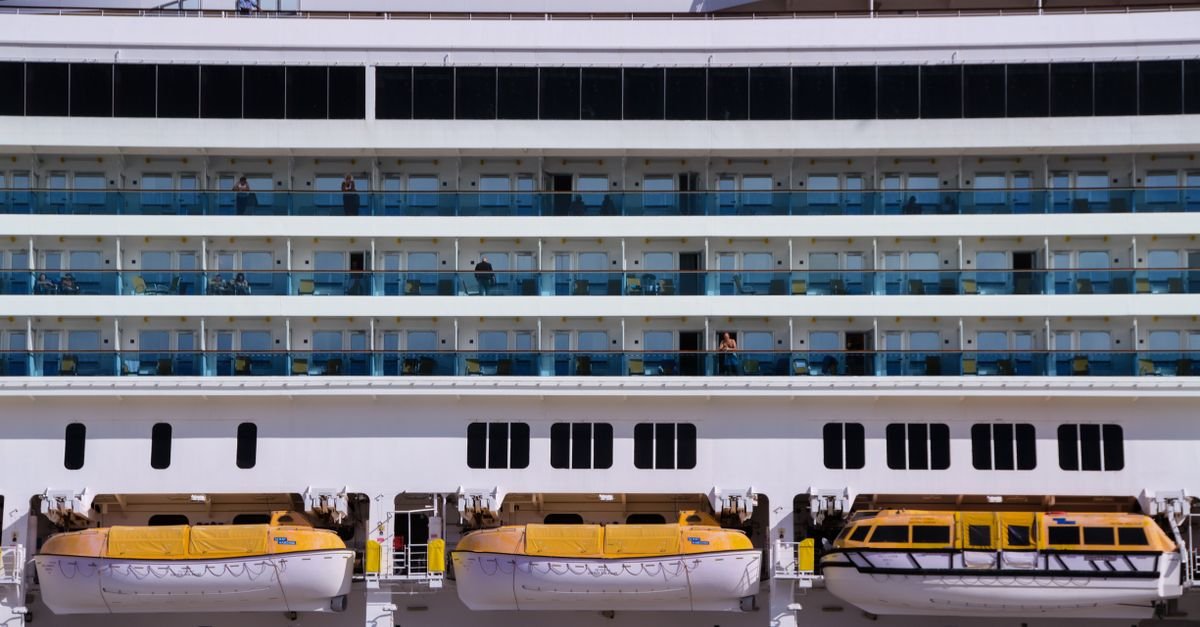
Finally, note the obstructed-view designations. Lifeboats, davits and structural overhangs block some balconies and windows, and lines disclose this unevenly.
Cabin categories and whether to upgrade
Category and position are separate decisions, and conflating them is a common error. Because a well-placed lower category often beats a badly placed higher one, position deserves the first look.
Inside cabins are the cheapest and are genuinely dark, which some travellers love and others find oppressive. Consequently they suit port-intensive itineraries where you are barely in the room.
Oceanview cabins add a window and usually sit on lower decks, which makes them a quiet, steady, sensible choice. Meanwhile they lack the private outdoor space that changes how a sea day feels.
Balcony cabins are the upgrade most people notice most. For scenic cruising, through fjords, along a glacier coast or past an island chain, a balcony is the difference between watching and queuing to watch.
Suites buy space, better bathrooms and, increasingly, access to private restaurants, lounges and sun decks. Therefore on lines where suite guests get a separate restaurant, the upgrade buys a different cruise rather than a bigger room.
Guaranteed-category bookings, where the line assigns the cabin later, save money and surrender exactly the control this article is about. So take the saving only if you genuinely do not mind where you end up.
Matching cabin to itinerary
The right cruise cabin location depends on where the ship is going, which is the part generic advice misses.
On open-ocean crossings and in known rough water, motion dominates and midship-low wins clearly. Consequently a transatlantic or a Drake Passage sailing is not the place to save money on a forward cabin.
On scenic coastal itineraries, the balcony earns its premium. Therefore Alaska, Norway, the Chilean fjords and the Mediterranean coast all argue for outdoor space.
On port-intensive itineraries you are ashore most days and asleep most nights aboard. Meanwhile that makes an inside cabin on a quiet deck a genuinely rational choice.
On a river cruise the ship barely moves, so motion is irrelevant and the question becomes which side faces the scenery and whether your deck has a walk-out window. So on rivers, ask about the side as well as the deck.
On expedition ships, the cabin matters less because the ship is small and you spend the day in zodiacs. Consequently budget saved on the cabin is better spent on the itinerary.
Which side of the ship your cruise cabin location faces
Port and starboard rarely matter, with specific exceptions worth knowing. Because ships turn around and dock either way, the view usually evens out over a week.
Coastal itineraries that run in one direction are the exception. On an Alaska northbound sailing or a one-way coastal route, one side faces land substantially more often.
Sun exposure follows the same logic. Therefore in the northern hemisphere a south-facing balcony gets more sun, which is welcome in Norway and punishing in the Caribbean.
River cruises are where side genuinely matters, since the vessel sits close to both banks and the scenery is often one-sided. Meanwhile the better-known castle and vineyard stretches favour a particular bank.
For most ocean cruising, spend your attention on deck and fore-aft position instead. So side is a tiebreaker rather than a decision.
Accessibility, families and solo cabins
Accessible cabins are limited in number and go early, and they are usually positioned near lifts for good reason. Consequently if you need one, book as far ahead as possible and confirm the specific features rather than relying on the category label.
Families should look at connecting cabins deliberately rather than avoiding them, because a connecting pair is far better than two separate rooms along a corridor. Therefore the symbol that is a drawback for couples is an advantage here.
Some ships have dedicated family cabins with bunks, curtained alcoves or separate sleeping areas. Meanwhile these cluster in specific parts of the ship, which may not be the quietest.
Solo travellers should look for dedicated single cabins, which an increasing number of ships now include. So where they exist, they avoid the single supplement entirely, though they tend to be small and oddly positioned.
For anyone with mobility considerations, walking distance to the lifts and the dining room matters more than motion does. Consequently midship near a lift bank is the practical answer.
Ship size changes the answer
Advice that works on a large modern ship can mislead on a small one, so the right cruise cabin location depends partly on the vessel. Because stabilisers and sheer mass damp motion, bigger hulls move less.
On the largest ships, the practical difference between a mid deck and a high deck is modest in ordinary conditions. Consequently noise becomes the dominant factor and the deck plan matters more than the deck number.
On mid-sized premium ships the traditional guidance holds well, with a clear gradient from forward to midship and from high to low. Therefore midship-low remains the reliable default here.
On small luxury and expedition ships, everything is felt more. Meanwhile these vessels are also quieter, with fewer public-space neighbours, so the choice collapses almost entirely to motion.
On river vessels the hull barely moves at all. So the question becomes which bank the scenery sits on and whether your deck has a full window rather than a high porthole.
Older ships of any size transmit more vibration and more machinery noise than recent builds. Consequently on an older vessel the usual warnings about aft cabins and lower forward cabins carry more weight.
Promenade, atrium and other unusual cabins
Several ship classes include cabin types that do not fit the normal categories, and they are worth understanding before you dismiss or choose them.
Promenade-view cabins look inward onto an interior shopping or dining street rather than out to sea. Because they have a window without an ocean view, they are priced between inside and oceanview.
They suit people who like watching activity and dislike total darkness. Consequently they are a poor choice for light sleepers, since the promenade stays lit and occupied late.
Atrium and courtyard-facing cabins follow the same logic on ships built around a central open space. Therefore the trade is natural light against evening noise.
Some ships have cabins with an obstructed ocean view behind lifeboats, sold at a discount and labelled unevenly. Meanwhile a partial obstruction on a lower deck can still give plenty of light, so these are sometimes genuine value.
Finally, a handful of cabins on most ships are simply odd shapes, created by the hull line or by structure. So irregular cabins occasionally come with a disproportionately large balcony, which is the best quiet bargain on a deck plan.
Guarantees, upgrades and cabin assignment
How you book affects how much control you keep over cruise cabin location, and the cheapest fare usually surrenders it.
A guaranteed-category booking means you buy a category and the line assigns the specific cabin later, sometimes close to sailing. Because the line fills awkward cabins this way, you are statistically more likely to land under the pool deck than you would be choosing yourself.
The saving is real and so is the risk. Therefore take it only when position genuinely does not matter to you, or when every cabin in the category is acceptable.
Paid upgrade offers and bid-for-upgrade programmes are a separate matter. Consequently accepting one can move you to a better category in a worse position, so check the cabin number against the deck plan before confirming.
Free upgrade offers from the line follow the same caution. Meanwhile an unsolicited move from a well-placed balcony to a badly placed one is worth declining, and lines generally allow that.
Finally, note that booking early usually gives the widest choice of position within a category. So on a sailing where cabin placement matters, early booking buys selection rather than price.
Practical cabin checks on embarkation day
A few minutes on the first afternoon can catch problems while there is still time to move, since ships often have a handful of unsold cabins.
Stand in the cabin and listen. Because the ship is quiet at the pier, obvious structural noise, air-handling hum or a humming lift shaft is easier to notice then than at sea.
Check the balcony for overlooking from the deck above, which is common where decks step back. Consequently a balcony that is private in the photographs sometimes is not in reality.
Open the connecting door latch, if there is one, and confirm it is locked on your side. Therefore a quick check avoids a surprise later in the week.
Test the air conditioning and the bathroom extraction, and report anything faulty immediately rather than on day three. Meanwhile early reports get fixed and late ones get apologies.
If the cruise cabin location is genuinely unworkable, ask guest services politely on the first afternoon. So the answer is often no, and it is occasionally yes, and it is never yes on the last sea day.
Booking a cruise cabin location without the common errors
First, open the deck plan and look at your deck plus the decks above and below before you choose anything.
Second, decide whether motion or noise is your priority, since they pull in slightly different directions, and remember that noise affects more people.
Third, rule out cabins under the pool deck and the buffet, and above the theatre or club, before comparing anything else.
Fourth, check for connecting doors, service areas and obstructed views on your shortlist specifically.
Fifth, match the category to the itinerary: balcony for scenic cruising, inside for port-intensive, midship-low for rough water.
Finally, confirm the cabin number on your booking confirmation rather than assuming the category is enough, and avoid guaranteed-category bookings if position matters to you.
Mistakes that cost people a good week
- Booking a bargain balcony that turns out to sit directly beneath the pool deck.
- Choosing forward for the price on a known rough-water crossing.
- Taking a guaranteed-category rate and then minding where the cabin lands.
- Missing the connecting-door symbol and sharing a thin partition with strangers.
- Booking an aft balcony on an older ship and being surprised by vibration.
- Paying for an oceanview and finding a lifeboat in front of the window.
- Choosing an inside cabin for a scenic fjord itinerary to save money.
Frequently asked questions about cruise cabin location
Which part of a cruise ship has the least movement?
Midship on a lower passenger deck, because a hull pitches about its centre and rolls about a point low in the ship. Forward cabins feel the most pitching, and upper decks feel the most roll. On very large modern ships with stabilisers the difference between decks is smaller than it once was.
What is the best deck to choose on a cruise ship?
A mid-height cabin deck with other cabin decks directly above and below it, which keeps you away from both the pool-deck noise above and the public spaces below. Lower decks are steadier and usually cheaper, and upper decks trade quiet for convenience.
Should I avoid cabins under the pool deck?
Yes, if you can. Loungers are moved across the deck early in the morning and the sound carries straight down into the cabins beneath. The main buffet is the next worst neighbour for the same reason, with trolleys and kitchen activity starting before dawn.
Are aft cabins worth it?
For the view, often yes, because an aft balcony looking over the wake is the best outlook on most ships and aft corner suites are among the most sought-after rooms. The trade-off is vibration and some machinery noise, which is mild on a modern ship and noticeable on an older one.
Does which side of the ship matter?
Rarely on ocean cruises, because ships turn and dock both ways so the views even out. It matters on one-way coastal routes where one side faces land more often, on river cruises where the scenery is frequently one-sided, and for sun exposure on a balcony.
Is a balcony worth the extra cost?
It depends on the itinerary. For scenic cruising past fjords, glaciers or coastlines, private outdoor space genuinely changes the experience. On a port-intensive itinerary where you are ashore all day and asleep aboard, a well-placed inside or oceanview cabin is a reasonable choice.
Planning the nights either side of your cruise
A night near the port before you sail removes the single biggest risk in this article, which is a delayed flight meeting a ship that will not wait. Compare hotels near the cruise port on Trip.com
How this guide was researched
This guide is built from the physical principles that govern how ships move, pitching about the centre and rolling about a low point in the hull, combined with reading published deck plans to identify where noise sources sit relative to cabin blocks.
The noise guidance comes from the consistent pattern across deck plans rather than from any single ship: pool decks, buffets, theatres, nightclubs, lift shafts and service areas occupy predictable positions, and cabins immediately adjacent to them share predictable problems. Specific cabin numbers are not given, because they differ by vessel even within a class.
No prices, percentages or line-specific policies appear here, because cabin pricing, category structures and suite benefits change frequently and vary by line and sailing. Verify the deck plan for your specific ship, and confirm obstructed-view designations and accessible-cabin features with the line before booking.
Useful official references: CDC cruise ship travel guidance, the CDC Vessel Sanitation Program for inspection reports, US Department of Transportation information on cruise passenger rights, and US State Department cruise travel guidance.
Planning the rest of the trip? See our guides to travel insurance for expensive trips, Europe river cruises and Caribbean islands to visit.
Last updated .