
The quick answer on Fiji resorts
Fiji is more than 300 islands, but luxury travel concentrates in four areas. Because each area has a different access route and cost profile, the group you pick matters more than the brand you book.
The Mamanuca islands are closest to the airport and the easiest to reach. The Yasawas are further north, wilder and reached by a longer boat. Meanwhile the Coral Coast and Denarau sit on the main island, and the remote outliers such as Taveuni and Vanua Levu require a domestic flight.
- Choose the island group first. Therefore flight and boat time, which shapes arrival day, is settled early.
- Fiji resorts are built around bures, traditional thatched bungalows, rather than hotel blocks.
- Meal plans matter here more than in most destinations, because island resorts have no alternatives.
- The dry season runs May to October, which is also the cooler and busier half of the year.
- Fijian service culture is a genuine differentiator rather than a marketing line.
Affiliate disclosure: Some links in this guide are affiliate links. If you book through them, Silk Harbor Travel may earn a commission at no extra cost to you, and it does not change what we recommend.

Free download: Luxury Trip Planning Checklist
Shortlist premium stays faster with a calm, high-signal checklist.
Choosing your island group
This decision does most of the work. Because transfers vary from a twenty-minute boat to a two-hour flight plus a boat, the group you choose determines how much of your holiday is spent travelling.
Denarau, on the main island near Nadi, is the most convenient. It is a short drive from the airport, has golf, marinas and a shopping village, and the larger family resorts cluster here. However, the beach is grey-sand and the water is not the postcard turquoise.
The Mamanucas sit a short catamaran or seaplane hop west of Nadi. Consequently they combine proper island scenery with easy access, which is why they hold the greatest concentration of luxury properties. Water clarity is good and reef is close.
The Yasawas run further north in a chain. They are quieter, more dramatic and less developed, although reaching them takes a longer boat or a seaplane. Therefore they suit travellers prioritising seclusion over convenience.
The Coral Coast, on Viti Levu’s southern shore, is reachable by road. It offers rainforest, villages and genuine Fijian culture alongside resorts, so it suits travellers who want more than a beach.
Finally the outer islands, including Taveuni, Vanua Levu and the Lau group, require a domestic flight. In practice these are for divers, honeymooners wanting total quiet, and repeat visitors.
Comparing the island groups
The table compares access and character rather than star ratings, because the top-end hardware is broadly comparable across groups.
| Area | Getting there from Nadi | Character | Best for | Watch out for |
|---|---|---|---|---|
| Denarau | 20-minute drive | Convenient, golf, marina, large resorts | Families, short stays, stopovers | Grey sand, limited snorkelling |
| Mamanucas | 30-90 minute boat or seaplane | Classic island scenery, close reef | Most luxury travellers, honeymoons | Busier channels near Nadi |
| Yasawas | 2-4 hour boat or seaplane | Wilder, quieter, dramatic | Seclusion, longer stays | Long transfers eat two half-days |
| Coral Coast | 1-2 hour drive | Rainforest, villages, culture | Culture and activity-led trips | Reef further out, mixed beaches |
| Outer islands | Domestic flight plus transfer | Remote, dive-focused | Divers, total quiet | Highest transfer cost and time |
A framework for choosing Fiji resorts
Work from how much travel you will tolerate on arrival day, then from what you want the days to contain. The framework below gets to a shortlist in two questions.
Bures and room categories
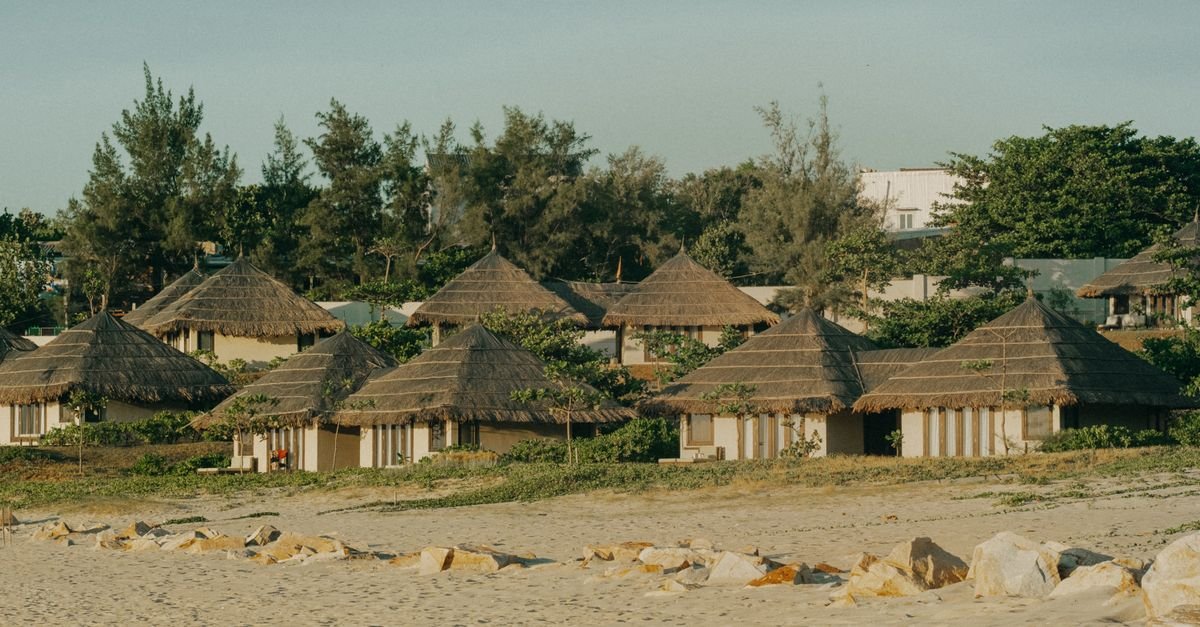
Fijian luxury resorts are built around the bure, a detached thatched bungalow. Because they are standalone rather than stacked, privacy is better than at an equivalently priced hotel elsewhere.
Garden bures sit back from the water. Consequently they are the best value, and on a small island the walk to the beach is short anyway. Therefore they suit travellers who are out all day.
Beachfront bures open directly onto sand. In practice this is the category most people picture, and it carries a clear premium. Oceanfront with a plunge pool sits above it again.
Overwater bures exist at a handful of properties, although Fiji has far fewer than the Maldives or Bora Bora because the lagoon depths and reef structures suit them less. So if overwater is the priority, check availability early rather than assuming.
Finally, two-bedroom and residence categories are common and genuinely useful. Because Fiji attracts multi-generational family groups, several resorts build large villas with separate wings and private pools.
Meal plans at Fiji resorts
This is the single most important practical detail, and it is where budgets go wrong. Because most island resorts sit alone on their island, there is literally nowhere else to eat.
Therefore full board or all-inclusive is usually the sensible choice on the Mamanucas, Yasawas and outer islands. Half board leaves you buying lunch at resort prices every day, which rarely saves money.
On Denarau and the Coral Coast the calculation reverses. Because restaurants and shops are reachable, half board or room-only often works better, and the food is more interesting for it.
Read what the plan includes carefully. Some cover every outlet, while others restrict you to the main restaurant and charge for the speciality venue. Consequently the same words mean quite different value between properties.
Drinks are the other variable. Fijian all-inclusive packages differ widely in what they pour, so check whether the plan covers cocktails and wine or only soft drinks and local beer.
What a stay at Fiji resorts costs
Treat all figures as planning bands. Fiji spans a wider range than Bora Bora, because the main island and Denarau offer genuinely mid-market options alongside the top tier.
At the luxury end, private-island properties and the best Mamanuca resorts sit comparably to high-end Maldivian resorts. Meanwhile the Coral Coast and Denarau come in materially lower for similar room quality.
Transfers are the line people forget. A seaplane to a Yasawa resort is a significant per-person cost each way, and a shared catamaran is cheaper but slower. Therefore price the transfer alongside the room rather than afterwards.
Meal plans then dominate the remaining budget. On a remote island, a week of full board for a family is a substantial figure, so include it in the comparison from the start.
Finally, Fiji levies a departure tax and various service and environmental charges. Consequently the quoted nightly rate is rarely the final figure, and asking for an all-in quote avoids a surprise at checkout.
When to go
The dry season runs roughly May to October. Humidity drops, rainfall is lower and skies are clearer, so this is the most reliable window. However, it is also cooler, busier and more expensive.
The wet season runs November to April. Temperatures are higher, rain arrives in heavy afternoon bursts, and the cyclone risk window sits within it. Rates soften noticeably, and resorts are quieter.
Therefore the shoulder weeks in May and October often give the best balance. Water is warm, rainfall is moderate and rates sit below peak.
Water temperature stays swimmable year-round, which is worth knowing if you are comparing with destinations that have a genuine cool season. Meanwhile visibility for diving is generally best from July to September.
If you travel in the wet season, read the resort’s cyclone and cancellation terms rather than assuming flexibility, and check that your insurance covers weather disruption rather than excluding it.
Diving and snorkelling
Fiji has a serious reputation among divers, and the soft coral is the reason. The Somosomo Strait off Taveuni is the best known site, although the Mamanucas and Bligh Water also deliver excellent diving.
For snorkellers the question is simpler: can you get in from the beach, or do you need a boat? Several island resorts have house reef within swimming distance, which transforms a lazy afternoon. Others require a short boat trip every time.
Consequently this is worth asking directly before booking. Resort websites often show reef photographs taken on boat excursions rather than from the shoreline.
Manta rays visit the Yasawas seasonally, broadly May to October, and swimming with them is well managed. Meanwhile shark diving in Beqa Lagoon is a specialist draw for certified divers.
Gear quality varies, so frequent snorkellers often bring their own mask. In practice that small step improves the week more than most paid upgrades.
Families at Fiji resorts
Fiji is among the strongest family destinations in the Pacific, and that is partly cultural. Fijian staff are genuinely warm with children, and several resorts build their proposition around it.
Kids’ clubs at the larger Denarau and Coral Coast properties are well developed, often with long opening hours and included activities. Consequently parents get real time off rather than a token hour.
Nanny services are widely available and comparatively affordable, which is unusual at this level. Therefore families who want evening meals alone can usually arrange it easily.
Room structure helps too. Because bures are detached and two-bedroom villas common, families avoid the single-room compromise that affects overwater-focused destinations.
However, a handful of the most design-led island properties are adults-only. So confirm the policy before booking rather than assuming a luxury resort welcomes children.
Culture, villages and what makes Fiji different
This is what separates Fiji from a purely scenic beach destination. Because the islands are populated and traditions are living rather than performed, cultural contact is straightforward.
A village visit, when arranged respectfully through the resort, is genuinely interesting rather than staged. Protocol matters: modest dress, a small gift of kava for the chief, and removing hats and shoes where asked.
The meke, a traditional dance, and the lovo, an earth-oven feast, appear at most resorts weekly. Although they are tourist-facing, they are performed by local staff and communities rather than imported troupes.
Kava ceremonies are common and worth joining once. The drink is earthy and mildly numbing rather than intoxicating in small quantities.
Finally, Fijian hospitality is the thing repeat visitors cite most. It is not a marketing line: staff turnover is low, families work at the same resorts for decades, and the warmth is noticeably different from the polished anonymity of some luxury chains.
Booking without the common errors
First, book the island group that matches your tolerance for transfers. A Yasawa resort is wonderful and will consume most of two days getting there and back.
Second, confirm the meal plan covers what you will actually eat, including the speciality restaurants and the drinks you drink. On a remote island this is the difference between a predictable bill and a shock.
Third, ask whether snorkelling is possible from the beach. For many travellers that single fact determines how much they enjoy the stay.
Fourth, price the transfer explicitly, per person, each way. Seaplanes and helicopters are spectacular and expensive, while shared catamarans are cheap and slow.
Finally, verify entry requirements and health guidance through official channels for your nationality, and check your insurance covers both weather disruption and any diving you plan to do, since dive cover is frequently an add-on.
Spas and wellness at Fiji resorts
Spa provision across Fiji resorts leans toward open-sided treatment bures set in gardens or over water. Because the climate is warm year-round, those open pavilions work rather than feeling exposed.
Treatment menus draw on local ingredients: coconut oil, dilo, sandalwood and volcanic clay. Although the branding varies between properties, the underlying techniques are broadly similar, so the differentiator is usually the setting.
Prices sit at international luxury levels. Therefore booking deliberately pays, and many resorts discount arrival-day or departure-day treatments when the schedule is quiet. Asking at reservation rather than at the spa desk is the practical move.
Several properties include yoga, guided reef walks and meditation sessions at no extra charge. In practice those free inclusions deliver more across a week than one expensive signature treatment.
Finally, the traditional Fijian bobo massage appears on most menus and is worth trying once. It is firmer than a standard Swedish massage, so mention your pressure preference clearly.
Honeymoons at Fiji resorts
Fiji competes directly with Bora Bora and the Maldives for honeymoons, and it usually wins on price and on warmth of service rather than on overwater hardware.
Honeymoon packages typically bundle a room upgrade subject to availability, a private beach dinner, a couples treatment and sparkling wine. The genuinely valuable items are the upgrade and the dinner, since both cost substantially when bought separately.
By contrast, the decorative extras are thin. Petals, cake and a fruit basket are pleasant but rarely justify a package premium alone. Therefore price the package against the same elements booked individually.
Adults-only properties exist across the Mamanucas and outer islands, and several island resorts are small enough that the atmosphere is effectively adult regardless of policy. Consequently couples wanting quiet have real choice here.
Finally, many couples split the stay: two or three nights on the main island to recover from the flight, then four or five on an island. In practice that structure beats a single base for most long-haul honeymoons.
Weather, cancellations and insurance
Fiji sits in the South Pacific cyclone belt, and the season broadly runs November to April. Direct strikes on any given resort are uncommon, although flight and boat disruption is more frequent.
Read the cancellation terms rather than assuming goodwill. Some Fiji resorts offer date changes for weather disruption while others hold deposits firmly, and the difference only becomes visible when you need it.
Insurance matters more than on a mainland trip. Because the outer islands are remote, medical evacuation is expensive, so check the evacuation ceiling rather than the headline cover figure.
Divers should confirm that diving is covered rather than excluded, and that the depth limits match what they plan to do. Many standard policies exclude diving below a shallow threshold entirely.
Flight disruption is the other common issue, since most long-haul routings have limited frequency. Therefore building a buffer night on the main island at the start protects the island transfer that follows.
Combining Fiji with other destinations
Because Fiji sits on the Pacific routing between North America, Australia and New Zealand, it works unusually well as a stopover rather than only as a destination in itself.
Travellers flying between Los Angeles and Auckland or Sydney can break the journey here for little or no additional airfare. Consequently a three or four night stay on Denarau or in the Mamanucas is a common and efficient addition.
For longer trips, pairing Fiji with New Zealand works well. The contrast between tropical islands and South Island landscapes gives genuine variety, and the flights are short.
Australians and New Zealanders often treat Fiji as a short-haul beach week, which is why school holiday periods are the busiest and most expensive. Therefore travellers from further afield benefit from avoiding those windows.
Finally, some itineraries combine Fiji with Vanuatu, Samoa or the Cook Islands. However, inter-Pacific flights are infrequent and expensive, so those combinations need careful scheduling rather than casual addition.
Getting to Fiji and internal connections
Nadi International Airport on Viti Levu handles almost all long-haul arrivals, with Suva serving mainly regional traffic. Because Nadi sits on the western side of the main island, it is conveniently placed for Denarau and the Mamanucas.
Direct long-haul services arrive from Australia, New Zealand, the United States west coast, and several Asian hubs. Consequently flight times from Europe are long and involve at least one connection, which is why European visitors typically stay longer.
Internal connections split three ways. Shared catamarans run scheduled services from Denarau marina to the Mamanucas and Yasawas, and they are inexpensive but slow. Seaplanes and helicopters serve the same islands in a fraction of the time at a considerable premium.
Domestic flights on small aircraft connect Nadi to Taveuni, Savusavu, Labasa and Kadavu. Therefore outer-island stays involve a flight plus a road or boat leg, and baggage allowances on those aircraft are tighter than on the international sector.
One timing note worth planning around: many catamaran and seaplane services do not operate after dark. So a late international arrival often means an unavoidable night on the main island before transferring out.
Mistakes that cost people the trip they wanted
- Booking a Yasawa resort for a five-night trip and losing two days to boat transfers.
- Choosing half board on a remote island where there is nowhere else to eat lunch.
- Expecting turquoise water at Denarau, which has grey sand and a distant reef.
- Assuming overwater bures are as common in Fiji as in the Maldives.
- Travelling in February without checking the cyclone cancellation terms.
- Booking an adults-only island property for a family holiday.
Frequently asked questions about Fiji resorts
Which island group should I choose in Fiji?
The Mamanucas suit most luxury travellers because they combine genuine island scenery with a short transfer from Nadi. Denarau is best for short stays and families wanting convenience, the Yasawas for seclusion, the Coral Coast for culture and rainforest, and the outer islands for diving.
Is all-inclusive worth it in Fiji?
On an island resort, usually yes, because there is nowhere else to eat and lunch at resort prices every day adds up quickly. On Denarau or the Coral Coast it is often not worth it, since restaurants are reachable and the food outside is more varied.
When is the best time to visit Fiji?
May to October is the dry season and the most reliable weather, although it is busier and pricier. November to April is hotter and wetter with cyclone risk. The shoulder weeks in May and October usually balance warm water, moderate rain and lower rates best.
Does Fiji have overwater bungalows?
A few resorts do, but far fewer than the Maldives or Bora Bora, because Fijian lagoon depths and reef structures suit them less. If an overwater room is essential, check availability early, as the handful that exist book out well ahead.
How long should I stay in Fiji?
Seven nights works well for one island, and that is the minimum worth doing if you are flying long-haul. Ten nights or more justifies splitting between two island groups, which is a common and rewarding structure.
Is Fiji good for families?
It is one of the best in the Pacific. Detached bures and two-bedroom villas avoid the single-room problem, kids’ clubs at the larger resorts are well developed, nanny services are affordable, and Fijian staff are genuinely good with children. Check for adults-only policies before booking.
Booking Fiji: where to start
Once you have settled which area and room category you want, the next step is seeing what is actually open on your dates, because the categories described above sell out first. Compare Fiji resorts and room categories on Trip.com
For the excursions mentioned above, booking the well-known ones ahead is usually worth it in high season. Browse Fiji tours and day trips on Viator
Because the transfer times above are long and the arrival is the part of the trip most often mishandled, arranging the car before you fly is worth more than it costs. Pre-book a private airport transfer with Welcome Pickups
How this guide was researched
This guide draws on resort-published room categories, meal-plan structures and transfer arrangements across the luxury properties in each Fijian island group, compared against each other to identify where they genuinely differ rather than where the marketing differs.
Seasonal rainfall, cyclone timing and dive visibility windows come from published climate and operator-season guidance rather than individual resort marketing, since properties naturally describe their own months favourably. Entry, health and insurance questions were checked against official sources.
Cost comparisons appear as relative bands rather than quoted figures, because rates move sharply with island group, season and meal plan. Nothing here claims first-hand stays at every property named, and where that distinction matters the text states what the source is.
Useful official references: CDC destination health notices for pre-trip guidance, US State Department international travel pages for entry and safety information, and FTC travel guidance on verifying an operator before paying a deposit.
Comparing Pacific and Indian Ocean options? See our guides to Bora Bora resorts, family island vacations and the best islands to visit.
Last updated .