
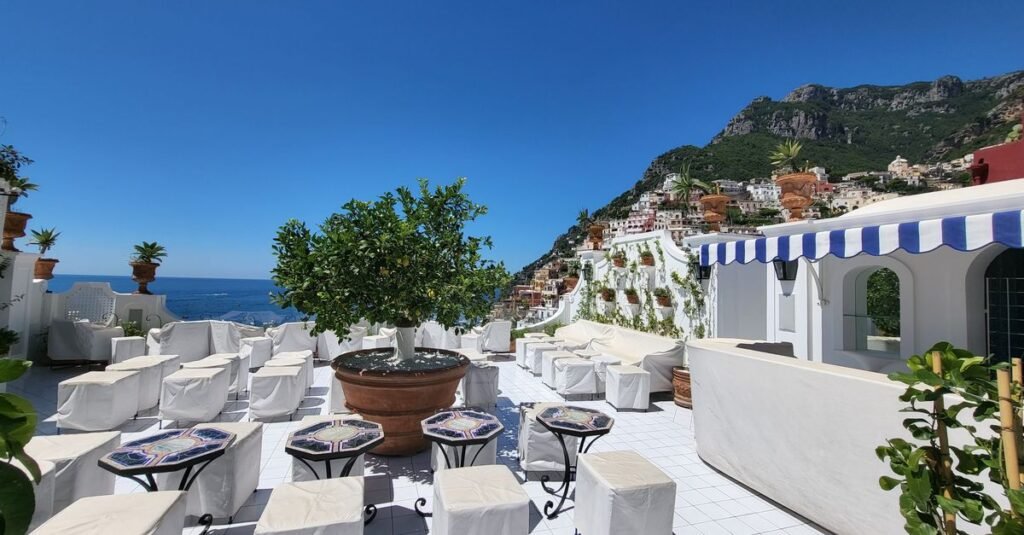
The quick answer on Amalfi Coast hotels
The Amalfi Coast is a vertical place. Because the towns are built into cliffs, the single biggest practical question is how many steps sit between your room and the sea. That one factor shapes a stay more than star rating or brand.
Six towns carry almost all the luxury accommodation: Positano, Amalfi, Ravello, Praiano, Conca dei Marini and Sorrento just around the headland. Each has a different balance of access, atmosphere and price.
- Choose the town first. Therefore the hotel shortlist narrows to a handful immediately.
- Amalfi Coast hotels sell sea views, and the view premium is usually the largest line on the rate card.
- Steps and shuttles matter enormously. Ask for numbers, not adjectives.
- The season is short and intense. May, June, September and early October are the sweet spots.
- Driving is genuinely difficult. Most travellers are better served by transfers, ferries and the bus.
Affiliate disclosure: Some links in this guide are affiliate links. If you book through them, Silk Harbor Travel may earn a commission at no extra cost to you, and it does not change what we recommend.

Free download: Luxury Trip Planning Checklist
Shortlist premium stays faster with a calm, high-signal checklist.
Choosing your town
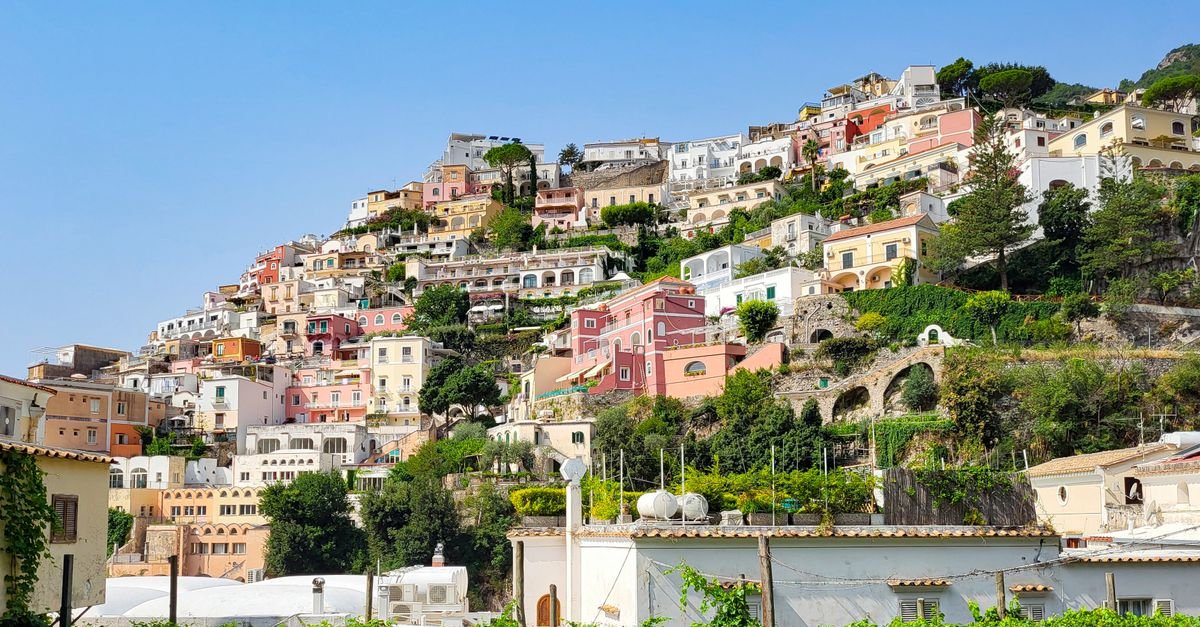
Positano is the icon. Pastel houses stack down a ravine to a pebble beach, and the setting is as good as the photographs suggest. However, it is also the steepest and the busiest, and almost every walk ends in a climb.
Amalfi town itself is flatter and more workaday, with a magnificent cathedral and a working harbour. Consequently it suits travellers who want the coast without the vertical effort, and it is the ferry hub for the whole coastline.
Ravello sits high above the sea rather than on it. Because it is up on the ridge, it is cooler, quieter and far more peaceful, with the two famous villa gardens. The trade-off is that the sea is a drive or a long descent away.
Praiano and Conca dei Marini are the quiet middle. Fewer shops, fewer crowds, excellent sunsets, and several of the coast’s best hotels. Therefore they suit repeat visitors and anyone prioritising calm over bustle.
Sorrento is not technically on the Amalfi Coast but functions as its gateway. It is flatter, better connected by rail to Naples and Pompeii, and generally cheaper. Meanwhile the sea access is via lifts and platforms rather than real beaches.
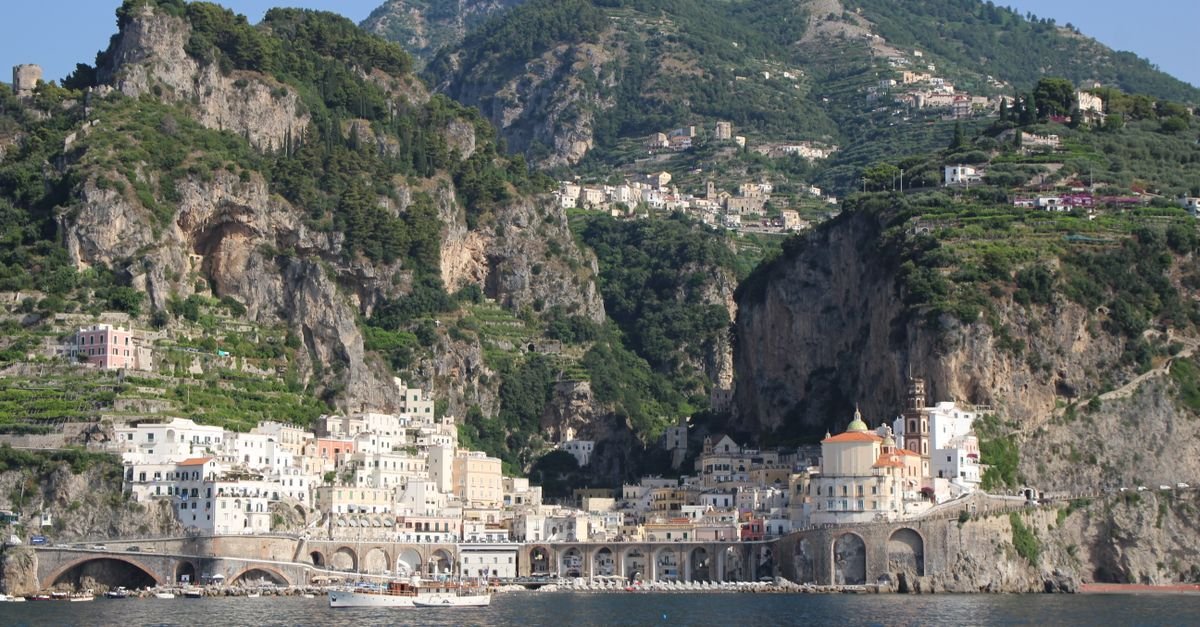
Comparing the towns before you book
The table compares the things that actually differ in daily use rather than hotel classifications.
| Town | Terrain | Sea access | Atmosphere | Best for |
|---|---|---|---|---|
| Positano | Very steep | Pebble beach at the bottom | Iconic, busy, glamorous | First visits, photography |
| Amalfi | Mostly flat centre | Beach and harbour in town | Working town, cathedral | Easy walking, ferry hub |
| Ravello | High ridge, flat on top | Drive or shuttle down | Serene, cultural, cooler | Gardens, music, quiet |
| Praiano | Steep but low-rise | Small coves, hotel platforms | Quiet, residential | Calm stays, sunsets |
| Conca dei Marini | Steep, scattered | Tiny coves and platforms | Very quiet, secluded | Seclusion, honeymoons |
| Sorrento | Flat clifftop | Lifts to platforms | Larger, well connected | Day trips, better value |
A framework for choosing Amalfi Coast hotels
Start with mobility and pace rather than with a hotel list. The framework below reaches a town in one question and a room decision in a second.
Sea views and what the premium actually buys
This is where most of the money goes, and the categories are less standardised than elsewhere. Because every hotel is built into a slope, the view language varies wildly between properties.
A full sea view means the sea fills the outlook from the room or terrace. Partial or lateral sea view means you see it at an angle, often past a wall or planting. Meanwhile garden, village or mountain view means no sea at all, and those rooms can be excellent value.
The honest question is how much time you will spend on the terrace. Travellers who breakfast outside every morning and return at sunset get real value from the view. Those out all day exploring often do not.
Therefore ask for the room number and check it rather than trusting the category name. Reputable hotels will tell you which rooms have the best outlook within a grade, and the difference inside one category can be larger than the difference between categories.
One further detail: many Amalfi Coast hotels have rooms carved into the rock on lower levels. These are cool and quiet, although some have small windows. Consequently they suit light sleepers and summer travellers more than they suit anyone wanting daylight.
Steps, lifts and shuttles at Amalfi Coast hotels
This deserves its own section because it is the single most common source of disappointment. Amalfi Coast hotels describe themselves as “a few steps from the centre” when they mean a hundred and eighty of them.
Several properties solve it properly. Some have private lifts cut through the cliff down to a sea platform. Others run a shuttle on request to the town centre and the beach, which transforms a steep location.
So ask three specific questions. How many steps from the road to reception? How many from reception to the room? And is there a lift or shuttle, running on request or on a fixed timetable?
Travellers with mobility limits, heavy luggage or young children should strongly favour Amalfi town, Sorrento or a Ravello property on the flat ridge. In practice those three remove most of the vertical problem.
Finally, note that porters are standard at the better hotels, and luggage is usually carried for you. That helps on arrival but does not help on the daily walk back up from dinner.
What a stay on the Amalfi Coast costs
Treat these as planning bands rather than quotes. The coast is expensive in high season and sharply cheaper at the margins, so dates move the number more than hotel choice does.
At the top end, the landmark cliffside hotels in Positano and Ravello sit among the highest-priced in Italy during July and August. Meanwhile the same properties in late April or late October can be a different proposition entirely.
Breakfast is usually included at this level and is often substantial. Dinner at hotel restaurants is priced accordingly, although the coast has excellent independent restaurants, so half board is rarely the right choice here.
Transfers are a real line item. A private car from Naples airport to Positano takes around ninety minutes and is priced as a premium transfer. Consequently the ferry from Sorrento or Salerno is often both cheaper and more pleasant in season.
Finally, budget for boat trips. A half-day private boat to the grottoes or along to Capri is the activity almost everyone remembers, and it is the best discretionary spend on the coast.
When to book Amalfi Coast hotels
The season runs roughly April to October, and the shape of it matters. Many hotels and restaurants close entirely from November to March, so a winter visit means a much quieter and more limited coast.
May, June and September are widely considered the best months. Temperatures are comfortable, the sea is warm enough by June, and the crowds are manageable. Therefore these are also the months that sell out first.
July and August are hot, extremely busy and the most expensive. Although the atmosphere is lively, the roads are congested and the beaches are full. Travellers who dislike crowds should avoid them.
Late April and early October are the value windows. Rates drop noticeably, the light is beautiful, and most things are open. However, sea swimming is marginal in April and the weather is less certain at both ends.
One timing note that catches people out: Easter and Italian public holidays create sharp local spikes in both price and crowding, independent of the broader season.
Getting around without a car
This is the practical advice most worth taking. The coast road is narrow, winding and busy, parking is scarce and expensive, and driving it in August is genuinely stressful.
Ferries are the pleasant option. In season they connect Sorrento, Positano, Amalfi, Salerno and Capri frequently, and the views from the water are better than from the road. Consequently many travellers use them as the primary transport.
The SITA bus runs the full coast road cheaply and reliably, although it is crowded in summer and the hairpins are not for everyone. Meanwhile private drivers are expensive per journey but remove all friction.
Trains serve Sorrento and Salerno but not the coast villages, so rail works for arriving rather than for moving around. Therefore a common structure is train to Sorrento or Salerno, then ferry along the coast.
If you do hire a car, note that several towns restrict traffic in the centre, and hotel parking is frequently charged per night and limited. So confirm parking before booking rather than on arrival.
Food and restaurants
The coast eats extremely well, and leaving your hotel for dinner is part of the point. Because the towns are compact, good restaurants are usually within walking distance even from cliffside hotels.
The local specialities are worth seeking out. Scialatielli ai frutti di mare, anchovies from Cetara, buffalo mozzarella from the plains inland, and the lemons that grow on every terrace and become limoncello and delizia al limone.
Reservations are essential in season, often several days ahead for the better places. Consequently asking the hotel concierge to book on your behalf is genuinely useful rather than a formality.
Prices in the tourist centres of Positano and Amalfi run high. Meanwhile walking ten minutes uphill, or eating in Praiano or Minori, usually improves both the price and the cooking.
Finally, lunch at a beach club is a particular Amalfi experience. Sun bed hire plus a long seafood lunch is expensive but genuinely memorable, and it is how locals spend a summer Sunday.
Day trips worth making
Capri is the obvious one, and it is best done early. Taking the first ferry beats the day-trip crowds, and the island is a different and more polished world than the mainland coast.
Pompeii and Herculaneum are both within reach, with Herculaneum smaller, better preserved and far less crowded. Therefore travellers short on time often prefer it to Pompeii.
The Path of the Gods is the coast’s famous walk, running high above Praiano and Positano. It takes a few hours, the views are exceptional, and it is best attempted early in the day or outside high summer.
Ravello’s Villa Rufolo and Villa Cimbrone are worth a half-day even if you are staying elsewhere. The Cimbrone terrace is the most photographed viewpoint on the coast for good reason.
Finally, a private boat along the coast or to the Li Galli islets gives you the perspective the road cannot. In practice most travellers rate it their best single day.
Who the Amalfi Coast suits, and who it does not
It suits travellers who want scenery, food and atmosphere in equal measure, and who are happy to walk. It suits couples, honeymooners and anyone drawn to a landscape rather than a resort facility list.
It also suits culture-led trips well. Because Naples, Pompeii, Herculaneum and Paestum are all reachable, the coast works as a base for more than beach time.
It suits less well anyone wanting long sandy beaches, since the beaches here are small, pebbled and often paid-access. It also suits poorly travellers with significant mobility limits, unless they choose Amalfi town, Sorrento or flat Ravello carefully.
Families with very young children find the steps and lack of shallow beaches hard work. Consequently many prefer Sorrento as a base, using ferries for day trips along the coast.
Finally, it is not a destination for travellers who want value. The coast knows what it is worth, and in season it charges accordingly.
Booking Amalfi Coast hotels without the common errors
First, pick the town that matches your appetite for steps. That decision prevents the most common complaint by a wide margin.
Second, confirm the view category in concrete terms and ask which room numbers within that grade have the best outlook. The variation inside a category is often larger than the price gap between categories.
Third, ask about the lift or shuttle explicitly, including whether it runs on request or on a timetable, and whether it operates late enough to bring you back from dinner.
Fourth, avoid half board. The coast’s restaurants are a genuine attraction, and tying yourself to the hotel dining room wastes them.
Finally, book shoulder-season dates early rather than late. May, June, September and early October are both the best months and the first to sell out, so the good rooms go months ahead.
Pools, platforms and swimming at Amalfi Coast hotels
Because real beaches are scarce, the way a hotel handles swimming matters more here than in most destinations. Three arrangements are common, and they are not equivalent.
Some Amalfi Coast hotels have a terrace pool, often cantilevered over the drop with a sea outlook. Consequently these are the most comfortable option and the easiest with children, although the pools are frequently small.
Others have a sea platform reached by a private lift or a staircase through the cliff. In practice these deliver the better experience, since you swim in the Tyrrhenian itself from a sunbathing deck. However, access depends on sea conditions, so rough days close them.
A third group has neither and instead offers access to a nearby beach club, typically with a shuttle and reserved loungers. Therefore check whether that access is included in the rate or charged daily, since the difference over a week is material.
Ask specifically which arrangement applies, and whether the pool is heated. Shoulder-season travellers in April, May and October find an unheated terrace pool noticeably cold, while the sea is warmer than people expect in late September.
Spas and wellness
Spa provision varies more on this coast than in resort destinations, largely because the historic buildings constrain what can be built. Several Amalfi Coast hotels occupy former monasteries and villas where space is genuinely limited.
The larger properties in Sorrento and Ravello have full spas with thermal circuits and multiple treatment rooms. Meanwhile the smaller cliffside hotels in Positano and Praiano often have one or two treatment rooms and little else.
Therefore if a spa day matters to you, confirm the facility list rather than assuming. A hotel can legitimately advertise a spa that is a single room with a massage table.
Treatment menus lean Mediterranean, with citrus, olive oil and marine ingredients. Prices sit at Italian luxury levels, which is lower than comparable island resorts but still substantial.
Several hotels also offer treatments on a private terrace or by the pool at a supplement. Consequently that is often the better choice on this coast, since the setting is the point rather than the facility.
Weddings and celebrations on the coast
The Amalfi Coast is among Europe’s most popular destination-wedding settings, and Ravello in particular has built an industry around it. Because of that, several hotels handle the logistics routinely.
Ravello’s villa gardens and clifftop terraces are the classic venues, with Positano and Conca dei Marini close behind. However, demand means the best dates book twelve to eighteen months ahead, so flexibility is limited.
Practical considerations are season and access. Summer heat is intense for a midday ceremony, while the shoulder months offer better light and comfort. Meanwhile guest mobility matters enormously on a coast built from staircases.
Noise restrictions apply in several towns, so late-night music is often limited. Therefore confirm the curfew before planning a reception around a band.
Finally, documentation for a legal marriage in Italy is specific and takes time. Verify current requirements through official channels rather than relying on a venue summary, since the rules differ by nationality and do change.
Mistakes that cost people the trip they wanted
- Booking Positano for a mobility-limited traveller without checking the step count.
- Paying a full sea-view premium then spending every day out on boats and in other towns.
- Hiring a car in August and losing hours to the coast road and parking.
- Taking half board and missing the independent restaurants that make the coast.
- Visiting Capri on a midday ferry and meeting the entire day-trip crowd at once.
- Assuming the beaches are sandy and free, when most are pebbled and paid-access.
Frequently asked questions about Amalfi Coast hotels
Which Amalfi Coast town should I stay in?
Positano for the iconic setting if you can manage steps, Amalfi town for flat walking and ferry connections, Ravello for quiet and cooler air above the sea, Praiano or Conca dei Marini for seclusion, and Sorrento for better value and easier day trips to Pompeii and Naples.
Is a sea view worth the extra cost at Amalfi Coast hotels?
It depends how much time you will spend on your terrace. If you breakfast outside and return for sunset, the premium is usually worth it. If you are out exploring all day, a garden or village view room at the same hotel is often much better value.
When is the best time to visit the Amalfi Coast?
May, June and September give the best balance of weather, warm sea and manageable crowds. Late April and early October are cheaper and quieter but less certain for swimming. July and August are hot, crowded and the most expensive, while many hotels close from November to March.
Do I need a car on the Amalfi Coast?
No, and most travellers are better off without one. The coast road is narrow and congested, parking is scarce and expensive, and ferries plus the SITA bus cover the towns well. Private drivers are the comfortable alternative for specific journeys.
How many nights should I spend on the Amalfi Coast?
Four to five nights suits most first visits. That allows two unhurried days in your base town, one boat day, and one day trip to Capri, Pompeii or Ravello. A week works well if you plan to split between two towns.
Are the beaches sandy?
Mostly not. The beaches are small and pebbled, and many are operated as paid beach clubs with sun bed hire. Several hotels have their own sea platforms reached by lift instead, which is often more comfortable than the public beaches in season.
Booking the Amalfi Coast: where to start
Once you have settled which area and room category you want, the next step is seeing what is actually open on your dates, because the categories described above sell out first. Compare Amalfi Coast resorts and room categories on Trip.com
For the excursions mentioned above, booking the well-known ones ahead is usually worth it in high season. Browse Amalfi Coast tours and day trips on Viator
How this guide was researched
This guide draws on hotel-published room categories, view classifications, transfer arrangements and access details across the luxury properties in Positano, Amalfi, Ravello, Praiano, Conca dei Marini and Sorrento, compared against each other to find where the terminology hides real differences.
Seasonal opening patterns, ferry operation and road conditions come from published transport and tourism information rather than individual hotel marketing, since properties describe their own access favourably. Entry and travel-document questions were checked against official sources.
Cost figures appear as relative bands rather than quoted rates, because pricing on this coast moves sharply with month and view category. Nothing here claims first-hand stays at every property named, and where that distinction matters the text states what the source is.
Useful official references: the European Commission visa policy pages for Schengen entry rules, US State Department international travel pages for entry and safety information, CDC destination health notices for pre-trip guidance, and the UNESCO World Heritage list, which includes the Amalfi Coast itself.
Planning more of Italy? See our guides to choosing a city base, luxury resorts in Europe and European sleeper trains for arriving overland.
Last updated .