
The quick answer on luxury resorts in Bora Bora
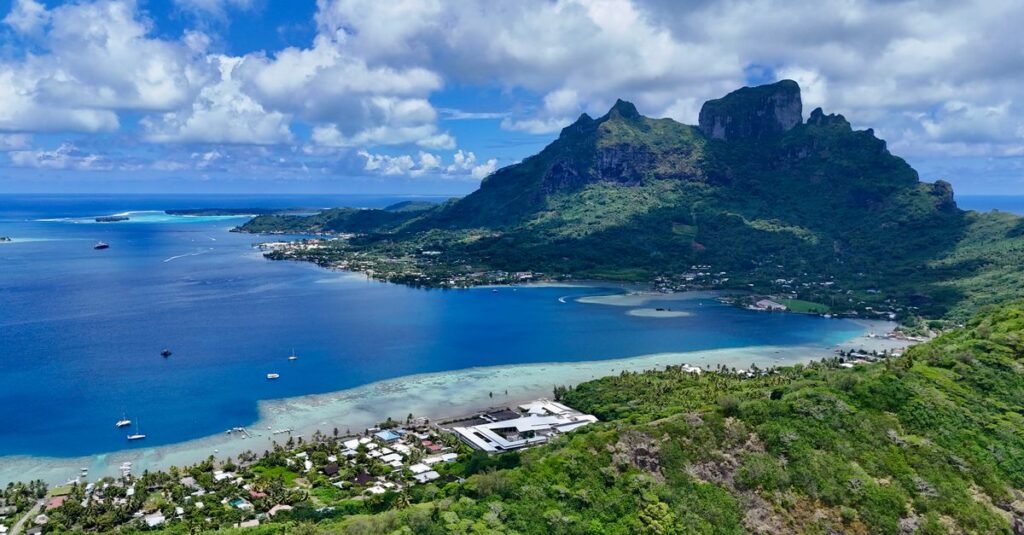
Bora Bora is a small island inside a large lagoon. Most luxury resorts sit not on the island itself but on the motu, the thin coral islets that ring the lagoon. That geography decides almost everything about your stay.
A motu resort gives you calm water, a reef on your doorstep, and a boat ride to anywhere else. A main-island resort gives you shops, restaurants and a rental car, but a less postcard lagoon. Neither is better. They are different holidays at similar prices.
- Overwater villas cost more for the photograph than the comfort. Beach villas are often larger and quieter.
- Which way your villa faces matters. A Mount Otemanu sightline carries a real premium.
- Nearly every resort is reached by boat from the airport motu, so transfer times and schedules shape arrival day.
- Food is expensive and largely resort-bound on the motu. Budget for it honestly or stay main-island.
- May to October is the dry season. It is also the busy, pricier half of the year.
Affiliate disclosure: Some links in this guide are affiliate links. If you book through them, Silk Harbor Travel may earn a commission at no extra cost to you, and it does not change what we recommend.

Free download: Luxury Trip Planning Checklist
Shortlist premium stays faster with a calm, high-signal checklist.
Motu resorts versus main-island resorts
The motu resorts are the ones you have seen in photographs. They face inward across the lagoon toward the volcanic peak, and the water around them is shallow, clear and protected. Snorkelling starts at your deck ladder.
The trade-off is isolation. Leaving means a scheduled boat, so a spontaneous dinner in Vaitape is not really available. You will eat at the resort most nights, and resort dining in French Polynesia is costly.
Main-island properties sit near Matira Beach or around the coast road. You can walk to a snack stand, hire a car, and eat at a roulotte for a fraction of resort prices. The lagoon in front of you is still beautiful, though usually without that inward view of the mountain.
So choose by appetite for independence. Travellers who want everything handled pick a motu. Travellers who like wandering pick the main island and visit a motu by day trip.
Villa categories at Bora Bora luxury resorts, and what each is worth
Resorts here use a consistent ladder, and understanding it saves real money. The categories sound similar but differ sharply in value.
| Villa type | What you get | Worth paying for when | Skip when |
|---|---|---|---|
| Garden or beach bungalow | Land-based, often largest floor area, direct sand access | You want space, shade and quiet | The overwater photo is the point of the trip |
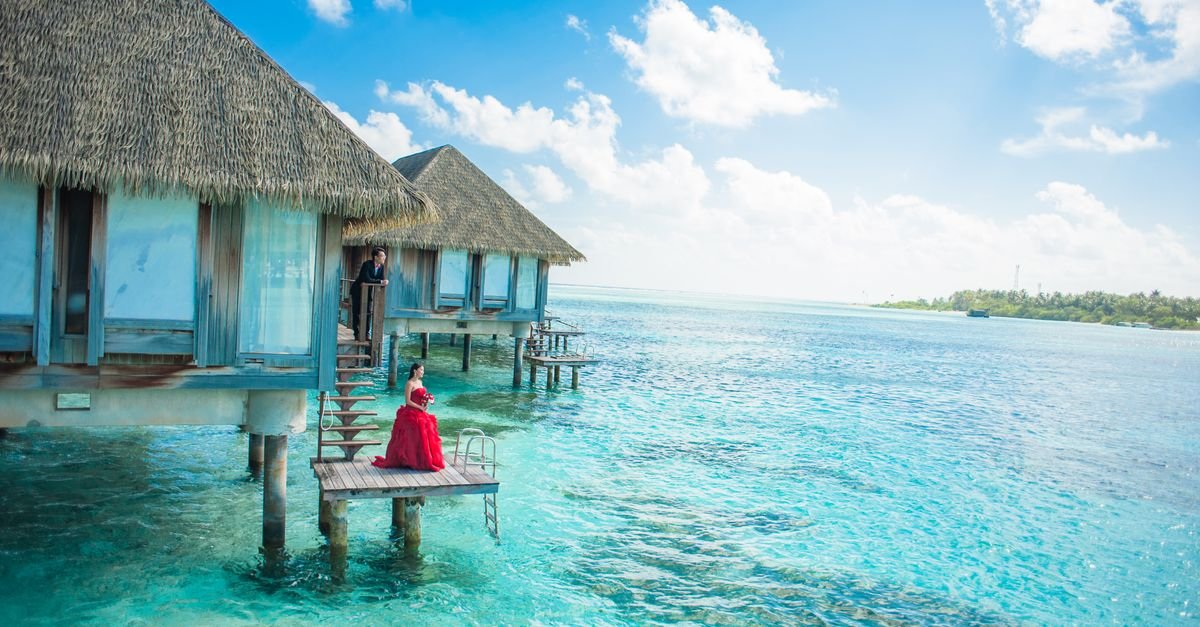
| Overwater, lagoon side | Deck steps into shallow water, glass floor panel common | First visit, honeymoon, swimming from the deck | You need two real bedrooms |
| Overwater, Otemanu view | Same villa, sightline to the peak | The view is the memory you are buying | Budget is tight; the villa itself is identical |
| Overwater, end of pontoon | Furthest from shore, most privacy, longest walk | Privacy matters more than convenience | Mobility is limited or you have small children |
| Two-bedroom or pool villa | Private pool, separate rooms, larger deck | Families or two couples sharing | A couple travelling alone; the pool goes unused |
One practical note on glass floors. They are charming for an evening and then mostly forgotten. Do not pay a premium for one. Pay instead for position: end of pontoon for privacy, or shoreward for an easy walk.
A framework for choosing your Bora Bora resort
Most people start by comparing resort brands. That is the least useful place to start, because the brands converge on similar hardware. Start with the three questions below instead.
Getting there, and why transfers shape your first day
Flights arrive at Motu Mute, an airport on its own islet in the lagoon. Nobody lands on the main island. From there every resort collects guests by boat.
Motu resorts run private launches, usually meeting the flight. Transfer time ranges from a few minutes to around half an hour depending on which motu you are heading for. Main-island resorts use the public catamaran into Vaitape, then a short road transfer.
Two things follow from this. First, your arrival time is really your flight time plus a boat, so a late arrival can mean checking in after dark. Second, transfers are charged per person and are rarely trivial, so confirm the round-trip cost when you book rather than treating it as incidental.
Most travellers reach Bora Bora via Papeete on Tahiti. Adding a night there on the way in protects the connection, and it is cheaper than the alternative of missing it.
What a stay actually costs
Treat all figures as planning bands rather than quotes. Nightly rates for an overwater villa at an international luxury brand sit high even in shoulder season. Beach and garden categories come in meaningfully lower at the same resort.
The costs people underestimate are not the room. They are the boat transfers, the meal plan, and drinks. Food is imported, so resort dining carries island pricing on top of luxury pricing.
Half-board can genuinely save money on a motu, because you are eating at the resort regardless. On the main island it usually does not, because cheaper options are a walk away. Work out which situation you are in before adding a plan.
Finally, build in one or two paid excursions. A lagoon tour with a snorkelling stop is the single activity almost everyone is glad they booked.
When to go
The dry season runs roughly May to October. Humidity drops, rain is brief, and the lagoon is at its clearest. That is also when rates and occupancy peak.
November to April is the wet season. Rain arrives in heavy short bursts rather than all-day drizzle, and temperatures stay warm. Rates soften, and resorts are quieter.
Shoulder weeks in May and late October often give the best balance. You get dry-season conditions without peak pricing, though availability in the better villa categories tightens early.
Check cyclone-season guidance for the South Pacific before committing to a wet-season trip, and read your resort’s weather and cancellation terms rather than assuming flexibility.
Who Bora Bora luxury resorts suit, and who they do not
They suit couples celebrating something, travellers who want water at the centre of the holiday, and anyone happy to spend most of a week in one beautiful place.
They also suit snorkellers particularly well. The lagoon is warm, calm and shallow, so the barrier to getting in the water is almost nothing.
They suit less well anyone wanting varied nightlife, museums, or a different restaurant each evening. The island is small and quiet by design. Families with several children should check occupancy limits carefully, because many overwater villas sleep only two or three.
Travellers with limited mobility should ask specifically about pontoon length and step-free routes. Overwater villas involve a long boardwalk and sometimes steps down to the deck.
Booking without the common errors
Book the villa position, not just the category. Two villas with the same name and price can differ enormously in privacy and view, so ask the resort which numbers face the mountain and which sit at the pontoon end.
Confirm transfer cost and schedule in writing. Confirm whether the quoted rate includes the local accommodation tax. Check the resort’s policy on moving villas mid-stay if you want a split between beach and overwater, which is a popular and often cheaper structure.
Verify passport validity and entry requirements for French Polynesia against official guidance for your nationality, because the rules differ from mainland France in some respects. Travel insurance matters more here than usual, since medical evacuation from a remote island is expensive.
Finally, decide the one thing that would disappoint you most if missed. If it is the mountain view, pay for the sightline. If it is swimming from the deck, pay for lagoon-side position. If it is space, take the beach villa and spend the difference on excursions.
Dining at Bora Bora resorts
Food is the cost most people misjudge. Almost everything is imported, so a resort kitchen is working against freight prices before it adds a margin. Expect main courses at international fine-dining levels even for simple dishes.
Most Bora Bora resorts run two or three outlets: a main restaurant, a casual poolside or beachside grill, and a reservation-only fine-dining room. Breakfast is usually included or available as a package, and it is generally the best value meal of the day.
On a motu you will eat in-house nearly every night, because leaving means a boat. That is where a half-board plan earns its keep. Price the plan against the a la carte menu for two or three dinners before committing, since plans often exclude the premium restaurant.
Main-island guests have genuine alternatives. Roulottes, the food trucks near Vaitape, serve substantial meals at a fraction of resort prices, and there are independent restaurants along the coast road. That difference alone can change a week’s budget materially.
One small tip that applies across Bora Bora resorts: ask whether in-villa dining carries a service supplement. A romantic deck dinner is a highlight, but it is frequently priced well above the same dishes in the restaurant.
Excursions worth booking
The lagoon is the attraction, so the excursions that matter happen on the water. A half-day lagoon tour with snorkelling stops is the one almost nobody regrets. Operators run shared boats and private charters, and the private option buys timing rather than a different route.
Snorkelling with rays and reef sharks in the shallows is the signature experience. It is tightly managed and suitable for nervous swimmers, because the water is waist-deep in places.
Beyond that, consider a 4×4 island tour for the wartime gun emplacements and viewpoints, a sunset cruise if you are not already facing west, and a motu picnic if your resort offers one. Diving is excellent outside the reef for certified divers.
Book the lagoon tour early in your stay rather than late. If weather moves it, you still have days left to reschedule. Travellers who leave it to the final morning are the ones who miss it entirely.
Service and what the premium actually buys
Staff-to-guest ratios here are high, and that is the clearest thing the price delivers. Most Bora Bora resorts remember your name by day two and your drink order shortly after.
What the premium does not buy is variety. These are small properties on small islets, so the same faces serve you all week, and the facilities list stays short by city-hotel standards. That intimacy is the product, not a limitation.
Butler or host service appears at the upper categories. In practice it means a single point of contact for reservations, excursions and transfers rather than someone unpacking your suitcase. It is genuinely useful on a motu, where everything must be arranged rather than walked to.
Spa facilities are usually strong, and several properties have overwater treatment rooms with glass floors. Treatments are expensive even relative to the room rate, so book one deliberately rather than on impulse.
Bora Bora resorts compared with the Maldives
Travellers choosing between the two are really choosing between a mountain and a horizon. Bora Bora has a volcanic peak at its centre, so the view from an overwater villa includes dramatic land. Maldivian atolls are flat, so the view is sea and sky.
Journey length is the other practical difference. The Maldives is reachable in one long-haul hop from Europe or the Middle East. French Polynesia requires a Pacific crossing plus a domestic flight, which makes short trips impractical.
On price, the two overlap heavily at the top end. The Maldives offers a wider spread of options below that, including genuinely mid-market resorts, while Bora Bora clusters tightly in the luxury bracket.
Water conditions differ too. Bora Bora’s lagoon is sheltered and shallow across a wide area. Maldivian house reefs often drop away quickly, which suits stronger swimmers and divers. Neither is better; they reward different habits.
Families at Bora Bora resorts
The island reads as a honeymoon destination, and most marketing reflects that. Families do travel here successfully, but the room maths needs checking first.
Many overwater villas sleep two adults only, or two adults plus one child on a daybed. That makes a family of four a two-villa booking at some properties, which changes the budget entirely. Beach and garden categories are usually larger and more flexible.
A few Bora Bora resorts run proper kids’ clubs with scheduled activities. Others offer little beyond a pool and babysitting on request. Ask what runs daily in your travel month rather than what the website lists, because off-season programmes are often reduced.
Safety around overwater villas deserves a direct question. Some properties restrict young children in overwater categories, and others require gates or supervision agreements. The deck ladder leads straight into open lagoon, so those rules exist for a reason.
Practically, families tend to do better in a beach villa with a pool than in an overwater villa. More floor space, no boardwalk at bedtime, and direct sand access all matter more than the photograph.
Weather, cancellations and travel insurance
Bora Bora resorts sit in the South Pacific cyclone belt, and the risk window broadly tracks the wet season. Direct strikes are uncommon, but disruption to flights and lagoon activities is not.
Read the cancellation terms rather than assuming goodwill. Policies vary widely: some properties offer date changes for weather disruption, others hold deposits firmly. The distinction only becomes visible when you need it.
Insurance matters more here than on a mainland trip for one specific reason. Medical evacuation from a remote island is expensive, and a policy with a low medical ceiling will not cover it. Check the evacuation limit, not just the headline cover.
Flight disruption is the other common problem, because most itineraries route through Papeete with a single daily connection to Bora Bora. Missing it can cost a night. Building a Tahiti night into the itinerary deliberately is cheaper than absorbing that unplanned.
Finally, confirm whether your resort charges for a transfer you could not use. Several Bora Bora resorts bill the boat separately from the room, and the refund position on an unused leg is not always obvious.
Choosing between the main Bora Bora resorts
Properties here divide into three loose groups, and knowing which group you are comparing prevents a lot of wasted research.
The first group is the large international brands on their own motu. These have the widest facilities, the most villa categories, and the most reliable service standards. They also carry the highest rates and the longest boardwalks.
The second group is the smaller boutique and locally owned properties, some on motu and some on the main island. Fewer facilities, more character, noticeably lower rates, and service that depends more on individual staff than on a brand standard.
The third group is pensions and guesthouses on the main island. These sit outside the luxury bracket but matter to the comparison, because pairing two nights in a pension with three in an overwater villa is a common way to afford the villa at all.
When comparing within a group, ignore the facilities list and compare three things: villa position options, transfer arrangements, and whether dining has an alternative. Those are what differ in practice between Bora Bora resorts at similar prices.
Mistakes that cost people the trip they wanted
- Paying an Otemanu-view premium for a villa whose view is blocked by the pontoon curve.
- Assuming a glass floor is worth a category upgrade. It rarely is.
- Adding a meal plan on the main island where cheaper food is a short walk away.
- Booking the cheapest overwater villa and discovering it sits beside the boat dock.
- Treating boat transfers as incidental, then finding they add a meaningful sum per person.
- Arriving on a late flight and losing the first evening to a dark boat transfer.
Frequently asked questions about luxury resorts in Bora Bora
Are overwater villas worth the extra cost?
For a first visit or a honeymoon, usually yes, because the setting is the reason most people come. For a longer stay or a family, a beach villa often gives more usable space for less money. A popular compromise is splitting the stay between the two categories.
How many nights should I stay in Bora Bora?
Four to five nights suits most travellers. That allows two unhurried lagoon days, one excursion, and a buffer for weather. Shorter stays lose too much to transfers, while longer ones work best if you enjoy staying put in one place.
Is the main island cheaper than a motu resort?
Generally yes, and not only on the room rate. Food, drinks and transport all cost less when shops and restaurants are walkable. The trade-off is the inward lagoon view that motu resorts are known for.
When is the best time to visit Bora Bora?
May to October is the dry season and the most reliable weather, though rates and occupancy peak then. November to April brings short heavy showers, warm temperatures and softer pricing. Shoulder weeks in May or late October often balance the two best.
Do I need a car in Bora Bora?
Only if you stay on the main island and want to explore the coast road. Motu guests have nowhere to drive, so transport means the resort boat. Main-island guests often hire a car or scooter for a day rather than the whole stay.
How do I get to my resort from the airport?
Every arrival lands on an airport islet in the lagoon, so a boat is involved either way. Motu resorts run their own launches timed to flights. Main-island resorts use the public catamaran to Vaitape followed by a short road transfer, and both legs are usually charged per person.
Booking Bora Bora: where to start
Once you have settled which area and room category you want, the next step is seeing what is actually open on your dates, because the categories described above sell out first. Compare Bora Bora resorts and room categories on Trip.com
For the excursions mentioned above, booking the well-known ones ahead is usually worth it in high season. Browse Bora Bora tours and day trips on Viator
Because the transfer times above are long and the arrival is the part of the trip most often mishandled, arranging the car before you fly is worth more than it costs. Pre-book a private airport transfer with Welcome Pickups
How this guide was researched
This guide is built from resort-published villa category descriptions, transfer arrangements and meal-plan structures across the international luxury properties operating on Bora Bora and its surrounding motu. Those were compared against each other to identify where the categories genuinely differ rather than where the marketing differs.
Entry, health and insurance questions were checked against official guidance rather than operator summaries, because those rules change. Cost figures appear as planning bands drawn from published rate structures, not as surveyed averages, since rates here move sharply with season and villa position.
Nothing here claims first-hand stays at every property named. Where that distinction matters, the text states what the source is instead of implying personal experience.
Useful official references: CDC destination health notices for pre-trip health guidance, FTC travel guidance on verifying an operator before paying, and European Commission visa policy pages for travellers routing through France.
Comparing island options more broadly? See our guides to overwater villas in the Maldives and luxury resorts in the Maldives, plus overwater versus beach villa privacy if the category choice is your open question.
Last updated .