
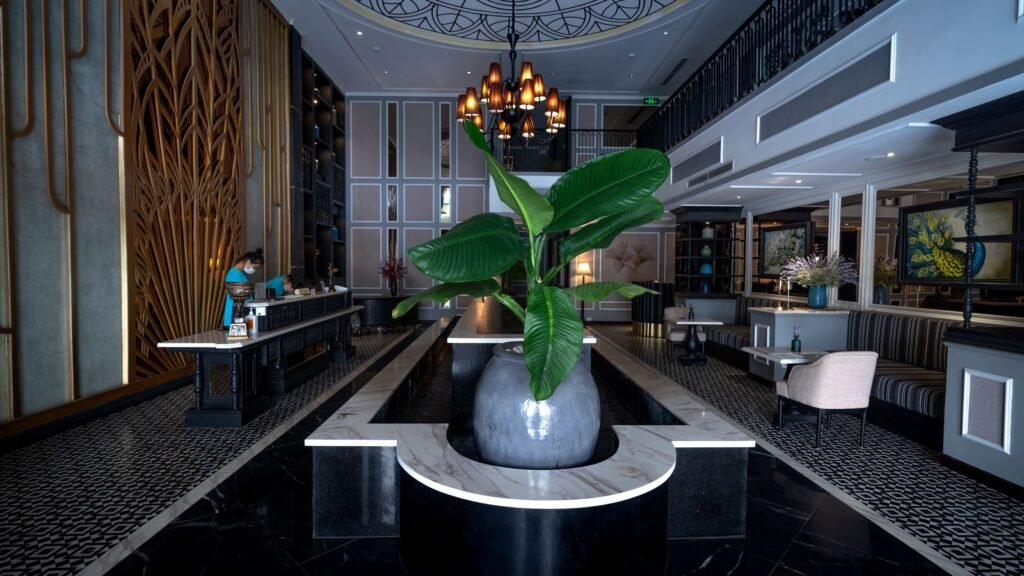
Five-star hotel check-in tips matter more than many luxury travelers expect. The room is already booked, but the arrival window still shapes the stay. Check in too early without a plan and you may wait with tired children, wrinkled clothes, or no privacy. Arrive with the right requests, timing, and backup plan, and the same booking can feel far smoother. That is especially true when you care about a better view, a quieter room, connecting doors, or a realistic shot at an upgrade.
This guide treats five-star hotel check-in tips as a buyer-intent skill, not a vague travel hack. The goal is simple: arrive with the right request, use the right channel, and know when the front desk can actually help. You will see how luxury hotel apps, elite-program rules, room-readiness patterns, and polite upgrade asks fit together. You will also see when to skip the ask and protect the mood instead.
Last reviewed: June 2026. For brand-specific policies, always confirm the current official pages linked in this guide because app features, elite benefits, and upgrade rules can change.
Free download: Luxury Trip Planning Checklist
Shortlist premium stays faster with a calm, high-signal checklist.
Five-star hotel check-in tips: quick answer
The best five-star hotel check-in tips are to set requests before arrival, aim for a realistic arrival window, use the hotel app when it adds control, and keep any upgrade ask precise and calm. Luxury hotels can often help with room location, housekeeping timing, family setup, and arrival flow. However, upgrades still depend on inventory at the time of check-in. Therefore, the winning move is not to ask for “anything better.” It is to ask for the room characteristic that matters most.
- Send key requests one to three days before arrival, not only at the desk.
- Ask for one priority first, such as quiet location, away from elevators, connecting rooms, or higher floor.
- Use app-based check-in when it lets you set arrival time, confirm room preferences, or choose from available rooms.
- Time your arrival realistically. Mid-afternoon usually offers better room readiness than late morning.
- If you want an upgrade, ask with flexibility and stay focused on room type, layout, or view rather than status theater.
- Protect the stay first. A ready room that fits your needs can beat a delayed upgrade chase.
Why five-star hotel check-in tips change the whole stay
Luxury arrivals are not just administrative. They decide whether the day starts smoothly or gets eaten by waiting, bags, and awkward tradeoffs. A good check-in can secure the quiet side of the building, the room away from a service lift, or the exact bedding setup your family needs. A weak check-in can leave you with the wrong view, no children’s setup, or a suite over the lobby bar.
Digital check-in tools now shape the arrival
That is why the best five-star hotel check-in tips start before you touch the desk. Marriott highlights mobile check-in and app-based room access as part of Bonvoy membership benefits. Hilton says Digital Check-in can let members choose an arrival time and even select their own room when available. Hyatt’s mobile-app materials say guests can confirm preferences, view room-upgrade status, select a preferred check-in time, and go directly to the room with digital key at participating hotels. Four Seasons positions its app around personalizing the stay with dining, spa, and itinerary control. Taken together, those official tools point to the same idea: the luxury check-in window starts before arrival, not only at the counter.
| Check-in priority | Why it matters | Best moment to request it |
|---|---|---|
| Quiet location | Helps sleep, privacy, and mood from night one. | Pre-arrival email or app message, then confirm at desk. |
| Higher floor or better view | Changes light, noise, and how special the room feels. | One to three days before arrival and again at check-in. |
| Connecting or nearby rooms | Critical for families and multigenerational trips. | Immediately after booking and reconfirm before arrival. |
| Early room readiness | Reduces waiting after long-haul or early-morning arrivals. | Several days before arrival and same-day reconfirmation. |
| Upgrade availability | Can improve layout, view, lounge access, or privacy. | At check-in, when live inventory is clear. |
| Celebration setup | Shapes the tone of the first evening. | Pre-arrival, not as a last-minute desk surprise. |
What to do 72 to 24 hours before arrival
The strongest five-star hotel check-in tips happen before travel day. Use the property’s app, website profile, or direct email to set room preferences early. Keep the request short. Luxury hotel teams respond better to clear, ranked priorities than to long wish lists.
Good examples are: “Quiet king room away from elevators is our top priority,” “If available, we would value a high floor over extra square footage,” or “If any connecting options are still open, please prioritize those over view.” Those requests are actionable. They also help the hotel protect what matters most if not every preference can be met.
Use this pre-arrival window to note anything operational. That includes early arrival after an overnight flight, crib timing, feather-free bedding, mobility needs, refrigerator requests, or a dinner reservation that depends on room readiness. In practice, hotels can often solve these issues more easily before room-blocking is final than when the lobby is crowded.

Use official digital tools when they add real control
Hilton’s official Digital Check-in flow says members can choose an arrival time and, when available, choose a room instead of letting the hotel assign one automatically. Hyatt’s app materials explicitly mention confirming room preferences, viewing room-upgrade status, selecting a preferred check-in time, and using digital key at participating hotels. Marriott Bonvoy lists mobile check-in and app services among membership benefits, while Four Seasons highlights app-based stay personalization. The lesson is not that every guest should avoid the desk. The lesson is that digital check-in is useful when it improves timing, room selection, and communication.
Still, use judgment. If your stay depends on a specific suite, a connecting setup, a celebration note, or an accessibility request, direct human confirmation still matters. App convenience helps. Human clarity closes the gap.
When is the best arrival time at a five-star hotel?
Many travelers think earlier is always better. It is not. Early arrival can work when you only need bag storage, breakfast, or spa access while waiting. It is less effective when your entire mood depends on getting into the room quickly. The best arrival time depends on the hotel’s turnover pressure, your stay length, and how specific your room request is.
| Arrival window | Best for | Main risk | How to use it well |
|---|---|---|---|
| 10:00 a.m. to noon | Bag drop, spa day, lunch, or flexible leisure starts. | Room may be nowhere near ready. | Ask for text updates and treat room access as a bonus. |
| Noon to 2:00 p.m. | Long-haul arrivals that need a chance at early readiness. | Some inventory still dirty or blocked. | Prioritize “first ready room that fits our must-haves.” |
| 2:00 p.m. to 4:00 p.m. | Best balance of readiness and upgrade clarity. | Lobby lines can peak. | Ideal window for a calm upgrade ask at most hotels. |
| After 6:00 p.m. | Late arrivals or guests who value a stabilized room map. | Some premium rooms may already be assigned. | Best if the priority is guaranteed readiness, not first pick. |
For most stays, mid-afternoon is the sweet spot. Rooms are more likely to be inspected. Operations teams can see remaining premium inventory more clearly. Housekeeping and engineering have also had more time to release rooms back into stock. Therefore, if your goal is a realistic upgrade conversation, a 2:00 p.m. to 4:00 p.m. arrival often beats an ambitious 11:00 a.m. appearance.
What should you ask for before you ask for an upgrade?
One of the most useful five-star hotel check-in tips is to separate the stay need from the upgrade fantasy. First ask for the characteristic that affects the trip. Then ask whether an upgrade could help deliver it. That order makes you sound practical rather than entitled.
For example, if privacy matters most, ask for a quiet room at the end of a corridor, away from elevators, with limited foot traffic nearby. If family comfort matters most, ask for connecting or adjacent rooms, bathtub availability, and enough closet or seating space. If romance matters most, ask for the best room the hotel can offer with a calmer view and strong natural light.
This approach also protects you from a common luxury-travel mistake. Bigger is not always better. A larger room over the driveway, ballroom, or late bar can feel less premium than a slightly smaller room in the right location.
| If you care about… | Ask for this first | Upgrade angle to mention second |
|---|---|---|
| Sleep quality | Quiet room away from elevators, ice machines, and event spaces. | Any higher-category room in a quieter stack. |
| Romance | Best view or most private layout available. | Any view or corner-room upgrade that improves privacy. |
| Family function | Connecting or nearby rooms, sofa bed, tub, and easy floor access. | A suite only if it solves layout or door needs. |
| Work plus leisure | Desk, quiet daylight, and lounge access if useful. | A club room or executive floor if available. |
| Celebration feel | Natural light, stronger view, and late-afternoon room readiness. | Any upgraded category that supports in-room dining or champagne setup. |
How to ask for an upgrade without sounding awkward
The front desk is not a stage for a speech. Keep it short. Smile. Confirm what you booked. Then ask whether there is a better room type or view available today that fits your main priority. If you have status or a program entitlement, let the hotel raise it first unless the desk clearly missed it.
A good script is: “If there is any chance of a quieter high-floor room or a nicer view today, we would really appreciate it.” Another good version is: “If any upgrade options opened up, especially one with better privacy, we would love to know.” That language is flexible. It also tells the agent what success looks like.
Marriott’s current benefit page says enhanced room upgrades are handled upon arrival and subject to availability under the relevant tier terms. Hyatt’s room-upgrade language likewise frames better rooms around availability at check-in. That matters because it reminds you not to present the ask as a promise. Treat it as a possibility tied to live inventory. You will usually get better help that way.
When paid upgrades make sense
Sometimes the smart move is not a free upgrade request. It is a paid step-up if the delta is small and the room change solves a real problem. That can be worth it for lounge access before a short business-leisure stay, a bathtub for children, or a suite on a milestone trip where in-room hosting matters. Use the arrival desk to compare the practical difference, not the category name alone.
Ask, “Is there a paid option today that meaningfully improves the view, layout, or lounge access?” This keeps the conversation grounded in value. It also gives the hotel a path to help you even when complimentary inventory is tight.

Should you use app check-in or talk to the front desk?
Use both when the stay is complex. Use the app first for speed, arrival timing, and any room-choice tools. Then use the desk to confirm the human details that matter. That is often the best blend of control and flexibility.
Hilton’s official flow is especially clear. It says eligible guests can choose an arrival time and, when available, choose a room in the app. Hyatt’s app page says guests can confirm preferences, view upgrade status, select their preferred check-in time, and use digital key at participating hotels. Four Seasons focuses on app-based personalization for spa, dining, and experiences. These features are useful because they reduce avoidable friction before you reach the lobby.
However, desk conversations still win when your needs involve connecting rooms, feather-free setups, high-value celebrations, room adjacency for older parents, or a specific concern about noise. Apps are excellent for logistics. Humans are still better for nuance.
Five-star hotel check-in timing workflow
FIVE-STAR HOTEL CHECK-IN FLOW
PRE-ARRIVAL
Rank one must-have
and send it early
APP CHECK-IN
Set arrival time
and room choice
DESK ASK
Confirm need first
upgrade second
ROOM READY
Take best-fit room
or wait by choice
ARRIVE EARLY
Use spa, lunch, or bag drop
Treat room access as a bonus
ARRIVE MIDDAY+
Better for readiness and
more realistic upgrade odds
When should you wait for a better room and when should you take the ready room?
This is one of the most practical five-star hotel check-in tips. Waiting only makes sense if the better room will change the stay enough to justify the lost time. That may be true for a honeymoon suite, a guaranteed connecting setup, or a true view upgrade on a short celebratory trip. It is less true when you are tired, the children need downtime, or the day’s value comes from getting showered and settled fast.
A useful question is: “If the better room takes another ninety minutes, does it improve this stay more than getting in now?” Answer honestly. Luxury trips get worse when travelers protect the fantasy instead of the day.
What mistakes ruin luxury hotel check-in?
The biggest mistake is vague asking. “Any upgrade?” gives the desk almost nothing to work with. Another mistake is overloading the request: high floor, best view, early check-in, connecting rooms, welcome amenity, away from elevators, late checkout, and free breakfast all at once. That list sounds less like prioritization and more like pressure.
Another common error is arriving far before standard check-in with no fallback plan. If you land at 9:00 a.m., build a spa booking, lunch reservation, or local walk into the schedule. Do not let the whole trip mood depend on a room magically opening four hours early.
- Do not ask for six priorities. Ask for one or two that matter most.
- Do not imply that elite status guarantees what the program only offers subject to availability.
- Do not push for a suite if a quieter standard room would solve the real problem.
- Do not ignore room location, event noise, or elevator proximity.
- Do not use app check-in blindly if your trip depends on a nuanced human request.
- Do not sacrifice the first afternoon just to chase a category name that may not improve the trip.
Best five-star hotel check-in tips by trip type
For couples and honeymooners
Lead with privacy, view, and timing. Ask whether any room with stronger light, better outlook, or more privacy opened up. If a better room will set the tone for the whole stay, waiting can make sense. Even so, do not trade two lost hours for a tiny category jump with no visible payoff.
For families
Lead with connecting doors, tubs, sofa beds, and bedtime logistics. In family travel, a slightly larger room matters less than a layout that keeps naps and early bedtimes workable. If a ready room solves those needs, take it.
For business-leisure stays
Lead with quiet, desk space, Wi-Fi reliability, and lounge access if that changes breakfast and work rhythm. For these trips, a club room or executive floor can be worth more than a decorative suite.
For short weekend escapes
Lead with speed. A one- or two-night trip loses value quickly if you spend half the first day waiting. Use app check-in, accept the best-fit ready room, and ask about a paid step-up only if the delta is modest and clearly useful.
A practical look at hotel upgrade timing and phrasing
If the embed does not load because of consent settings, watch it directly on YouTube here: How I Get FREE Hotel Upgrades Every Time (Suite Talking!).
This outside video is useful because it shows the tone and timing of an upgrade ask in a way that is easy to picture. Use it as a visual supplement, then pair it with the official program rules and app tools linked below.
More luxury hotel guides for planning your stay
For room-value strategy, read Five Star Resort Room Categories Explained. If lounge access may matter more than a suite, read Club Level Hotel Upgrade Worth It. If status and elite treatment are part of your planning, read Luxury Hotel Loyalty Perks. For departure strategy, read Securing Late Checkout at Luxury Hotels.
FAQ: five-star hotel check-in tips
What are the most important five-star hotel check-in tips?
The most important tips are to send one clear priority before arrival, use app-based check-in when it gives real control, arrive in a realistic time window, and ask for a specific room improvement instead of a generic upgrade.
Is it better to check in online or at the front desk?
Online or app check-in is better for arrival timing, digital key, and room-choice tools. The front desk is better for nuanced requests such as connecting rooms, celebration setups, accessibility needs, or a discussion about upgrade tradeoffs.
When do luxury hotel upgrades usually get decided?
Many upgrade decisions become clearest at check-in because live inventory, housekeeping release times, and same-day occupancy patterns are easier to see then. That is also why official loyalty rules often frame upgrades around availability at arrival.
Should I arrive early if I want a better room?
Not always. Early arrival can help if you are flexible and happy to wait. Mid-afternoon often gives a better balance of room readiness and upgrade clarity.
What should I say if I want a better room?
Ask for the room feature first. For example: “If there is any chance of a quieter high-floor room or a better view today, we would really appreciate it.” That gives the hotel a clear target without sounding demanding.
Do elite benefits guarantee an upgrade at five-star hotels?
No. Official program pages from brands such as Marriott and Hyatt still tie better rooms to availability and terms. Status helps. It does not override occupancy.
Bottom line
The best five-star hotel check-in tips are not clever scripts alone. They are small operational choices that protect the stay: rank one real priority, use digital tools that improve timing, ask for the room need before the upgrade, and know when to take the ready room. Luxury travel feels better when arrival is calm. If your check-in strategy reduces friction, improves privacy, and saves the first afternoon, it is already doing its job.
Official and primary sources referenced in this guide:
- Marriott Bonvoy benefits and mobile check-in services
- Hilton Digital Check-in help page
- World of Hyatt mobile app and digital check-in features
- World of Hyatt tiers and benefits
- Four Seasons mobile app
- Prince of Travel: suite-upgrade phrasing and timing context
Helpful next step: Before you book, compare location, total cost, cancellation rules, timing, and the practical tradeoffs for this trip.
Affiliate disclosure: Silk Harbor Travel may earn a commission when you use qualifying partner links, at no extra cost to you. Recommendations are chosen for reader usefulness and fit.