
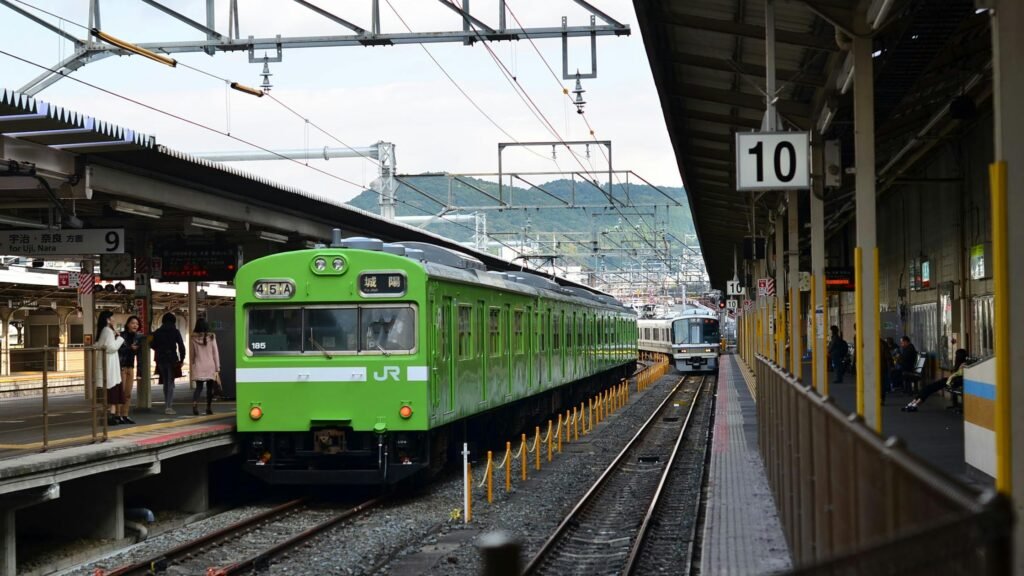
A luxury Japan itinerary should feel calm, precise, and beautifully sequenced. However, the best version does not rush Tokyo, treat Kyoto like a checklist, or squeeze a ryokan into the wrong night. Instead, it uses Japan’s rail network intelligently, places hotel stays where they reduce friction, and saves the most atmospheric experiences for the moments when you can actually enjoy them.
This guide builds a 10-day luxury Japan itinerary around Tokyo, Hakone, Kyoto, and an optional Osaka or Nara finish. It is designed for couples, honeymoon travelers, milestone trips, and comfort-focused travelers who want polished hotels, strong dining access, rail simplicity, and enough space in the schedule to make the trip feel five-star rather than frantic.
Affiliate disclosure: Some links in this luxury travel guide may be affiliate links. If you book or buy through them, Silk Harbor Travel may earn a commission at no extra cost to you.
Quick Answer: What Is the Best Luxury Japan Itinerary?
The best first-time luxury Japan itinerary is usually three nights in Tokyo, one or two nights in Hakone, three nights in Kyoto, and one final night near Osaka, Kyoto, or Tokyo depending on your flight. That structure gives you the biggest contrast: skyline dining, a private-onsen-style reset, temple and garden time, and smooth rail movement without moving hotels every night.
If you have only seven nights, remove Osaka and keep Tokyo, Hakone, and Kyoto. However, if you have 12 nights, add Kanazawa, Naoshima, or a slower Kyoto extension. For a truly high-comfort trip, avoid changing hotels more than four times and protect at least two evenings for destination dining or a quiet ryokan meal.
Luxury Japan Itinerary At a Glance
| Day | Base | Luxury Focus | Best Booking Priority |
|---|---|---|---|
| 1 | Tokyo | Arrival, recovery, elegant dinner | Hotel location near Ginza, Marunouchi, Roppongi, or Shinjuku |
| 2 | Tokyo | Design, dining, neighborhoods | Restaurant reservations and private transfer if needed |
| 3 | Tokyo | Shopping, art, skyline views | Club-level or view-room upgrade |
| 4 | Hakone | Ryokan, onsen, Mt. Fuji views when weather cooperates | Ryokan room with private bath or open-air bath access |
| 5 | Kyoto | Shinkansen, old streets, refined dinner | Kyoto hotel near Higashiyama, Gion, or Kyoto Station |
| 6 | Kyoto | Temples, gardens, tea, private guide | Morning guide before the busiest visitor windows |
| 7 | Kyoto | Arashiyama, dining, craft shopping | Driver or carefully timed rail/taxi plan |
| 8 | Nara or Osaka | Nara culture or Osaka city finish | Decide between culture, food, or airport convenience |
| 9 | Kyoto, Osaka, or Tokyo | Flexible buffer and final dinner | Stay near your departure airport or final rail link |
| 10 | Departure | Unrushed airport transfer | Late checkout or airport hotel if the flight is early |
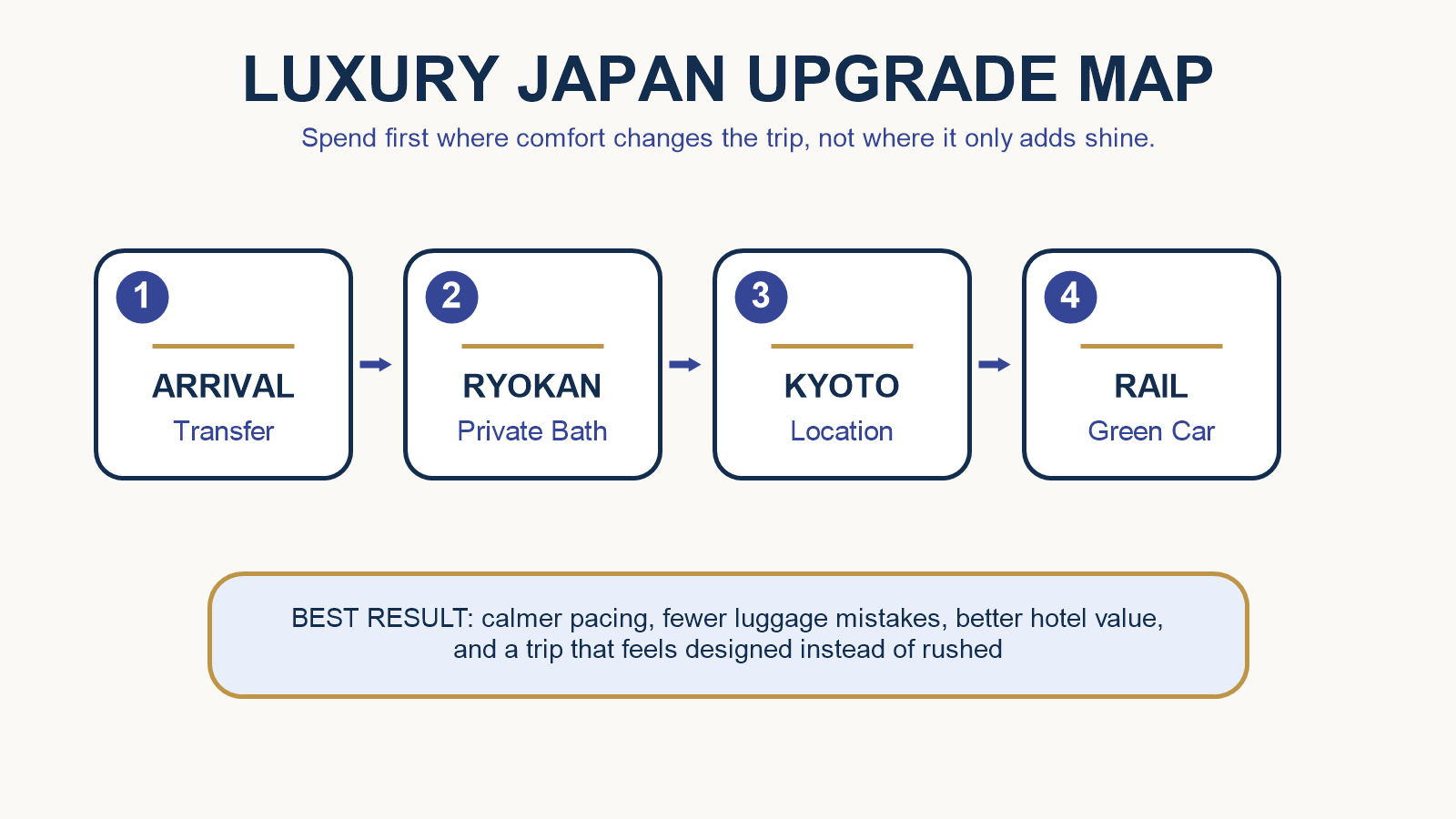
How Should You Use the Luxury Upgrade Map?
Use the upgrade map as a spending order, not as a rule that every line item must be expensive. First, protect the arrival because a smooth airport transfer sets the tone for the whole route. After a long flight, a private transfer can be more valuable than a marginally larger room because it removes the first moment of friction.
Second, treat the Hakone ryokan as the emotional splurge. A private bath, thoughtful meal timing, and calm room category can change how the middle of the trip feels. In practice, this is where a premium choice becomes an experience rather than a logo.
Third, pay attention to Kyoto location because it affects every morning and evening. A hotel that shortens taxi time can make temple visits easier, dinner calmer, and shopping less tiring. Therefore, a slightly less famous hotel in a better position may outperform a more recognizable name in the wrong neighborhood.
Finally, upgrade rail only where the ride is long enough to matter. Green Car can feel worthwhile on major Shinkansen legs, while short hops may not justify the extra spend. In other words, the best luxury Japan itinerary uses premium choices to buy time, calm, and better timing.
Who Is This Luxury Japan Itinerary Best For?
This luxury Japan itinerary is best for travelers who want a refined first trip without needing every minute planned. It works well for couples who care about hotels and food, travelers who want to experience the Shinkansen without wrestling with too many regional routes, and anyone who prefers fewer hotel changes with higher-quality stays.
It is not the best plan if your main goal is skiing, anime shopping, theme parks, or ultra-rural Japan. Those can become excellent specialty trips, but they change the route. For a first luxury trip, Tokyo, Hakone, and Kyoto remain the most reliable arc because each stop feels different and the rail connections are manageable.
How Many Days Do You Need for a Luxury Japan Itinerary?
Ten days is the sweet spot. Seven days can work if you move decisively, but it leaves little room for jet lag, weather, or dining reservations. Fourteen days is better for slow travel, yet many luxury travelers prefer a tighter, better-edited trip over a long list of cities.
- 7 nights: Tokyo 3, Hakone 1, Kyoto 3.
- 9 nights: Tokyo 3, Hakone 1, Kyoto 4, Osaka or Tokyo 1.
- 12 nights: Tokyo 4, Hakone 1, Kyoto 4, Kanazawa or Naoshima 2, airport night 1.
- 14 nights: Add more countryside, art islands, or a luxury train-style extension.
Should You Start in Tokyo or Kyoto?
Start in Tokyo if your international flight arrives there, which is the most common plan for travelers from North America. Tokyo is excellent for easing into Japan because hotel service is polished, airport transfers are straightforward, and you can keep the first night simple. The Japan National Tourism Organization notes that Tokyo is served by Haneda and Narita and offers everything from historic Asakusa to luxury shopping in Ginza, making it a practical and exciting first base. See JNTO’s Tokyo guide at Japan Travel Tokyo.
Start in Kyoto only if your flight pattern brings you through Kansai International Airport or if the trip is primarily cultural. Kyoto has more atmosphere on foot, but it can feel more demanding on arrival day because popular districts are spread out and hotel access may depend more on taxis.
Days 1-3: Tokyo for Arrival, Dining, and Design
Tokyo should not be treated as a stopover. It is the modern contrast that makes the rest of the route feel richer. For a luxury traveler, the question is not whether Tokyo has enough to do. The question is where to stay so the city becomes smooth instead of overwhelming.
Where should you stay in Tokyo?
For this luxury Japan itinerary, the strongest Tokyo bases are Ginza/Marunouchi, Roppongi/Akasaka, Shinjuku, and select parts of Shibuya. Ginza and Marunouchi work best for elegant dining, shopping, Tokyo Station rail access, and a polished first impression. Roppongi and Akasaka are strong for dining and international hotel brands. Shinjuku is efficient and energetic, though less serene. Shibuya is better when nightlife, design, and youth culture matter more than quiet.
If you want to compare Tokyo hotels by location and availability, use this Trip.com search as a starting point: check Tokyo luxury hotel availability on Trip.com.
What should you do in Tokyo first?
Keep the first day gentle. Choose a direct airport transfer, check in, shower, walk near the hotel, and reserve a dinner within easy taxi range. On the second day, plan one cultural anchor and one modern anchor: Asakusa plus Ginza, Meiji Shrine plus Omotesando, or the Imperial Palace area plus a skyline dinner. On the third day, shop, visit a museum, or add a private food guide.
The luxury move is not to overbook Tokyo. You will enjoy the city more if you plan one meaningful experience per half day and leave space for shopping, hotel amenities, and meals. Tokyo rewards precision, but it punishes over-scheduling.
Day 4: Hakone for the Ryokan and Onsen Pause
Hakone is the emotional reset in this luxury Japan itinerary. It breaks the city-to-city rhythm and gives the trip a Japanese inn experience without sending you too far from the Tokyo-Kyoto corridor. JNTO describes Kanagawa as an easy-to-reach prefecture from Tokyo and points to Hakone as the place to relax in hot springs and see Mt. Fuji when conditions are right. See the official Kanagawa overview at Japan Travel Kanagawa and the Hakone area page at Japan Travel Hakone.
Should you book one night or two nights in Hakone?
Book one night if the trip is 10 days and this is your first Japan visit. Book two nights if you want a slower ryokan experience, a private open-air bath, or a more complete Hakone loop. One night is enough to enjoy a kaiseki-style dinner, a bath, breakfast, and the feeling of being outside the city. Two nights are better if the ryokan itself is the splurge.
What should you look for in a luxury ryokan?
- A room category with private bath access or open-air bath access if privacy matters.
- Dinner included, ideally with clear dietary communication before arrival.
- Easy luggage handling between Tokyo, Hakone, and Kyoto.
- Strong recent reviews for service, food, and English-language comfort if needed.
- A location that does not create a long transfer after dark.
A ryokan night is not just a hotel stay. It is a sequence. Arrive early enough to settle in, bathe before dinner, enjoy the meal, and avoid treating Hakone like a rushed sightseeing stop. For a luxury trip, the rhythm is part of the value.
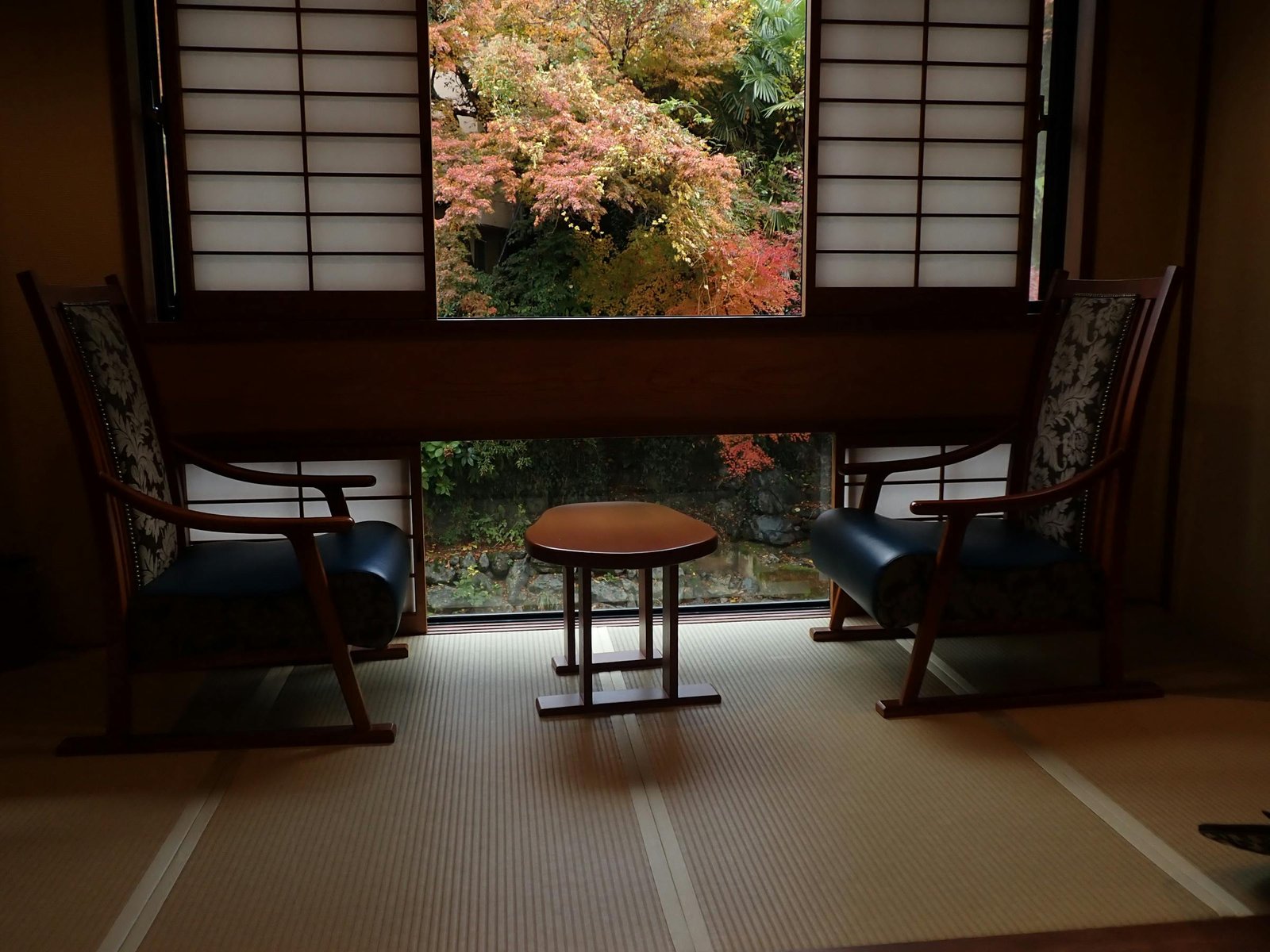
Days 5-7: Kyoto for Culture, Gardens, and Slower Luxury
Kyoto is where the route becomes quieter and more layered. It is the cultural center of a luxury Japan itinerary, and it deserves at least three nights. The official JNTO Kyoto guide describes the city as a place where Japanese culture has been refined over 1,200 years, from machiya townhouses and tea to temples and seasonal events. See the official page at Japan Travel Kyoto.
Where should you stay in Kyoto?
Higashiyama and Gion are the most atmospheric choices if walking access to historic streets matters. Kyoto Station is more practical for rail, day trips, and luggage-heavy travel. Central Kyoto can be useful for dining and taxis. For a honeymoon or special occasion, choose atmosphere first. For a rail-heavy trip, choose access first.
If Kyoto is the emotional center of your trip, compare room categories carefully. A serene hotel with a garden, strong breakfast, and good taxi access may be better than a more famous name in a less convenient position. You can start with this Trip.com search: check Kyoto luxury hotel availability on Trip.com.
What should you do in Kyoto?
Plan Kyoto by energy, not by distance alone. Put the most famous sites early in the morning. Leave afternoons for less crowded streets, tea, gardens, shopping, or a guided cultural experience. A private guide can be worthwhile here because Kyoto’s beauty often depends on context: why a garden is arranged a certain way, how to move through a temple precinct, and when to leave before the crowds thicken.
- Arrival evening: Arrive by rail, settle in, take an evening walk in Gion or Higashiyama.
- Culture day: Visit one major temple early, then add tea, crafts, or a garden-focused afternoon.
- Final Kyoto day: Choose Arashiyama, Northern Kyoto, or a quieter cultural guide day.
Choose Nara, Osaka, or a Kyoto Slow Day
This is the main decision point near the end of the route. Many travelers add Nara for temples and deer, Osaka for food and energy, or a slow Kyoto day for a more indulgent finish. There is no universal answer. The best choice depends on your return flight and whether you want the trip to end with cultural calm or city flavor.
| Choice | Best For | Luxury Advantage | Skip If |
|---|---|---|---|
| Nara | Culture and historic atmosphere | Strong guided half-day with a refined Kyoto evening | You dislike day trips or want no more temples |
| Osaka | Food, nightlife, airport convenience | Excellent final dinner and easier Kansai departure | You want a quiet final night |
| Kyoto slow day | Couples, honeymooners, photographers | Less packing, more depth, better final memory | You want another city contrast |
Build in a Buffer Before Departure
One of the biggest luxury mistakes in Japan is using the last day like a spreadsheet. A final buffer day protects the whole trip. It absorbs weather, shopping, luggage forwarding, dining changes, and rail timing. It also gives you one more chance to revisit the place that surprised you.
Travelers departing from Tokyo should usually return by Shinkansen the day before the flight unless the flight is late and same-day rail feels comfortable. For a Kansai departure, finish in Kyoto or Osaka. When you are booking a high-value hotel room, consider whether late checkout matters more than one extra sightseeing stop.
Should You Buy a Japan Rail Pass for This Route?
For this specific luxury Japan itinerary, do not assume the nationwide Japan Rail Pass is automatically the best purchase. The route is mostly Tokyo to Hakone/Odawara and then Kyoto, with possible Osaka or Nara add-ons. That often favors individual tickets or regional products, especially when comfort and schedule control matter more than maximum mileage.
There is also a timing issue for 2026. JNTO reported that Japan Rail Pass prices are scheduled to increase from October 1, 2026, with different rates for Ordinary and Green Car passes. See the official JNTO news item at Japan Rail Pass price changes 2026. For luxury travelers, the key point is simple: price the actual route before buying a pass, and compare Green Car value against reserved individual seats.
What rail class should luxury travelers choose?
Choose reserved seats as the baseline. Consider Green Car when you want more space, a calmer cabin, and a more premium rail feel. The upgrade is most meaningful on longer intercity legs, less important on short hops, and not a substitute for careful hotel placement. If you plan to send luggage ahead, your rail days become dramatically easier.
Luxury Upgrade Priorities: Where to Spend First
Not every upgrade improves the trip equally. A private transfer on arrival can be more valuable than a larger room on the first night. The ryokan room with a private bath can change the emotional tone of the trip. Choosing a better Kyoto location can save hours of taxi friction.
- Arrival transfer: Worth it after a long international flight.
- Tokyo location: Choose the neighborhood that matches dining, rail, and shopping plans.
- Hakone ryokan room: Upgrade here if privacy and atmosphere matter.
- Kyoto hotel position: Pay for calm access, not just a famous name.
- Private guide: Use in Kyoto or Tokyo when context improves the experience.
- Rail comfort: Consider Green Car for longer Shinkansen legs.
What Should You Book First?
Book the ryokan first if it is a key part of the trip. The best room categories can disappear early, especially in cherry blossom, autumn foliage, holiday, and weekend periods. After that, secure Tokyo and Kyoto hotels, then dining, guides, and transfers. Rail tickets can usually be handled later, but peak dates change the equation.
For a polished luxury Japan itinerary, the booking order should look like this:
- International flights and arrival city.
- Hakone ryokan room category.
- Tokyo and Kyoto luxury hotels.
- Private guides, restaurant reservations, and special experiences.
- Rail tickets, luggage forwarding, and transfers.
- eSIM, insurance, and final packing details.
Best Seasons for a Luxury Japan Itinerary
Spring and autumn are the classic choices, but they also bring the highest demand. Cherry blossom season is beautiful and logistically intense. Autumn foliage is slightly more forgiving but still popular. Winter can be excellent for clear air, hot springs, and fewer crowds outside holiday windows. Summer is lush and energetic, though heat and humidity can reduce comfort.
| Season | Luxury Strength | Main Caution | Best Adjustment |
|---|---|---|---|
| Spring | Blossoms, gardens, festive atmosphere | High demand and rates | Book early and avoid moving too often |
| Summer | Long days and festivals | Heat and humidity | Use better hotels, taxis, and lighter sightseeing blocks |
| Autumn | Foliage, food, comfortable weather | Popular Kyoto dates | Plan early mornings and private guide timing |
| Winter | Onsen, clear views, quieter travel | Shorter daylight | Lean into ryokan time and fine dining |
How to Make the Trip Feel More Five-Star
The difference between a good trip and a five-star trip is usually not one giant splurge. Instead, it is a collection of friction removers. Use luggage forwarding between Tokyo, Hakone, and Kyoto. Keep rail days simple. Also, let one hotel be the scenic splurge and another be the convenience splurge. Build pauses into the day so you can enjoy the hotels you paid for.
For travelers used to resort-style luxury, Japan’s best moments can feel quieter. For example, the luxury may be a perfect breakfast, a garden view, the silence before temple crowds arrive, or a ryokan dinner served with exact timing. Therefore, do not judge the trip only by square footage. Judge it by how carefully each day is arranged.
How should each day be paced?
In practice, the best days have one anchor in the morning and one flexible reward later. For example, a Tokyo day might pair a shrine or museum with a late lunch, shopping, and a skyline dinner. Meanwhile, a Kyoto day might start with one major temple before breakfast crowds build, then move into tea, craft shopping, or a private guide block.
After lunch, avoid turning the afternoon into a second checklist. Instead, use that time for neighborhood wandering, hotel amenities, or a carefully chosen reservation. This matters because Japan rewards attention to small details. If every day is packed, the trip becomes efficient but not luxurious.
When a day includes rail, keep the sightseeing lighter. Send luggage ahead when possible, reserve seats, and leave room for taxi timing. Then, once you arrive, choose one strong evening plan rather than trying to recover lost time. As a result, the route feels composed even when the cities are busy.
Finally, plan one deliberate pause every two or three days. That pause could be a long breakfast, a hotel spa block, a garden-view coffee, or an early night before a guide day. The goal is not to do less for the sake of doing less. Rather, the goal is to create enough space for the expensive moments to feel memorable.
What Are the Best Internal Next Steps?
If you want to extend the rail side of this plan, read Silk Harbor’s guide to luxury train service and the broader luxury train trips buyer guide. If your Japan route is part of a larger premium trip, the luxury travel guide can help you compare when to use a concierge, private guide, or self-planned booking stack.
For travelers who want a beach or island finish after Japan, compare the site’s luxury resort guides before adding extra flights. A luxury Japan itinerary is strongest when the core route is crisp, not when every possible extension is squeezed into the same trip.
FAQ: Luxury Japan Itinerary
Is a luxury Japan itinerary better by train or private car?
A luxury Japan itinerary is usually better by train between major cities and by taxi, driver, or private transfer within cities when comfort matters. The Shinkansen is fast, reliable, and part of the Japan experience. Private cars make more sense for airport arrivals, Kyoto temple timing, Hakone transfers, and luggage-heavy moments.
How far ahead should I book luxury hotels in Japan?
For cherry blossom, autumn foliage, holidays, and famous ryokan stays, book as early as your plans allow. For regular dates, high-end hotels may still have availability closer in, but the best room categories and better locations can disappear. The ryokan night should be one of the first bookings.
Is Hakone worth it on a first luxury trip to Japan?
Yes, Hakone is worth it if you want a hot spring pause between Tokyo and Kyoto. It is close enough to fit into a 10-day route, different enough to feel special, and strong for travelers who want a ryokan experience without building an entire rural itinerary.
Should I stay in Kyoto or Osaka at the end?
Stay in Kyoto if you want a calmer, more cultural ending. Stay in Osaka if dining, nightlife, or Kansai airport logistics matter more. For most couples, Kyoto feels more romantic. For food-focused travelers, Osaka can be the better final note.
Can this itinerary work for families?
Yes, but adjust the pacing. Families may prefer larger Tokyo and Kyoto hotels, fewer formal meals, and more flexible afternoon blocks. A private bath in Hakone can also make the ryokan experience easier for families who want onsen atmosphere with more privacy.
Bottom line: a luxury Japan itinerary works best when it is edited, not overloaded. Start with Tokyo, slow down in Hakone, give Kyoto enough nights to breathe, and let each upgrade reduce friction or deepen the experience.
Free download: Luxury Trip Planning Checklist
Shortlist premium stays faster with a calm, high-signal checklist.