
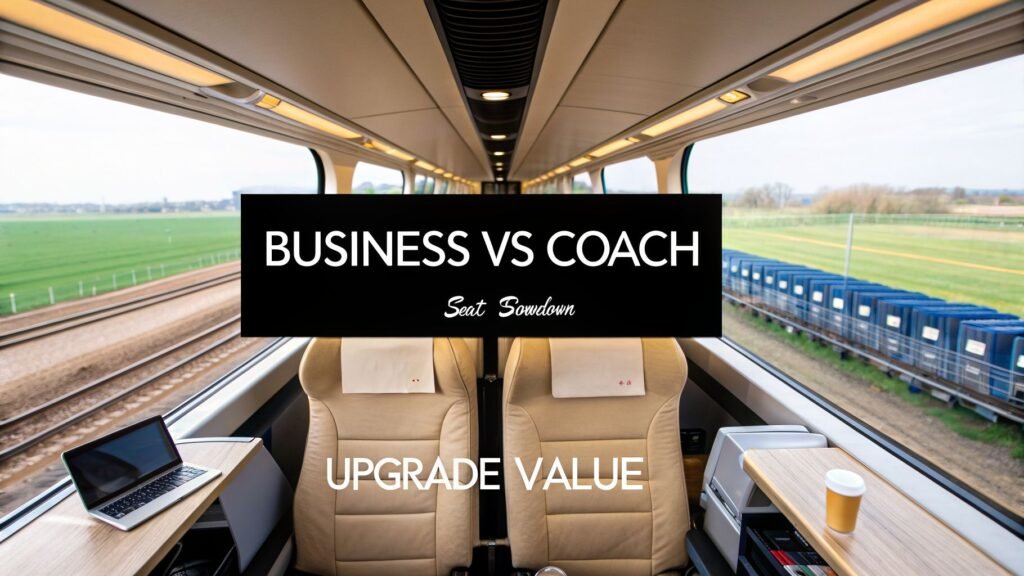
Deciding between Amtrak business vs coach is a strategic choice for the discerning traveler. While both promise a journey far more comfortable than flying, the right decision hinges on your trip’s length, your travel style, and what you need from your travel day. Business Class offers a significant upgrade in comfort and quiet, making it a smart investment for productive or relaxing trips. Coach, on the other hand, provides fantastic value and still beats flying for space and scenery.
This guide is designed to help you confidently navigate your options, ensuring you book the perfect class for your next rail journey.
Who Is This Guide For?
- Business Travelers: Those who need a quiet, productive environment to work while on the move.
- Couples & Solo Travelers: Individuals or pairs seeking a more refined, relaxing travel experience, especially on scenic or longer routes.
- Discerning Families: Families who value extra space and a calmer atmosphere for a more enjoyable journey.
- First-Time Amtrak Riders: Anyone new to train travel who wants to understand the tangible benefits of a class upgrade.
Amtrak Business vs Coach at a Glance
At its core, the choice between Business and Coach is about personal space and cabin atmosphere. To make your decision easier, this quick comparison highlights the key differences.
- Coach Class: Generous legroom, standard-width seats. The cabin can be lively and family-friendly. Beverages are available for purchase, and boarding is general. You earn standard Amtrak Guest Rewards points (2 per dollar).
- Business Class: Wider seats with extra legroom, often in leather. The cabin is a dedicated quiet car, offering a more relaxed, professional atmosphere. You receive complimentary non-alcoholic drinks, priority boarding, and a 25% bonus on points.
- Lounge Access: A major differentiator. Business Class tickets include access to Metropolitan Lounges at select major stations, a perk not available to Coach passengers.
While both classes get you there, it’s clear that Business Class is less about the destination and more about elevating the journey itself.

The Onboard Experience: A Seat-by-Seat Breakdown
The choice between Amtrak Business Class and Coach almost always hinges on one thing: your personal space. It’s the most immediate difference you’ll feel, and it’s about more than just a seat—it’s the entire environment that can reshape your journey from stressful to serene.
Coach seating on Amtrak is surprisingly generous, especially if you’re used to the cramped quarters of an airplane. The seats are wide, they recline, and most travelers find there’s plenty of legroom to stretch out. That said, Coach cars are often a lively mix of families, groups, and solo riders, creating a bustling atmosphere that can feel a bit unpredictable.
Seating Comfort and Personal Space
This is where the upgrade to Business Class makes its case. You’re not just paying for a slightly better seat; you’re buying a significant increase in personal territory. Business Class seats are wider, often finished in leather, and offer a noticeable improvement in both recline and legroom.
This extra space is more than just a simple comfort. If you need to work, the larger tray table and extra elbow room make using a laptop feel productive, not constricted. For anyone on a long, scenic route, being able to recline further without disrupting the person behind you makes the entire trip feel more relaxed and civilized.
While some Coach cars are designated as “Quiet Cars,” the dedicated Business Class cabin enforces this standard far more consistently. You’re paying for a guaranteed level of calm from start to finish. If you’re curious about how this compares to other premium rail options, you might find our complete luxury train travel guide for 2026 insightful.
Amenities That Make a Difference
While the seat is the main event, the amenities around it complete the experience. Both classes offer power outlets to keep your devices charged, though you’ll often find them more reliably placed and functional in the newer or refurbished Business Class cars.
Likewise, complimentary Wi-Fi is available on most Amtrak routes, but the quality can vary. With fewer people sharing the connection in Business Class, you’ll typically get a more stable signal for emails and light browsing. Just remember, streaming is discouraged across all classes to keep the network usable for everyone.
Here’s a quick look at the key at-seat features:
- Power Outlets: Available in both classes, usually one outlet per seat or seat pair.
- Tray Tables: Standard size in Coach; often larger and sturdier in Business Class, making them better suited for laptops.
- Overhead Storage: Plenty of room for carry-ons in both classes, but with fewer passengers, finding space is never an issue in Business.
The upgrade also comes with perks that extend beyond your seat. Business Class passengers get complimentary non-alcoholic drinks on most routes, and for frequent riders, the loyalty benefit is a major plus. You’ll earn a 25% bonus on Amtrak Guest Rewards points compared to the standard 2 points per dollar spent in Coach. This boost can significantly accelerate your path to earning free tickets, upgrades, or lounge passes on future trips.
Editor’s Pick: The Acela Business Class Experience
- Best For: Business travelers and couples on the Northeast Corridor.
- Why It’s Worth It: The Acela Business Class offers the fastest train service in the U.S., combined with superior comfort. Seats are exceptionally spacious, service is attentive, and the at-seat cart service for complimentary drinks and snacks adds a touch of refinement. It transforms a regional trip into a premium travel experience.
- One Limitation: The price premium over the Northeast Regional service can be substantial, making it a splurge for budget-conscious travelers.
Exclusive Perks of an Amtrak Business Class Ticket
When you’re weighing Amtrak business vs coach, the real difference isn’t just a slightly better seat. The upgrade to Business Class buys you a series of small, stress-reducing perks that start the moment you walk into the station, changing the entire feel of your travel day.
One of the first things you’ll notice is priority boarding. Instead of lingering in a crowded gate area, Business Class passengers get on the train first. This small detail means you can stow your luggage without a fight, settle in, and get your bearings long before the general rush begins. It sets a calm, unhurried tone for the whole trip.
Streamline Your Start with Lounge Access
For anyone traveling out of a major hub, lounge access is where the upgrade really starts to pay for itself. A Business Class ticket gets you into Amtrak’s Metropolitan Lounges in key cities like Washington D.C.’s Union Station, Chicago Union Station, and Moynihan Train Hall in New York. These lounges are a quiet escape from the chaos of the main concourse.
Inside, you can expect:
- A quiet environment with comfortable seating for work or just relaxing.
- Complimentary snacks and non-alcoholic beverages, perfect for a quick bite before you board.
- Free, reliable Wi-Fi that’s usually a step up from the general station network.
- Dedicated attendants who can help with ticketing, reservations, and any last-minute changes.
Access to a lounge completely changes the pre-departure experience. For a long wait, this perk alone can make the upgrade feel worth it.
This level of comfort turns travel time into productive or relaxing time. For those planning other high-end journeys, understanding these small but impactful details is key. You can discover similar insights in our guide to the world’s most luxurious train trips.
Onboard Conveniences and Loyalty Rewards
The perks don’t stop once you’re on the train. A quiet car and more legroom are the obvious benefits, but it’s the smaller service touches that add a layer of polish. On most corridor services, Business Class passengers receive complimentary non-alcoholic beverages like coffee, tea, water, and soft drinks.
On premium services like the Acela, this is even better, with at-seat cart service bringing refreshments directly to you. It’s a small but meaningful convenience that means you don’t have to get up and walk to the Café Car, letting you stay settled and uninterrupted.
For the frequent traveler, though, the smartest perk might be the points bonus. All Business Class tickets earn a 25% bonus on Amtrak Guest Rewards points. While Coach passengers get 2 points per dollar, you’re earning more for the exact same trip. This bonus adds up surprisingly fast, helping you earn free travel much sooner.
Cost Analysis: When Is the Upgrade Worth It?
The real value of any travel upgrade comes down to price, and the choice between Amtrak Business vs. Coach is no exception. The cost to move up from Coach isn’t a fixed fee; it can swing wildly depending on your route, the time of day, and how far out you book. On shorter, less-trafficked lines or during off-peak hours, the upgrade can be surprisingly affordable—sometimes just $20 to $40 USD more than a standard Coach ticket.
Pricing Variations Across Popular Routes
Not all Amtrak routes are created equal, and the premium for Business Class often reflects the specific demands of that line. For instance, the Northeast Corridor, which connects major business hubs like New York, Boston, and Washington D.C., tends to have some of the steepest premiums. Here, you’re often competing with corporate travelers whose companies are footing the bill.
In contrast, West Coast routes like the Pacific Surfliner (San Diego to Los Angeles) or the Amtrak Cascades (Portland to Seattle) often have more modest upcharges. A recent look at typical fares shows just how dramatic these differences can be. On a given day, a Coach ticket from New York to Boston might go for just $19 USD, while a Business Class seat on the same train could leap to $149 USD. Meanwhile, shorter journeys showed much milder increases; Los Angeles to San Diego saw a typical fare of $35 USD in Coach vs. $54 USD in Business, and Portland to Seattle was $26 USD vs. $49 USD.
When Is the Upgrade a Smart Decision?
Figuring out the “worth it” moment is a personal calculation, but there are definitely times when upgrading to Business Class delivers fantastic value for the money.
Consider the Upgrade If:
- Your Trip Exceeds Three Hours: On longer daytime journeys, the extra legroom, wider seat, and quieter car shift from being a simple perk to a genuine comfort essential.
- You Need to Work: The combination of a larger tray table, more reliable Wi-Fi, and a calmer environment turns your seat into a productive mobile office.
- You Have a Long Layover: If your trip includes a stop at a major station like New York or Chicago, the complimentary lounge access can easily justify a moderate upgrade fee on its own.
- You’re Celebrating a Special Occasion: For an anniversary or a milestone trip, the small splurge for a more refined experience can make the entire journey feel more memorable.
The sweet spot is often found on mid-length journeys (3-5 hours) booked during off-peak times. Here, the upgrade cost is frequently low enough that the complimentary beverages and enhanced comfort effectively pay for themselves.
How to Book Your Amtrak Ticket: A 5-Step Plan
Booking your Amtrak ticket is the first strategic move you make to shape your entire trip. Follow this straightforward plan to secure the best experience for the best price.
- Book in Advance (What to Book First): Your train ticket should be the first thing you book, ideally 3-4 weeks ahead of time. Amtrak uses dynamic pricing, so fares climb dramatically as the departure date nears.
- Choose Your Route and Dates Wisely: Start on the Amtrak website or app. If your schedule has any wiggle room, use it. Traveling on a Tuesday or Wednesday is almost always cheaper than a Friday or Sunday.
- Compare Fare Classes and Types: Once you’ve picked your train, Amtrak lays out the prices for Coach and Business Class. This is your decision point. Also, review the fare types: Saver (cheapest, non-refundable), Value (moderate, some fees for changes), and Flexible (most expensive, fully refundable).
- Apply Discounts and Points: Before checkout, look for the discount field to add codes for seniors, students, or military personnel. If you’re an Amtrak Guest Rewards member, this is also where you can redeem points.
- Finalize and Manage Your eTicket: After a final check of the details, complete the purchase. Your eTicket will be emailed to you. You can add it to your phone’s digital wallet or just pull up the email for the conductor—no printing required.
Common Booking Mistakes to Avoid
Even frequent travelers can make small errors that add up. Keep these three pitfalls in mind to book efficiently and avoid surprise costs.
- Ignoring the Amtrak Guest Rewards Program: Not signing up for this free loyalty program is like leaving money on the table. Every dollar you spend earns points you can redeem for future trips, upgrades, and even single-visit passes to their station lounges.
- Overlooking the Fare Rules: It’s easy to click past the fine print, but failing to check the cancellation and change policies can be a costly mistake. Always take a moment to understand the rules for your fare type before you confirm the purchase.
- Forgetting to Check for Deals: Amtrak often runs promotions, especially for new routes or during the off-season. It only takes a minute to check the “Deals” section on their website, and it can sometimes lead to significant savings.
Inspired by the classic romance of American rail? For a look at other iconic train journeys, check out our guide to the most luxurious train journeys in Europe.
Luxury Checklist: Packing for a Premium Train Journey
- Noise-canceling headphones for ultimate focus.
- A portable power bank to ensure devices stay charged.
- A refillable water bottle (stay hydrated and be sustainable).
- A comfortable travel pillow or scarf for napping.
- Downloaded books, podcasts, or movies for offline entertainment.
- Your physical credit card (for any onboard purchases in the Café Car).
Key Takeaways: Amtrak Business vs. Coach
- Business Class is for Comfort and Quiet: The primary benefits are a wider seat, extra legroom, and a guaranteed quiet car, making it ideal for work or relaxation.
- Coach Offers Excellent Value: For shorter trips (under 3 hours) or budget-conscious travelers, Coach provides a comfortable ride with more space than an airline.
- Lounge Access is a Major Perk: A Business Class ticket includes access to Metropolitan Lounges in major hubs, a significant benefit for long layovers.
- Book Early and Off-Peak: The best way to get a good price on either class is to book several weeks in advance and travel on weekdays like Tuesday or Wednesday.
- Points Matter: Business Class provides a 25% bonus on Amtrak Guest Rewards points, accelerating your path to free travel.
- Acela is a Class Apart: On the Northeast Corridor, Acela’s Business Class is a significant step up from the regional train’s offering in both speed and service.
FAQ: Your Amtrak Questions Answered
What is the food situation in Amtrak Business Class?
On most corridor services, a Business Class ticket includes complimentary non-alcoholic beverages. Full meals are generally not included; however, passengers can purchase a wide variety of food and drinks from the Café Car. The premium Acela service offers at-seat cart service with snacks and drinks.
Is it possible to upgrade from Coach to Business on the train?
Yes, you can often ask a conductor for an onboard upgrade, provided there are seats available in Business Class. However, this is a gamble. It is more reliable and often cheaper to book your Business Class seat in advance, as last-minute upgrades can be more expensive and are not guaranteed.
What’s the difference in seating on long-distance vs. short-distance trains?
The difference is significant. Coach seats on long-distance trains (e.g., California Zephyr) are designed for overnight travel, offering substantial legroom and recline. On these routes, the comfort gap between Coach and Business is smaller. In contrast, on shorter corridor routes, the upgrade to a Business Class seat provides a more noticeable increase in space and comfort.
Does my Amtrak Business Class ticket give me lounge access?
Yes, one of the best perks of a Business Class ticket is access to Amtrak Metropolitan Lounges at major stations like New York (Moynihan Train Hall), Chicago, and Washington D.C. This is a valuable benefit that provides a quiet space with snacks and Wi-Fi. Details are available on the Amtrak station lounges page.
Are Amtrak Business Class tickets refundable?
Refundability depends on the fare type you purchase, not the class of travel. Amtrak offers Saver (non-refundable), Value (fees apply), and Flexible (fully refundable) fares. Always check the fare rules during checkout to understand the cancellation policy for your specific ticket.
At SilkHarbor Travel, we focus on helping you make smart, confident decisions that elevate your journey. From choosing the right seat on a train to finding the perfect resort suite, our guides cut through the noise to deliver practical advice for luxury travel. Explore our curated trip ideas and start planning your next memorable getaway at https://silkharbortravel.com.