
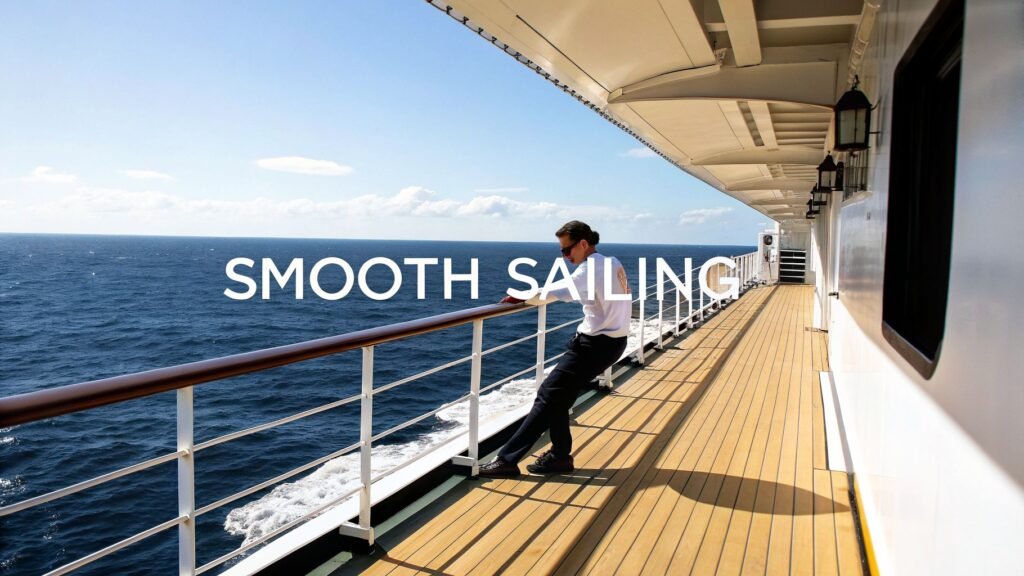

Knowing how to avoid seasickness on a cruise can transform a luxury voyage from a source of anxiety into the restorative escape you deserve. The thought of motion sickness can cast an unwelcome shadow over the excitement of a milestone celebration, but with savvy planning, you can all but eliminate the risk. This isn't about crossing your fingers and hoping for the best; it's about making smart, strategic decisions from the moment you book to your first day at sea, ensuring you feel confident and comfortable from start to finish.

Who This Guide Is For
This guide is for the discerning traveler who values comfort and wants to ensure a seamless, enjoyable cruise experience. Whether you're a first-time cruiser feeling apprehensive or a seasoned traveler with a known sensitivity to motion, these steps are designed to give you complete peace of mind.
Seasickness—or any motion sickness—is a simple case of sensory confusion. Your inner ear, your body’s balance center, feels the gentle rock of the ship. However, your eyes, looking at the static walls of your beautiful suite, tell your brain everything is still. That conflict is what can trigger nausea, dizziness, and that dreadful queasy feeling.
It’s a surprisingly common issue, affecting as many as one in three people to some degree. Fortunately, modern ships and a few insider strategies mean you are firmly in control.
Your 5-Step Plan for a Seasickness-Proof Cruise
This isn't about just packing some Dramamine and calling it a day. A truly serene voyage starts long before you step on board. By following this simple 5-step booking and preparation plan, you ensure that absolutely nothing gets in the way of the serene, memorable experience you deserve.
- Select a Stable Ship & Calm Itinerary (12-18 months out): Your first and best defense is choosing the right ship and route. We'll show you why this one decision can solve most of the problem before it even starts.
- Book the Right Stateroom (12-18 months out): Where you sleep matters. Securing a midship cabin on a lower deck is the single most effective choice you can make for stability.
- Book Flights & Pre-Cruise Hotel (4-6 months out): Arriving a day early is non-negotiable. It eliminates travel stress and fatigue, two major contributors to motion sensitivity.
- Consult Your Physician (2-3 months out): A quick medical consultation and a well-packed wellness kit are essential. We'll give you a clear checklist for what to discuss with your doctor.
- Pack Your Wellness Kit (1 week out): Gather your remedies and comfort items so you're prepared from the moment you board.
Step 1 & 2: Strategic Booking for a Rock-Steady Voyage
If you want to know how to avoid seasickness on a cruise, the most important work happens long before you pack your bags. Your choices during the booking process can engineer a smoother, more stable experience from the very start. This is where you can truly take control of your comfort.
Why Newer, Larger Ships Are Worth the Splurge
A ship’s size and age aren’t just brochure details; they are your first and best line of defense against a rocky ride. Larger, more modern vessels—think anything over 100,000 gross tons—are simply more stable because of their sheer mass. They don’t get pushed around by the waves like smaller ships do.
But the real game-changer is the technology. Newer ships from premium lines are built with advanced stabilization systems. These are essentially giant fins beneath the waterline that actively counteract the ship’s rolling motion, smoothing out the journey. In fact, these modern stabilizers can reduce a ship’s roll and pitch by up to 80%. For anyone even slightly prone to motion sickness, booking a modern ship is a non-negotiable. You can explore how modern ships reduce motion on VirginVoyages.com for a deeper dive.
The Best Cabins and Decks to Dodge Seasickness
Once you’ve picked your ship, locking in the right stateroom is your next critical move. Imagine the ship is a giant seesaw. The ends—the bow (front) and stern (back)—will always have the most up-and-down movement. The center, however, acts as the pivot point and stays far more stable.
This "stability sweet spot" is always midship and on a lower deck. These cabins can experience up to 50% less motion than those at the far ends or on the highest decks. Because these are prime locations, they get snapped up quickly. Understanding the best time to book a cruise is your key to securing one before they’re gone.

While a lower deck is the gold standard for stability, don't overlook the power of a balcony. A Veranda or Balcony Suite gives you instant access to fresh air and, more importantly, a fixed, stable horizon. That constant visual reference point helps your brain make sense of the ship’s movement, which can dramatically reduce the sensory confusion that triggers nausea.
Step 3 & 4: Choosing Your Itinerary & Planning Ahead
Your ship and cabin choice are critical, but where you sail can make or break your entire trip. Not all oceans are created equal. Some routes are notoriously choppy, while others are known for their calm, glass-like surfaces. The smartest move you can make is to pick an itinerary that naturally avoids rough water.
Best Time to Go for Calm Seas
The "best time" is less about the calendar month and more about choosing a season known for calm weather in your chosen destination. For the Mediterranean, this means summer (June-August). For the Caribbean, it means avoiding the peak hurricane season (late August-October). Alaska’s Inside Passage is consistently calm throughout its main season (May-September).
Prioritize Sheltered Seas and Calm Routes
For the most serene journey, look for itineraries that spend most of their time in protected waters. Alaska’s Inside Passage, for instance, is famously calm because it’s shielded from the open ocean by a long chain of islands. It feels more like sailing on a massive, scenic lake.
Similarly, many of the best Mediterranean cruise itineraries weave between landmasses, especially in the Aegean Sea. During the popular summer sailing season, those waters stay relatively flat. If you want to eliminate the risk of ocean swells almost entirely, river cruises on waterways like the Danube or Rhine are an exceptional choice.
Limit Your Time on the Open Ocean
The next factor to consider is your ratio of "sea days" to "port days." The more time your ship is docked in a harbor, the less time you're exposed to potential motion. It's that simple. Because of this, port-intensive itineraries are a much safer bet for anyone prone to feeling queasy.
When you're comparing your options, be wary of any cruise known for long, consecutive days at sea. A transatlantic crossing, for example, might sound romantic, but it can mean 7-10 straight days navigating the unpredictable Atlantic.
Comparing Calm vs. Adventurous Cruise Routes
| Cruise Region | Typical Sea Conditions | Best For | What to Book First |
|---|---|---|---|
| Alaska (Inside Passage) | Exceptionally calm, shielded waters. | First-timers & highly sensitive travelers. | A midship balcony cabin. |
| Caribbean (Southern) | Generally calm, short open-water sails. | Travelers seeking sun and port-hopping. | A cruise outside hurricane season. |
| Mediterranean (Summer) | Often very calm, especially in the Aegean. | Culture lovers who want smooth sailing. | A modern, large vessel. |
| Transatlantic Crossings | Unpredictable; can be very rough. | Confident sailors with no motion sensitivity. | A suite with a large balcony. |
The key is to minimize your time spent on the open water. Look for itineraries with short, overnight sails between nearby islands or coastal towns. This lets you focus on the destinations, not your stomach.
Step 5 & Onboard: Preparation and At-Sea Tactics
You're finally on board, the ship is magnificent, and the last thing you want is a bout of seasickness to ruin the mood. Fortunately, once you're on the ship, staying comfortable is all about a few smart, immediate adjustments. These are the practical, real-world tactics that seasoned cruisers use to keep their equilibrium.

The simplest trick is also the most effective: keep your eyes on the horizon. If you feel even the slightest hint of queasiness, don't stay inside. Step out onto your balcony or a public deck and find that stable line where the sea meets the sky. Gazing at a fixed point helps your brain sync what it feels (the ship’s motion) with what it sees (a steady horizon). This resolves the sensory disconnect that causes nausea. If you want the ultimate private space to do this, our guide on the best suites on cruise ships is a great resource.
Editor’s Pick: The Scopolamine Patch
- Who It’s Best For: Luxury travelers prone to severe motion sickness who want the highest level of assurance for a milestone voyage.
- Why It’s Worth It: You apply it behind your ear before sailing, and it delivers continuous, steady protection for up to three days per patch. It allows you to forget about motion sickness entirely and just immerse yourself in the experience.
- One Limitation: As a prescription, it requires a doctor's consultation. Side effects can include dry mouth or drowsiness, so it's essential to confirm it's the right choice for you.
The Best Foods and Drinks to Enjoy Onboard
What you eat and drink in the first 24-48 hours can make a huge difference. Think light, simple, and stabilizing. Instead of heading straight for the rich five-course meal, opt for blander, starchy foods that are easy to digest.
These are your best friends at the buffet or from room service:
- Green apples and crackers: The pectin in apples and the starch in crackers are known to help calm an unsettled stomach.
- Ginger ale or ginger tea: Ginger is a classic, time-tested natural remedy for nausea. Most ships have it readily available.
- Simple broths and plain toast: These are gentle, comforting, and won't overwhelm your digestive system.
Equally important is what you avoid. For the first day or so, steer clear of greasy, spicy, and overly rich foods. It’s also wise to be mindful of alcohol, as it can worsen nausea and contributes to dehydration.
Natural and Over-the-Counter Solutions That Work
Beyond your diet, a few proven remedies are great to have packed and ready. A popular, drug-free option is acupressure wristbands, often sold under the brand name Sea-Band. They work by applying gentle pressure to the P6 (Nei-Kuan) point on your inner wrist, a technique long used in traditional medicine to relieve nausea.
For a medicinal approach, non-drowsy antihistamines are highly effective. Look for medications containing Meclizine (often sold as Bonine or Dramamine Less Drowsy). For the best preventative effect, take it a few hours before the ship sets sail. As always, it’s a good idea to check with your pharmacist to make sure it’s the right choice for you.
Your Pre-Cruise Preparation and Booking Plan
A smooth, comfortable cruise doesn’t happen by accident—it’s designed well before you ever step on board. For travelers who value a truly serene experience, learning how to avoid seasickness on a cruise is about making a few smart decisions early on. This isn't about last-minute panic; it's about putting a calm, structured plan in place.
Think of it as front-loading the logistics so you can focus on the experience. The best time to start is 12 to 18 months out, especially if you have your heart set on a specific ship, itinerary, or stateroom.

Common Mistakes to Avoid
- Booking Last Minute: This almost guarantees you won't get a stable, midship cabin.
- Flying in the Day of Departure: Travel delays and fatigue are a recipe for motion sickness. Always arrive a day early.
- Waiting to Feel Sick: Preventative measures are far more effective than treatments. Start your chosen remedy before you sail.
- Choosing a Small or Old Ship: Don't underestimate the power of modern stabilizers on larger ships. It's worth the investment in your comfort.
Luxury Wellness Packing Checklist
Your carry-on should be your comfort toolkit for the first 48 hours at sea. Having these items on hand means you can create a serene sanctuary in your suite right away—a great strategy for any voyage, but especially for shorter getaways like a 5-day Caribbean cruise.
- Acupressure bands: A drug-free option like Sea-Bands can be surprisingly effective.
- Ginger: Pack it in your preferred form—chews, capsules, or tea bags—to settle your stomach naturally.
- Your chosen OTC medication: Bonine or Dramamine are the go-to choices for a reason. Have them with you.
- Prescription medication: If you have a Scopolamine patch or other prescription, keep it in your hand luggage, not your checked bag.
- A high-quality reusable water bottle: Staying hydrated is simple, but it makes a huge difference.
- Light, bland snacks: Think plain crackers or pretzels to nibble on if you feel off.
- Peppermint essential oil roller: A quick, grounding scent you can apply to your wrists for a calming effect.
- Comfortable loungewear: Loose-fitting, soft clothing for relaxing in your suite is a must.
Key Takeaways for a Smooth Sailing Experience
If you only remember a few things from this guide, make them these. Preventing seasickness isn’t about one magic trick; it’s about a few smart, intentional choices that stack the odds in your favor.
- Book a Modern, Large Ship: Vessels over 100,000 gross tons with advanced stabilizers offer the smoothest ride.
- Secure a Midship, Lower-Deck Cabin: This is the ship's most stable point, minimizing the sensation of motion.
- Choose a Calm Itinerary: Prioritize routes in sheltered waters like Alaska's Inside Passage, the Caribbean, or a river cruise.
- Arrive a Day Early: Flying to your port a day ahead reduces stress and fatigue, key triggers for seasickness.
- Prepare Proactively: Consult your doctor about options like the Scopolamine patch and pack a wellness kit with remedies like ginger and Meclizine.
- Use the Horizon: If you feel queasy, get fresh air and fix your gaze on the stable horizon line to help your brain recalibrate.
FAQ: Your Cruise Seasickness Questions, Answered
Even the most seasoned luxury travelers have questions about motion sickness. Here are straightforward answers to the questions we hear most, designed to give you confidence so you can focus on the excitement of your trip.
Are smaller luxury cruise ships worse for seasickness?
Yes, as a general rule, the smaller the ship, the more you’ll feel the ocean’s movement. If you’re prone to seasickness, a modern ship over 100,000 gross tons is a much more stable bet due to its size and advanced fin stabilizers. If you're new to cruising, getting familiar with the best luxury cruise lines can help you find a modern, stable ship that matches your travel style.
How long does it take to get your "sea legs"?
For most people, it takes about 24 to 48 hours for the brain to acclimate to the ship's motion. This is why being proactive is so important. Taking preventative steps before you feel the first hint of queasiness—like applying a patch or taking medication before sailing—can help you bypass this adjustment period entirely.
What is the best stateroom to book to prevent seasickness?
The best stateroom to prevent seasickness is one located midship on a lower deck. This area is the ship’s natural balance point, experiencing significantly less movement than cabins at the front (bow), back (stern), or on higher decks. A cabin with a balcony is also an excellent choice, as it provides instant access to fresh air and a stable horizon.
Can I get seasickness medicine on the cruise ship?
Absolutely. Every major cruise ship is prepared for this. You can almost always find complimentary, basic over-the-counter tablets like Meclizine at the Guest Services desk. For more severe cases, the ship’s medical center can provide stronger treatments, such as an injection, though this will incur a fee. We recommend the official CDC guidance on motion sickness as a helpful resource.
Which cruise itineraries are the worst for rough seas?
The itineraries with the highest potential for rough water are those that cross long, unprotected stretches of open ocean. Transatlantic and transpacific crossings are famous for this. Other routes notorious for choppy conditions include voyages around Cape Horn at the tip of South America and the legendary Drake Passage on the way to Antarctica. For a smoother experience, stick to more sheltered routes.