
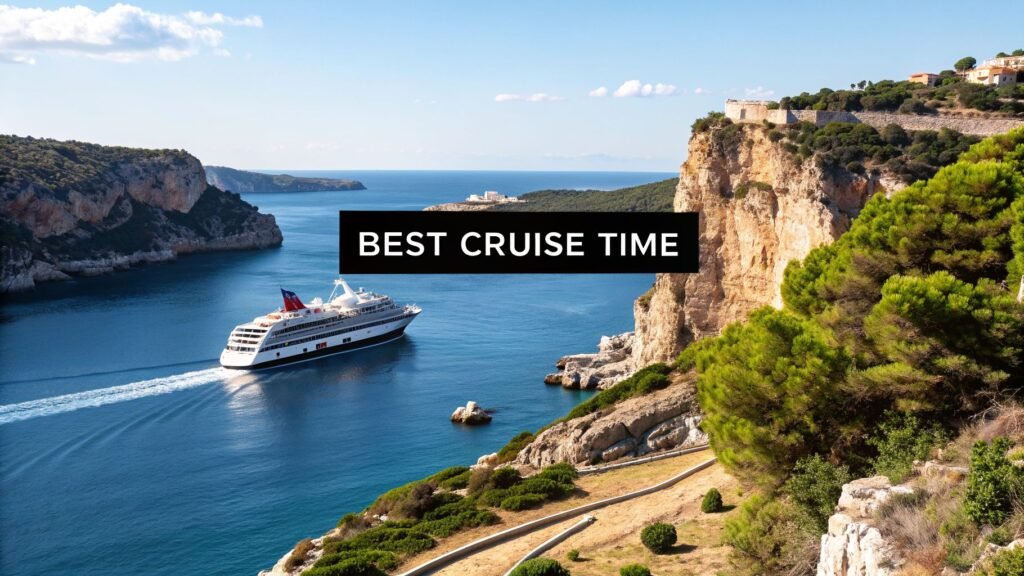

Deciding on the best time of year for a Mediterranean cruise is the first crucial step in planning an unforgettable journey. For the discerning traveler, the ideal window is almost always the “shoulder seasons”—late spring (May-June) and early autumn (September-October). This period offers a flawless blend of sublime weather, fewer crowds, and superior value, ensuring your experience is as seamless as it is spectacular.
Your Guide to the Perfect Mediterranean Cruise Season
This guide is for travelers who desire an escape that feels both effortless and refined. We will explore how timing shapes every detail of your voyage, from the tranquility of your shore excursions in Santorini to the ease of securing a coveted table at a cliffside restaurant in Portofino. Understanding these nuances is the key to selecting a sailing date that aligns with your vision of a perfect Mediterranean experience.
This guide is designed for:
- Couples seeking a romantic and relaxed escape.
- Seasoned travelers who prioritize authentic experiences over peak-season crowds.
- Luxury explorers who value comfort, exclusivity, and impeccable service.
- First-time Mediterranean cruisers wanting to make an informed, confident decision.
The region’s cruise calendar breaks down into three distinct periods. Each delivers a completely different atmosphere, from the vibrant energy of summer to the quiet introspection of winter.
Understanding the Cruise Seasons
Your choice of season directly impacts every aspect of your trip. It is not merely about the price of your suite; it is about the quality of your time ashore. A July visit to Rome means sharing the Colosseum with thousands of overheated tourists. In contrast, a May visit can feel like a much more personal encounter with history.
This is precisely why so many experienced luxury travelers prioritize the shoulder seasons. The benefits are impossible to ignore:
- Gorgeous Weather: Days are warm and sunny, ideal for exploring ancient sites or relaxing on your balcony, but you are spared the oppressive heat of mid-summer. Average temperatures often hover around a perfect 70°F (21°C).
- Fewer Crowds: Popular spots like Dubrovnik’s city walls or the cliffside paths of Cinque Terre are far more enjoyable with fewer people. It allows for a more intimate, authentic connection with the places you came to see.
- Better Value: Cruise fares and airfare are often more attractive outside the peak summer crush. This can make that balcony suite upgrade or a pre-cruise stay in a five-star hotel feel much more accessible. You can learn more about building the perfect route in our guide to the best Mediterranean cruise itineraries.
To help you visualize these differences, the chart below breaks down what you can expect from each Mediterranean cruising season.

As you can see, the shoulder season provides a superior balance of great weather and manageable crowds. It is the premier choice for a relaxed, upscale voyage where the experience, not the logistics, takes center stage.
To help you decide, here is a quick comparison of the main cruising seasons. This table should make it easier to choose the best time for your luxury voyage.
Comparing Mediterranean Cruise Seasons
| Season | Best For | Weather & Sea Conditions | Crowds & Value |
|---|---|---|---|
| Shoulder Season | Discerning travelers seeking pleasant weather and a more authentic local experience. | Warm and comfortable, with averages around 70°F (21°C). Seas are generally calm and ideal for cruising. | Moderate crowd levels, offering a more relaxed experience. Prices are more favorable than in peak season. |
| Peak Season | Sun-seekers, families with school schedules, and those who love a vibrant, high-energy atmosphere. | Hot and sunny, with temperatures often exceeding 85°F (29°C). Seas are typically very calm. | Very high crowd levels at all major ports and attractions. Expect the highest prices for cruises and flights. |
| Off-Season | Cultural explorers focused on museums and those who don’t mind cooler weather. | Cool and often wet, with a higher chance of rougher seas, especially in the Western Mediterranean. | Very few crowds, providing a quiet, local feel. Cruise fares are at their lowest, but many excursions are limited. |
Ultimately, the best season comes down to what you want your trip to feel like. If it is about calm, comfort, and quality, the shoulder season is almost always the right answer.
The Mediterranean Sweet Spot: The Best Time of Year for a Cruise
Ask any seasoned Mediterranean cruiser for their secret, and they will likely tell you it is the shoulder season. For many, late spring (April to June) and early autumn (September to October) are, without question, the best time of year for a Mediterranean cruise. This period is the perfect blend of everything you desire: beautiful weather, ports you can actually breathe in, and prices that feel like a smart investment.
Imagine exploring the Acropolis in Athens or wandering the cliffside villages of the Amalfi Coast without the oppressive heat of July. This is the Mediterranean as it is meant to be experienced. The pace is slower, the light is softer, and every stop feels more personal. You can linger over a cappuccino in a Venetian piazza or get lost in Dubrovnik’s Old Town without being swept along by a massive crowd.
The Spring Awakening: April to June
There is a special magic to the Mediterranean in the spring. Wildflowers are blooming across the Greek Isles, and the scent of lemon blossoms fills the air in Italy. The weather is just right—warm enough for dinner on the deck but still cool enough that exploring ancient ruins on foot feels like a pleasure, not a chore.
This is the ideal time for anyone who wants to be active and dive into the culture. The milder temperatures are perfect for long walking tours through Rome or hiking the stunning coastal paths of Cinque Terre. On top of that, the seas are usually calm, which means smooth, comfortable sailing between islands.
Spring, especially May, is a prime window for a luxury cruise. The weather is gorgeous, the landscapes are lush, and the crowds are a fraction of their summer peak. In iconic ports like Santorini, daily visitors drop from a chaotic 15,000 in July to a much more manageable 3,000. You can find official visitor statistics and tourism trends at the Greek National Tourism Organisation.
The Golden Autumn: September to October
Once the summer rush is over, a calmer, more sophisticated atmosphere settles over the Mediterranean. The sea, having soaked up the sun for months, is still wonderfully warm for swimming, often right into October. The days are still sunny and bright, but that intense August heat has finally broken.
This season is a dream for anyone who loves food and wine. September kicks off the grape harvest—the vendemmia in Italy—and wine festivals pop up all over the region. It is a fantastic time for a vineyard tour in Tuscany or to experience the olive harvest in Greece. The entire shore experience feels richer and more authentic. You can explore our guide to the best cruise excursions to book for a few ideas that really shine this time of year.
Spring vs. Autumn: How to Choose
While both shoulder seasons are fantastic, they do offer slightly different vibes. Picking the right one just comes down to what you are looking for in your trip. Spring is all about freshness and new beginnings, while autumn has a mellow, golden glow.
| Factor | Spring (April – June) | Autumn (September – October) |
|---|---|---|
| Atmosphere | Fresh, vibrant, and in full bloom. It’s the best time to see the landscapes at their most green and lush. | Golden, mellow, and centered around the harvest. Perfect for foodies and wine lovers. |
| Sea Temperature | A bit brisk at the start of the season but warms up beautifully by June. | At its absolute warmest. Perfect for swimming and water sports the entire time. |
| Shore Activities | Fantastic for hiking, photography, and exploring historical sites surrounded by wildflowers. | The best for wine tasting, food festivals, and enjoying those warm seas with fewer people around. |
| Value | Great value, especially in April and May, before summer pricing takes over. | Exceptional value, as prices drop quite a bit right after the end of August. |
Ultimately, whether you choose spring or autumn, you are getting a more exclusive and comfortable experience than you ever could in the peak of summer. Opting for the shoulder season is simply a smarter way to travel. You are buying yourself the luxury of space and time—the greatest indulgence of all.
Navigating the Peak Summer Season
For anyone who thrives on pure, unadulterated energy, a Mediterranean cruise in July or August is an intense but compelling experience. This is the Med at its most cinematic and alive—long, sun-drenched days, the warmest sea temperatures for swimming, and a palpable buzz in every single port.
If your travel is tied to school holidays or you are dreaming of that quintessential sun-and-sea escape, a summer voyage can be magnificent. You just need the right approach.

Let’s be clear, though: this is not the best time of year for a Mediterranean cruise if you are looking for solitude. Expect significant crowds in iconic spots like Mykonos, the French Riviera, and the Amalfi Coast. The trade-off for perfect swimming weather is sharing these postcard destinations with thousands of other visitors.
The Realities of a Summer Voyage
The defining factor of a summer cruise is the heat. Daytime temperatures regularly climb into the high 80s and 90s°F (30-35°C), which can make midday exploring feel draining. The sun is powerful, so staying hydrated and finding shade are absolute priorities on any shore excursion.
This intense heat naturally shapes the rhythm of your day. The smartest move is to plan your active exploring for the early morning or late afternoon. Reserve the hottest part of the day for relaxing on your ship—by the pool, in the spa, or on your private balcony.
The key to a luxurious summer cruise is strategic planning. Instead of joining the masses, leverage your cruise line’s connections to book private tours that start earlier, use exclusive access points, or visit less-crowded alternative sites. This completely changes the dynamic of your time ashore.
Strategies for an Elevated Summer Experience
Despite the challenges, a summer cruise can be incredibly rewarding. The atmosphere is festive, with countless open-air concerts, festivals, and events, like the Bastille Day fireworks in France on July 14th. To make the most of it, smart booking is everything.
Here is how to ensure your peak-season trip feels exclusive, not overwhelming:
- Book Well in Advance: Suites, especially those with private verandas, sell out many months—sometimes over a year—ahead for July and August sailings. Lock in your preferred stateroom as early as you can.
- Opt for Smaller Ships: Luxury lines with smaller vessels can often access more exclusive, less-crowded ports that the mega-ships cannot reach. Explore our guide on the best luxury cruise lines to find a brand that fits your travel style.
- Prioritize Private Excursions: This is the single best investment you can make in summer. A private guide and driver let you bypass long lines, customize your itinerary on the fly, and escape the crowds on your own schedule.
- Embrace the Siesta Culture: Adopt the local approach to the heat. Explore vigorously in the morning, enjoy a long, leisurely lunch in the shade, and then retreat to your air-conditioned suite during the peak afternoon sun.
While summer commands the highest prices and busiest ports, it also delivers the Mediterranean in its most classic, sun-soaked form. With thoughtful planning, you can craft a journey that captures all the season’s energy while preserving the comfort and exclusivity you expect.
Discovering the Quiet Charm of a Winter Cruise
While most travelers picture a sun-drenched Mediterranean, venturing out between November and March offers a completely different kind of trip—one that is sophisticated, culturally rich, and incredibly personal. If your priority is deep immersion over beach time, this quiet period can be an excellent choice. It is your chance to see iconic destinations through a local’s eyes, free from the overwhelming crowds of summer.
Imagine exploring the Vatican Museums or the Uffizi Gallery in Florence with enough space to appreciate the masterpieces. In winter, this is the reality. The absence of long lines and packed tour groups allows for unhurried, meaningful visits to world-class historical sites. You get an authentic glimpse into the daily life of cities like Barcelona, Rome, and Lisbon, which remain vibrant year-round.

Weighing the Pros and Cons of an Off-Season Voyage
Of course, a winter cruise requires a different mindset and a realistic understanding of the trade-offs. Weather is the biggest factor. You should expect cooler temperatures and a higher chance of rain, particularly in the Western Mediterranean. The seas can also be less predictable, an important factor if you are prone to motion sensitivity.
But the upsides are compelling, especially when it comes to value and tranquility. Cruise fares during this period are often at their lowest, presenting an incredible opportunity for travelers with flexible schedules. This can make booking a higher-tier suite or splurging on exclusive onboard experiences far more attainable.
The real luxury of a winter cruise is the serenity. You trade sunbathing for the rare chance to have a world-famous landmark almost to yourself, creating a much more profound connection with the culture and history.
Where to Go and What to Expect in Winter
Not all Mediterranean destinations are created equal in the off-season. While many of the Greek Isles largely shut down for the season, other areas thrive. A winter itinerary will typically focus on one of two distinct regions, each offering its own unique charm.
- Cultural Capitals (Western Med): Itineraries centered on the grand cities of Spain, Italy, and Portugal are excellent choices. You can enjoy Christmas markets in December, the festive atmosphere of Carnival in February, and the quiet beauty of ancient sites like those on the UNESCO World Heritage List.
- Milder Climates (Canary Islands & Cyprus): For those seeking a bit of winter sun, cruises that venture further south to destinations like the Canary Islands offer a welcome escape. While not tropical, daytime temperatures are often pleasantly mild—perfect for hiking and exploring unique volcanic landscapes.
It is also worth noting that while the main Greek islands are quiet, you can get a unique perspective on local life if you know where to look. For those interested in the authentic side of the Cyclades, our guide to experiencing luxury in Greece during its more peaceful seasons is a great resource.
Ultimately, a winter Mediterranean cruise is for the traveler who values authenticity over ideal weather. It is a chance to explore the region’s timeless treasures in serene solitude and enjoy the very best of luxury travel for a fraction of the peak-season price.
Your 5-Step Plan to Book the Perfect Cruise
You have decided on the perfect time of year for your Mediterranean adventure—now for the exciting part. Booking a luxury cruise is a sequence of smart decisions. Follow this simple five-step plan to move from initial ideas to final confirmation with complete confidence.

This structured approach ensures you lock in the most important elements first. On intimate luxury vessels, the best suites can sell out a year in advance.
Step 1: Define Your Itinerary Priorities (What to Book First)
Before you think about ships, think about shores. What is pulling you to the Mediterranean? Are you dreaming of the classical history of Rome and Athens, or is the glamour of the French Riviera more your style? Perhaps it is all about the Greek Isles, with their iconic white-washed villages.
Jot down a list of your “must-see” ports and the kinds of experiences that excite you, whether it is touring ancient ruins or visiting private vineyards. This simple act works like a filter, instantly narrowing the vast world of cruises down to the ones that fit your vision.
Step 2: Select Your Ideal Cruise Line and Ship
With your dream itinerary in hand, you can find a cruise line that matches your travel personality. Do you prefer the intimate, yacht-like atmosphere of a smaller, all-suite line like Silversea or Seabourn? These ships can often access smaller, more exclusive ports.
Or perhaps you would prefer a premium line like Viking Ocean Cruises or Oceania Cruises, celebrated for their focus on destinations and culinary programs. Think about the onboard vibe you want—formal and traditional, or relaxed and contemporary? Our luxury cruise guide can help you sort through the nuances.
Step 3: Choose and Book Your Suite
Your suite is your sanctuary. On a Mediterranean cruise, a private veranda is essential for soaking in the stunning coastal scenery.
Think carefully about location. A mid-ship suite generally offers the smoothest ride. A forward-facing suite delivers dramatic views as you sail into a new port. Once you have settled on a cruise and sailing date, book your suite immediately. The best ones—especially corner suites or those with extended balconies—are always the first to disappear.
Step 4: Arrange Flights and Pre- or Post-Cruise Stays
With your cruise locked in, it is time to handle air travel. The smartest move you can make is to fly into your embarkation city at least one full day early. This buffer protects you from flight delays and lets you start your vacation feeling relaxed.
Consider extending your trip with a two or three-night stay in your arrival or departure city. It is the perfect way to explore iconic hubs like Barcelona, Rome, or Venice on your own terms.
Step 5: Finalize Excursions and Onboard Reservations
About 90 to 120 days before you set sail, the cruise line will open bookings for shore excursions, specialty dining, and the spa. This is your cue to act fast. Private tours and popular small-group experiences—like a Tuscan cooking class or a private boat tour around Capri—fill up quickly.
The same goes for reservations at the ship’s alternative restaurants and sought-after spa treatments. By finalizing these details well in advance, you ensure your time is perfectly tailored to your tastes, with no last-minute compromises.
Editor’s Pick: The Regent Seven Seas Voyager “Ionian & Adriatic Seas” Itinerary
- Best For: Travelers seeking an all-inclusive, ultra-luxury experience that blends iconic ports with hidden gems.
- Why It’s Worth It: This 10-night Athens to Venice (or reverse) sailing in late September is timed perfectly for the shoulder season. It combines the must-see Greek Isles with the less-traveled, dramatic coastlines of Albania and Montenegro. Since everything is included with Regent—from flights to unlimited shore excursions—the journey is truly seamless. The ship is all-suite, all-balcony, offering a supremely comfortable home base.
- One Limitation: The all-inclusive pricing model means a higher upfront cost, which may not appeal to travelers who prefer to customize their spending more granularly.
Common Mistakes to Avoid When Booking Your Cruise
Before you pack your bags, let’s run through a final checklist. The difference between a good Mediterranean cruise and a truly seamless one often comes down to a few small, but critical, decisions you make before you leave home. Think of this as our pre-departure briefing—a collection of core principles and common missteps we have seen travelers make over the years.
The Big Picture: Matching the Season to Your Style
Choosing the best time of year for a Mediterranean cruise really just depends on the kind of trip you are dreaming of. Here is a quick recap to lock in your decision.
For Romance and Relaxation (May, June, September): These shoulder months are the sweet spot. You get gorgeous sunshine and warm seas without the peak-season intensity. It is the perfect window for couples who want tranquil ports and intimate moments.
For Sun-Worshippers and Families (July, August): If your vision is all about the hottest sun and a vibrant atmosphere, high summer is your time. It is the best choice for families navigating school holidays, just be ready for the heat and crowds.
For Cultural Immersion and Value (October-April): The off-season is a gift for travelers who prioritize unhurried exploration. If authentic cultural encounters matter more than beach days, this is when you will find exceptional serenity and value.
Your time in port is precious. Never underestimate the transit time from large, industrial ports to the city center. Civitavecchia, the port for Rome, is a prime example—it’s a 75 to 90-minute journey to the city, a detail that can disrupt your entire day if not planned for.
Common Missteps to Sidestep
Even the most experienced travelers can overlook a detail or two. Here are the most common mistakes we see and how to easily avoid them.
Waiting Too Long to Book Key Experiences
This is the number one error. The best shore excursions—especially private tours or exclusive vineyard visits—fill up months in advance. The same goes for reservations at the ship’s specialty restaurants and prime-time slots at the spa. Book these essentials 90-120 days before your sailing date.
Packing Inappropriately for the Season
Yes, the Mediterranean is famous for sun, but the weather can be fickle, especially in spring and fall. A day in the Greek Isles can start cool, get warm by noon, and then turn breezy by evening. The simple solution is layering. A few lightweight sweaters, a versatile pashmina, and a packable jacket will be your best friends. For a more detailed guide, check out our advice on what to pack for a luxury cruise.
Underestimating Port Transit Times
Not all ports are created equal. While gems like Dubrovnik let you step right off the ship into the old town, many others are industrial hubs located a significant distance from the main attractions. Le Havre (for Paris) and Livorno (for Florence/Pisa) are other classic examples. Always do a quick search on your port logistics. For these more distant ports, a ship-sponsored excursion or a pre-booked private transfer is almost always the most efficient move.
Luxury Cruise Checklist: Final Touches
- Confirm Passport & Visas: Ensure your passport is valid for at least 6 months beyond your travel date.
- Book Travel Insurance: Select a comprehensive policy covering cruise-specific issues.
- Arrange Airport Transfers: Pre-book transfers for a seamless arrival and departure.
- Notify Banks: Inform your credit card companies of your travel dates to avoid issues.
- Download Cruise Line App: Access your itinerary, book reservations, and stay connected onboard.
- Pack Essentials: Include medications, adapters, and a portable charger in your carry-on.
Key Takeaways: Your Perfect Mediterranean Cruise
- Best Overall Time: The shoulder seasons (May-June and September-October) offer the best combination of pleasant weather, fewer crowds, and good value.
- Plan for Your Priorities: High summer is best for sun-seekers and families, while the off-season (November-March) is ideal for cultural exploration without crowds.
- Book Well in Advance: Reserve your cruise, especially your preferred suite, 9 to 18 months ahead to secure the best options and pricing.
- Don’t Forget the Details: Pre-book shore excursions, specialty dining, and spa treatments 90-120 days out, as the best experiences fill up quickly.
- Travel Smart: Fly in at least one day early to avoid stress from potential travel delays and consider extending your stay in your port cities.
- Pack for Versatility: Layering is key for navigating the changing temperatures throughout the day, especially in the spring and fall shoulder seasons.
Frequently Asked Questions
Here are straightforward answers to the most common questions about planning your Mediterranean voyage.
What is the cheapest month for a Mediterranean cruise?
If you are purely chasing value, the lowest prices for Mediterranean cruises are found between November and February. During this off-season, demand is at its yearly low, so you can often find excellent deals on high-end suites and airfare. However, this value comes with trade-offs: cool, unpredictable weather, choppier seas, and the closure of many seasonal businesses in resort destinations like the Greek Isles. This timing is best suited for travelers focused on the major cultural hubs of Italy and Spain.
What is the best month to cruise the Mediterranean to avoid crowds?
To enjoy great weather while avoiding the biggest crowds, May and October are the ideal months. This is the heart of the shoulder season, when the summer chaos has not yet begun or has already faded. You will experience popular sites like Pompeii and Dubrovnik’s city walls with far more breathing room. The entire atmosphere is calmer and more authentic. For the absolute quietest experience with still-pleasant weather in the south, consider early November.
What is the weather like on a Mediterranean cruise in September?
September offers nearly perfect weather for a Mediterranean cruise. It strikes a beautiful balance of late-summer warmth and early-autumn comfort, with average temperatures in the mid-70s to low-80s°F (24-28°C). The sea is still wonderfully warm from the summer sun, making it ideal for swimming. The oppressive heat of August has passed, which makes shore excursions comfortable and enjoyable. It is an overwhelmingly sunny and pleasant month to travel.
Should I choose an Eastern or Western Mediterranean cruise?
The choice between an Eastern or Western Mediterranean itinerary depends on your travel style and interests.
- Eastern Mediterranean: This route is ideal for lovers of ancient history and stunning coastlines. It typically includes the iconic Greek Isles (Santorini, Mykonos) and Croatia’s Dalmatian Coast (Dubrovnik, Split), offering postcard-perfect scenery.
- Western Mediterranean: This itinerary focuses on high culture, art, and glamorous cities. You will explore world-class destinations in Italy (Rome, Florence), the French Riviera, and Spain (Barcelona, Palma de Mallorca).
For a first-time cruiser seeking iconic island views, the Eastern Med is often the perfect choice. For a deep dive into European art and cuisine, the Western Med excels.
How far in advance should I book my cruise for the best price?
For a luxury Mediterranean cruise, you should book nine to 18 months in advance for the best combination of price and choice. This is especially critical if you are traveling during the popular shoulder or peak seasons. Booking early secures your preferred suite and itinerary and often provides access to early-booking promotions, such as onboard credits or included gratuities. Waiting longer typically results in higher prices and fewer options.
At SilkHarbor Travel, we focus on the details that make a trip unforgettable. Explore our curated guides to plan a journey that feels effortless, elevated, and perfectly tailored to you.